

Makassar, Indonesia, June 03 2026/PPM-When people hear the term “green economy,” they often think about renewable energy, recycling programs, or efforts to reduce carbon emissions. However, the benefits of environmentally friendly practices go far beyond protecting the planet. A recent study conducted in private universities in South Sulawesi, Indonesia, reveals that green economy initiatives can also improve employee well-being and workplace performance.
As climate change and environmental challenges become global concerns, many organizations are adopting sustainable practices to reduce their ecological footprint. Universities are no exception. From energy-saving programs and waste reduction initiatives to digital systems that minimize paper use, educational institutions are increasingly embracing sustainability. But can these efforts make employees happier and more productive?
According to the study Impact of Green Economy on Job Satisfaction and Employee Performance in Private University South Sulawesi, the answer is yes. The research examined how green economy programs influence employee satisfaction and performance among staff working at private universities in South Sulawesi.
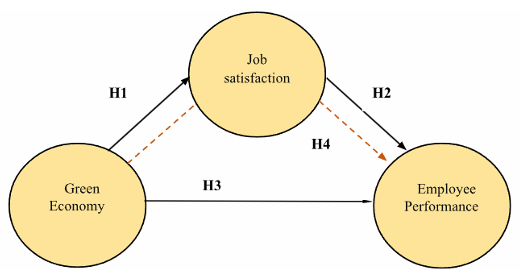
The findings show that green economy initiatives significantly increase job satisfaction. Employees who work in environmentally responsible institutions tend to feel more comfortable, motivated, and engaged in their daily tasks. Sustainable practices help create healthier workplaces, improve working conditions, and foster a sense of purpose among employees. When people believe they are contributing to positive environmental change, they often feel more connected to their organization.
Interestingly, the study found that green economy programs do not directly improve employee performance. Instead, they improve performance indirectly through job satisfaction. In simple terms, sustainability initiatives first make employees happier, and this increased satisfaction then leads to better work performance. Employees who are satisfied with their jobs are more likely to be productive, committed, and willing to contribute to organizational goals.
These findings have important implications for modern organizations. Many institutions focus heavily on technology, infrastructure, and operational efficiency to improve performance. While these factors are important, the study suggests that employee well-being should also be a priority. A positive and environmentally conscious workplace can become a powerful driver of motivation and productivity.
The research is closely linked to Sustainable Development Goal (SDG) 3: Good Health and Well-Being. SDG 3 aims to ensure healthy lives and promote well-being for all people. Although discussions about SDG 3 often focus on physical health, mental well-being and healthy work environments are equally important. Employees who work in supportive, sustainable, and environmentally friendly settings are more likely to experience higher levels of satisfaction and lower levels of workplace stress.
Universities, businesses, and public institutions can learn valuable lessons from this study. Green initiatives should not be viewed solely as environmental programs but also as investments in people. Simple actions such as improving energy efficiency, reducing waste, creating greener workspaces, and encouraging environmentally responsible behavior can generate benefits that extend beyond sustainability.
Ultimately, building a greener workplace means creating a healthier and more satisfying environment for employees. As organizations continue to pursue sustainable development, they should recognize that environmental responsibility and human well-being are deeply connected. By supporting both, institutions can contribute to the achievement of SDG 3: Good Health and Well-Being while fostering a more productive and motivated workforce.
Reference
DOI link: https://doi.org/10.2991/978-94-6463-758-8_268
Contact:
Mahlia Muis
mahliamuis@fe.unhas.ac.id


