
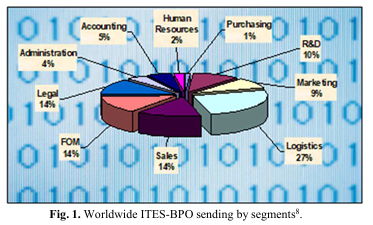

Makassar, Indonesia, June 03 2026/PPM-In an increasingly connected world, businesses are no longer limited by geography. A company based in New York can hire customer service representatives in the Philippines, software developers in India, or accounting specialists in another country without opening a physical office there. This global business model, known as Business Process Outsourcing (BPO), has become one of the fastest-growing industries in the world and offers significant opportunities for developing economies.
A recent study titled Global Business Process Outsourcing Development and Its Impact Toward Indonesia explores how the global growth of BPO could influence Indonesia’s economic future. The study examines Indonesia’s position in the international outsourcing market and evaluates the factors that could help or hinder the country’s ability to compete with established outsourcing destinations such as India, the Philippines, China, and Malaysia.
Business Process Outsourcing refers to the practice of delegating specific business functions to specialized third-party providers. These services can include customer support, payroll management, information technology services, marketing, data processing, human resources, and many other business activities. Companies often choose outsourcing because it reduces operational costs, improves efficiency, and allows them to focus on their core business activities.
According to the study, the global BPO industry has experienced remarkable growth over the past two decades. Advances in digital technology, internet connectivity, and telecommunications have enabled companies to collaborate with service providers across different countries more efficiently than ever before. As a result, nations that successfully develop strong outsourcing industries can attract foreign investment, create jobs, and strengthen their digital economies.
Indonesia possesses several advantages that could support the development of a competitive BPO sector. The country has a large population, a growing workforce, increasing internet penetration, and a strategic location within the Asia-Pacific region. The government has also demonstrated commitment to expanding information and communication technology infrastructure while promoting digital transformation initiatives.
However, the study also identifies several challenges. Indonesia faces strong competition from countries that already have mature outsourcing industries. Factors such as infrastructure quality, workforce skills, regulatory frameworks, investment policies, and access to global markets play critical roles in determining a country’s attractiveness as a BPO destination. To compete effectively, Indonesia must continue investing in education, digital skills development, and technology infrastructure.
The findings are closely linked to Sustainable Development Goal (SDG) 17: Partnerships for the Goals. SDG 17 highlights the importance of cooperation among governments, businesses, educational institutions, investors, and international organizations to achieve sustainable development. The growth of Indonesia’s BPO industry cannot be achieved by a single actor alone. It requires strong partnerships that connect talent development, technological innovation, investment opportunities, and supportive public policies.
Universities can help by producing graduates with digital competencies. Governments can create favorable regulations and improve infrastructure. Private companies can invest in technology and workforce development. International partners can contribute knowledge, expertise, and market access. Together, these partnerships can strengthen Indonesia’s position in the global outsourcing industry.
Ultimately, the study demonstrates that Business Process Outsourcing is more than just a business strategy. It represents an opportunity for Indonesia to participate more actively in the global digital economy. Through collaboration, innovation, and strategic partnerships, Indonesia can transform its potential into sustainable economic growth while advancing the objectives of SDG 17: Partnerships for the Goals.
Reference
DOI: https://doi.org/10.65246/xyzzav96
Contact:
Mahlia Muis
mahliamuis@fe.unhas.ac.id


