
Makassar, Indonesia, June 03 2026/PPM-The global travel and hospitality sectors are facing a stormy post-pandemic landscape. Hotel executives and team supervisors are forced to navigate sudden disruptions, ranging from massive technological shifts to rising commodity prices and intense economic instability. Amid these turbulent waves, how can local businesses ensure their staff keep performing well without burning out?
A groundbreaking study offers fresh answers. Titled “Unveiling the antecedents of sustainable performance: Insights from hospitality industry managers,” the research was written by Ajmal As’ad, Nurdin Brasit, Mahlia Muis, and Fauziah Umar. It was published on November 18, 2024, in the journal Problems and Perspectives in Management by the publisher LLC “Consulting Publishing Company “Business Perspectives””.
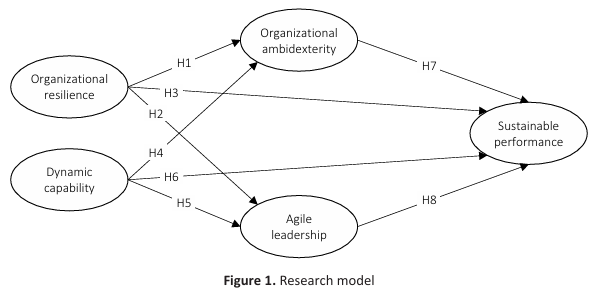
The academic team surveyed 210 hotel managers across various operational levels in Makassar, Indonesia. They examined four core corporate traits: organizational resilience, dynamic capabilities, agile leadership, and organizational ambidexterity (the knack for balancing day-to-day operations while exploring new business horizons). Interestingly, the data revealed that dynamic capabilities and corporate ambidexterity do not directly guarantee better worker outcomes on their own. Instead, the real secret ingredients behind long-term success are organizational resilience and agile leadership.
When an institution builds a resilient internal culture, its managers can handle massive crises, neutralize operational risks, and safeguard employee mental health. At the same time, agile leaders step up by encouraging their teams, offering adaptive training opportunities, and making rapid decisions during periods of low occupancy. This combination directly boosts sustainable worker performance.
This empirical insight aligns perfectly with the United Nations’ Sustainable Development Goals, specifically SDG 17, which promotes “Partnerships for the Goals.” Sustainable performance in tourism cannot thrive in isolation. By building strong institutional networks, sharing strategic resource capabilities, and uniting managers under agile leadership, local hospitality ecosystems establish robust partnerships. In Indonesia, this looks like hotels partnering with local communities to offer heritage tours, diversifying revenue, and establishing collaborative crisis management networks to survive unexpected economic downturns.
For corporate leaders and tourism policymakers, the study makes it clear that long-term survival relies on human-centric adaptability. Investing heavily in static systems or rigid structures is no longer enough. To truly thrive in a changing global market, businesses must empower agile leaders and nurture resilient work environments where employees are equipped to rebound from setbacks together.
Reference
http://dx.doi.org/10.21511/ppm.22(4).2024.23
Contact:
Mahlia Muis
mahliamuis@fe.unhas.ac.id