

Makassar, Indonesia, June 03 2026/PPM-In today’s digital world, a delicious product alone is no longer enough to guarantee business success. Customers now discover restaurants, food stalls, and local culinary brands through social media, online reviews, and digital platforms. For many small businesses, especially in the culinary sector, digital marketing has become a powerful tool for growth and survival.
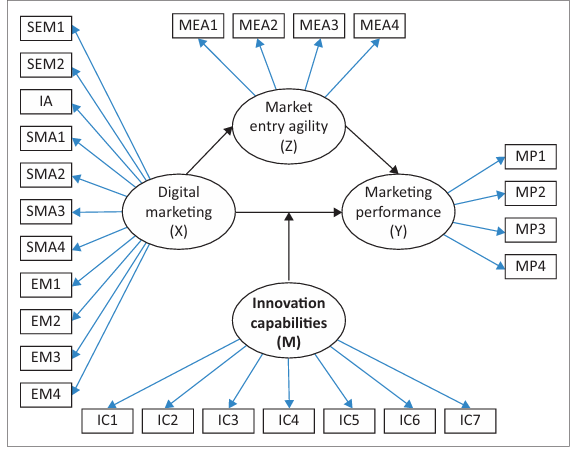
A recent study titled Model of Digital Marketing to Enhance Marketing Performance at Pontianak Culinary MSEs reveals how digital marketing is helping micro and small enterprises (MSEs) improve their marketing performance and compete in an increasingly crowded marketplace. The research focused on culinary businesses in Pontianak, Indonesia, and examined how digital marketing, market entry agility, and innovation capability influence business success.
The findings show that digital marketing significantly improves marketing performance. Businesses that actively use social media, online promotions, digital advertising, and other internet-based marketing tools are better able to attract customers, increase sales, and strengthen customer relationships. In a competitive environment where consumer preferences change rapidly, digital platforms allow businesses to communicate directly with customers and respond more effectively to market trends.
One of the most interesting findings of the study is the role of market entry agility. This refers to a business’s ability to quickly adapt to changing market conditions, identify opportunities, and adjust strategies when needed. The research found that digital marketing helps businesses become more agile, which in turn improves their overall marketing performance. In simple terms, digital marketing does not only increase visibility; it also helps businesses react faster and smarter.
For example, culinary entrepreneurs can monitor customer feedback through social media, identify popular food trends, and launch promotional campaigns almost instantly. This flexibility allows businesses to stay relevant and competitive even in rapidly changing markets.
The study also highlights that while innovation capability remains important, it did not significantly strengthen the relationship between digital marketing and marketing performance. This finding suggests that many small businesses still face limitations in resources, technology, and training that prevent them from fully integrating innovation into their marketing activities.
These findings are closely connected to Sustainable Development Goal (SDG) 17: Partnerships for the Goals. SDG 17 emphasizes the importance of collaboration, knowledge sharing, technology transfer, and partnerships among governments, businesses, educational institutions, and communities to achieve sustainable development. The success of digital marketing among culinary MSEs depends not only on individual entrepreneurs but also on support systems that provide access to digital infrastructure, training programs, financing opportunities, and business networks.
Digital transformation cannot happen in isolation. Small businesses need partnerships with technology providers, local governments, financial institutions, and digital platforms to maximize their potential. Through these collaborations, entrepreneurs can gain the skills and resources necessary to compete in the modern economy.
As Indonesia continues to embrace digital transformation, the experiences of culinary MSEs in Pontianak provide an important lesson. Digital marketing is more than a promotional tool—it is a pathway to growth, adaptability, and competitiveness. By strengthening partnerships and expanding access to digital resources, small businesses can unlock new opportunities and contribute to a more inclusive and sustainable economy. This is precisely the vision promoted by SDG 17: Partnerships for the Goals, where collaboration becomes the foundation for shared progress and long-term development.
Reference
DOI link: https://doi.org/10.4102/sajesbm.v17i1.1063
Contact:
Mahlia Muis
mahliamuis@fe.unhas.ac.id


