

A focused meeting on advancing gut microbiome research in children was held alongside the 3rd International Conference on Nutrition and Public Health (ICNPH 2026) at Universitas Hasanuddin, Makassar. The meeting took place in between the engagements of Andrew J. Holmes as an invited speaker, providing a valuable opportunity for a more in-depth and strategic exchange beyond the main conference sessions. ICNPH 2026 itself brought together more than 200 participants, including academics, researchers, practitioners, and students from various institutions.
The session served as a strategic platform to explore potential research collaboration between Universitas Hasanuddin and the University of Sydney, particularly in the area of child nutrition and gut microbiome science. Discussions centered on the growing recognition that gut microbiota plays a critical role in shaping nutrient metabolism, immune function, and long-term health trajectories. Rather than being a passive biological component, the microbiome is increasingly understood as a dynamic system that interacts closely with diet, environment, and host biology.

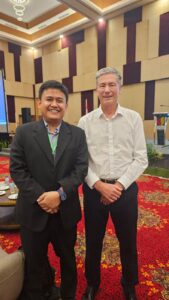
While the broader ICNPH 2026 conference engaged a wide academic audience, this focused meeting was conducted at the faculty level, enabling a more in-depth and targeted discussion on advancing collaborative research. The exchange allowed for deeper exploration of methodological approaches, including the integration of microbiome, dietary, and environmental data, as well as identifying opportunities for joint research development, data harmonization, and future academic collaboration.
A key point of discussion highlighted Indonesia’s unique potential as a setting for microbiome research. The country’s diverse dietary patterns, cultural practices, and environmental exposures provide a rich context for generating novel insights into microbiome variation and its implications for child health. Strengthening collaboration between Universitas Hasanuddin and international partners is therefore expected to support the development of context-specific evidence and innovative analytical frameworks to better address complex nutrition challenges, including the double burden of malnutrition.
Beyond scientific exchange, the meeting underscored the importance of translating research into actionable public health strategies. Strengthening evidence-based approaches in child nutrition has the potential to reduce health-related vulnerabilities and contribute to SDG 1 (No Poverty) and SDG 3 (Good Health and Well-being). Furthermore, the partnership reflects a strong commitment to SDG 17 (Partnerships for the Goals) through sustained international collaboration.
Overall, this strategic meeting represents an important step toward strengthening gut microbiome research in Indonesia. By connecting global expertise with local research priorities, Universitas Hasanuddin continues to advance its role as a key contributor to innovative, impactful, and internationally collaborative public health nutrition research.