

The Obesity and Child Nutrition Research Group (OCN-RG), Universitas Hasanuddin, is generating early field evidence on how Indonesia’s Makan Bergizi Gratis (MBG) program is experienced at the school level—and whether the meals provided are truly consumed by children. This work is part of the study titled “Policy Analysis and Implementation Model of the Makan Bergizi Gratis (MBG) Program: A Governance and Public Trust Approach in South Sulawesi.”
Led by M. Thahir Haning, the study captures real-time observations from participating schools in three areas in South Sulawesi—Makassar, Gowa, and Maros Regencies. A total of 152 children and 121 parents were involved in this phase of the study, allowing for a comprehensive understanding of both behavioral responses and household perspectives. The research focuses not only on food distribution processes but also on actual consumption patterns and student behavior in response to the program.
Recent observations reveal a critical but often overlooked issue: not all children consume the meals as intended. While food distribution is consistently implemented across schools, variability emerges at the point of consumption. Some children finish their meals, but others leave portions uneaten, selectively consume certain items, or bring alternative foods from outside the program. This pattern highlights a key disconnect—program delivery does not automatically translate into nutritional intake.
Further observations indicate that meal acceptance varies across menu types, with some foods being less preferred by children. In some cases, MBG meals appear to partially replace breakfast, while in others they function only as an additional meal. Eating behavior is also shaped by peer influence, taste preferences, and habitual snacking patterns, suggesting that consumption is not solely determined by availability, but also by behavioral and social factors.
These findings carry important implications for how the effectiveness of MBG should be evaluated. Rather than relying solely on coverage or distribution metrics, program success must be assessed based on actual consumption and its contribution to children’s dietary intake. From a nutritional perspective, several potential gaps emerge. If meals are not fully consumed, expected energy and nutrient intake may not be achieved. If MBG displaces existing meals, the net nutritional benefit may be smaller than assumed. Meanwhile, if children continue consuming snacks alongside MBG, the risk of excess energy intake remains.
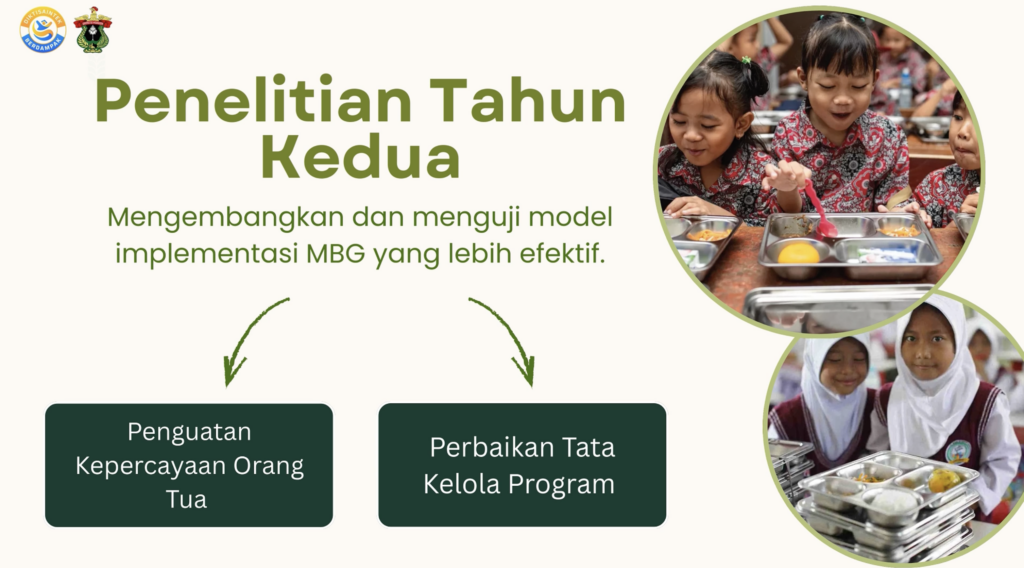
From a policy standpoint, the study underscores that implementation quality and behavioral response are central to program success. Large-scale feeding initiatives such as MBG require not only standardized delivery systems but also adaptive and responsive strategies. These include menu adjustments based on children’s preferences, systematic monitoring of plate waste and consumption patterns, integration with nutrition education to influence eating behavior, and stronger engagement with schools and parents to reinforce healthy dietary practices.
Ultimately, the findings reinforce a fundamental principle: a nutrition program is effective only when the food provided is actually consumed and contributes meaningfully to children’s diets. This study also contributes to broader development priorities, particularly SDG 1 (No Poverty) and SDG 3 (Good Health and Well-being), by addressing nutritional inequalities and improving child health outcomes, as well as SDG 17 (Partnerships for the Goals) through collaboration between researchers, schools, families, and policymakers.
Moving forward, the research will continue by linking observed consumption patterns with nutritional and health outcomes. The goal is to generate robust, context-specific evidence to refine and strengthen the implementation of the MBG program, particularly in South Sulawesi, ensuring that policy intentions translate into real and measurable nutritional impact.