

Tiny Bacteria in Babies’ Gut May Play a Bigger Role in Growth Than We Think
MAKASSAR, Indonesia Mar 26 2026/OCNRG/ – When we think about what helps babies grow well, the answers usually seem straightforward, which are good nutrition, proper care, and a healthy environment. But scientists are increasingly discovering that another important factor may be quietly working behind the scenes — the tiny bacteria living in the gut.
Inside every human body lives a vast community of microorganisms known as the gut microbiome. These microbes or bacteria begin colonizing the body early in life, even during the first days after birth. Although invisible to the naked eye, they may play a surprisingly important role in shaping how the body develops.
In recent years, world’s scientist have begun asking an interesting question: could these microbes also influence how infants grow?
This question was explored in the scientific article “Does Gut Microbiome Associate with the Growth of Infants? A Review of the Literature,” published in the journal Enfermería Clínica. The paper reviewed existing studies to understand whether the microbial community living in infants’ digestive systems might be linked to their growth and development.
After examining available research, the authors found growing evidence that the gut microbiome may interact with several biological processes related to growth. For example, certain microbes appear to influence hormones involved in physical development, including hormones that regulate how the body grows and builds tissues.
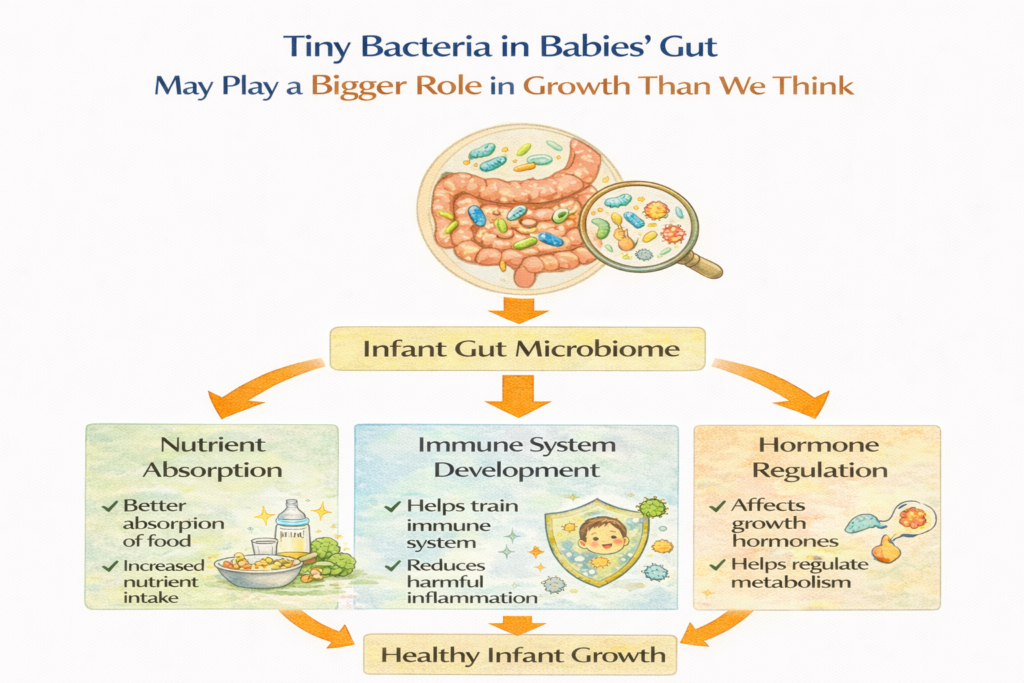
Microbes in the gut also help break down food and make nutrients easier for the body to absorb. For infants, whose bodies are growing rapidly, efficient nutrient absorption is essential. In this way, the microbial community inside the gut may indirectly support healthy growth.
Another important role of gut microbes is helping maintain a healthy digestive system. Beneficial bacteria can strengthen the intestinal barrier and support the immune system, protecting the body from harmful pathogens that could interfere with digestion or cause illness.
However, the relationship between gut microbes and infant growth is still an emerging area of research. While many studies suggest that these microbial communities may influence growth, scientists are still working to understand exactly how strong this relationship is and what factors shape it during early life.
What is becoming increasingly clear is that growth in early childhood is influenced by many interconnected factors. Nutrition, environment, family care, and the microscopic world inside the body may all work together during this critical stage of development.
Understanding these connections is important because early childhood growth can shape health later in life. Supporting healthy growth during infancy contributes to broader global efforts such as SDG 2 (Zero Hunger), which aims to end all forms of malnutrition, and SDG 3 (Good Health and Well-being), which promotes healthy lives across all stages of life.The idea that tiny microbes could influence how children grow reminds us that human health is often shaped by factors we cannot see — but that may have a profound impact from the very beginning of life.
Reference:
DOI: https://doi.org/10.1016/j.enfcli.2019.10.042
Contact:
Andi Imam Arundhana Thahir
+62 852-7009-4092
andi.imam@unhas.ac.id