

MAKASSAR, Indonesia, 28 August 2026/neuro-onc – A stroke does not end when a patient leaves the hospital. For many families, discharge marks the beginning of a completely new role. A spouse, child, or other relative may suddenly become responsible for medication, meals, mobility, personal care, emotional support, and follow-up appointments. The challenge is simple but important: Is the family truly ready?
A recent study, “Development of family readiness instrument for caring of stroke patients at home: Application of transition theory,” addressed this question by developing a tool to assess how prepared Indonesian families are to care for stroke survivors at home. The article was published in the Japan Journal of Nursing Science in 2025. The authors are Muhammad Abu, Rosyidah Arafat, Syahrul Syahrul, and Aulia Insani Latif. Importantly, 19 May 2025 was the revision date, while the article was first published online on 20 August 2025.
The study used a mixed-methods approach with four stages. First, eight experts—including neurologists, physiotherapists, nurses, and nursing lecturers—participated in a three-round Delphi process to identify important areas of family readiness. Next, 30 family members tested whether the questions were easy to understand. Five experts then assessed the relevance of the questions, followed by testing with 110 families of stroke caregivers. The result was a 20-item instrument designed around Transition Theory. It identified three key areas of readiness: awareness, involvement, and changes in internal and external processes. In everyday language, this means families need to understand what caring for a stroke survivor involves, actively participate in care, and be able to adapt psychologically and practically to their new situation.
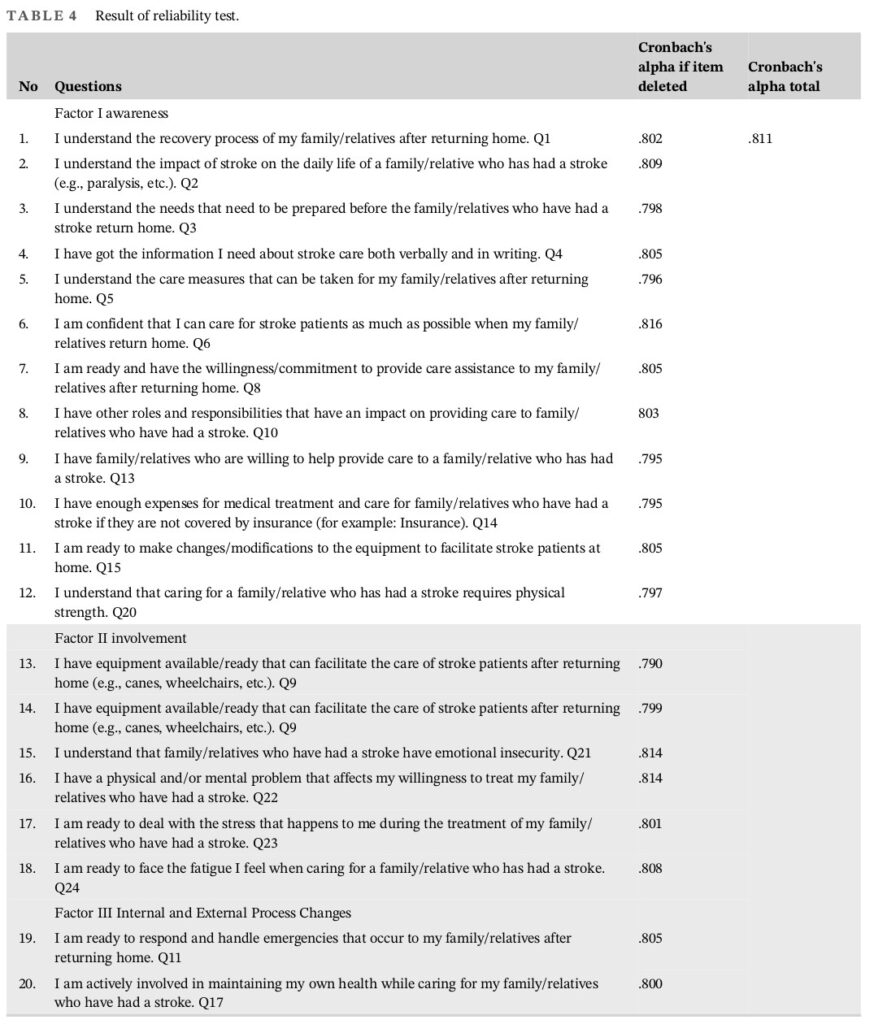
The instrument showed good reliability, with a Cronbach’s alpha of 0.811. Exploratory factor analysis found that the three factors explained 61.8% of the total variance. These findings suggest that the tool can provide nurses with a structured way to understand whether a family is prepared for the transition from hospital-based care to home care.
Why is this important? Because a family may receive plenty of information and still feel unprepared. A caregiver may know how to give medication but feel anxious about managing fatigue, stress, mobility problems, or unexpected changes. Readiness is therefore more than knowledge. It involves confidence, participation, adaptation, and the ability to recognize when help is needed. This research supports Sustainable Development Goal (SDG) 3: Good Health and Well-being. Safe recovery after stroke depends not only on hospital treatment but also on what happens at home. By assessing family readiness, nurses may be better able to provide targeted education, strengthen discharge planning, and tailor support to each family’s needs.
Reference:
DOI: 10.1111/jjns.70015
Contact:
Dr. Rosyidah Arafat, S.Kep., Ns.,M.Kep., Sp.KMB
+6282112862492