

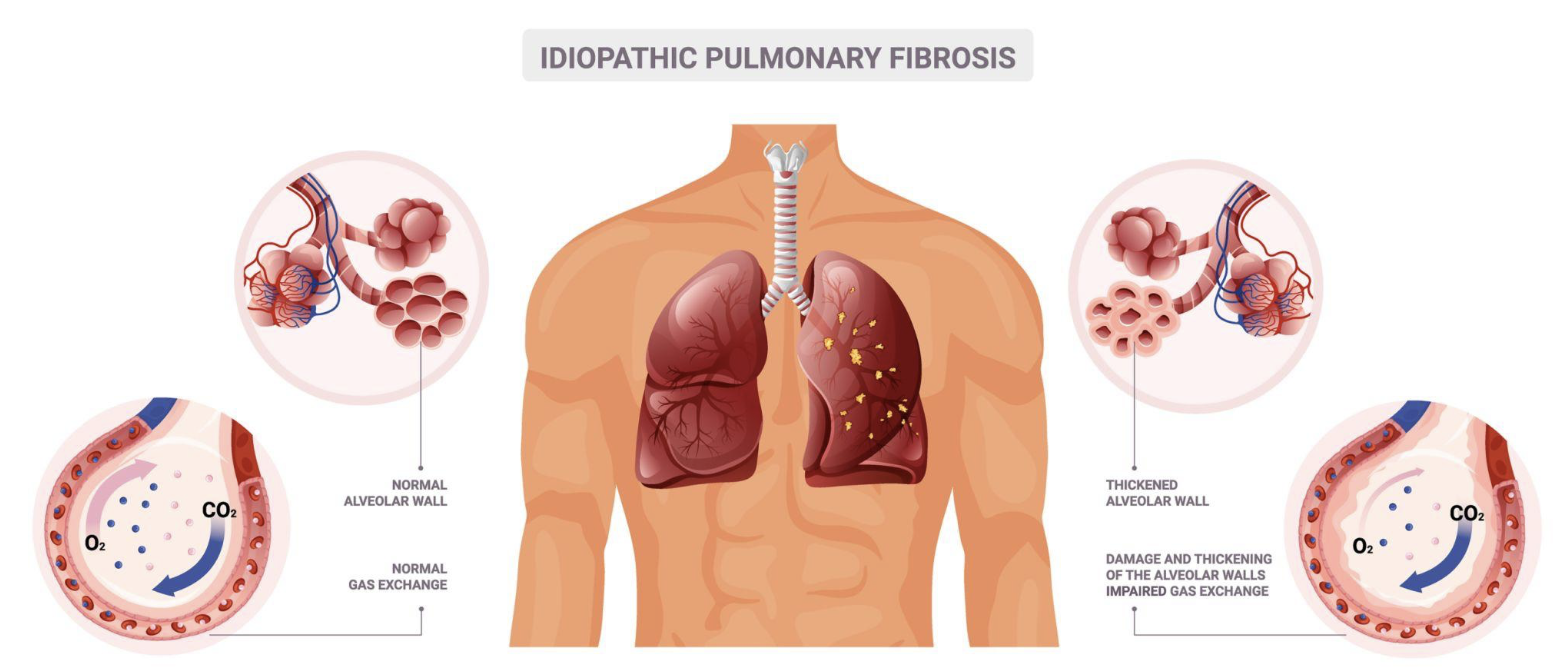

What if a simple blood marker could help doctors predict how fast a deadly lung disease is progressing? A recent scientific discovery may bring us one step closer to that possibility.
A study titled “Osteoprotegerin Is Elevated in Pulmonary Fibrosis and Associates with Idiopathic Pulmonary Fibrosis Progression: A Pilot Study”, published in the journal Respiration by S. Karger AG on 13 August 2025, explored an important biological signal that could improve how doctors understand and monitor a severe lung disease called idiopathic pulmonary fibrosis (IPF).
IPF is a chronic and progressive disease in which lung tissue becomes scarred over time. As the lungs stiffen, breathing becomes increasingly difficult, making everyday activities such as walking or climbing stairs exhausting. Unfortunately, many patients are diagnosed late because symptoms are often mistaken for normal aging or common respiratory problems. Worse still, predicting how quickly the disease will worsen remains a major challenge.
In this pilot study, researchers investigated a molecule called osteoprotegerin (OPG). Although OPG is usually known for its role in bone health, scientists discovered that it may also be involved in lung scarring. The researchers found significantly higher levels of OPG in fibrotic lung tissue and in the blood of patients with IPF compared with healthy individuals. Even more importantly, patients with higher OPG levels tended to experience faster disease progression and poorer lung function.
The findings suggest that OPG may serve as a biomarker—a measurable biological sign that helps doctors identify disease severity and predict outcomes. Imagine a future where physicians can use a blood test not only to diagnose lung fibrosis earlier but also to estimate whether a patient is at higher risk of rapid deterioration. Such information could help guide treatment decisions and improve patient care.
This scientific advancement strongly connects with SDG 3: Good Health and Well-Being, which aims to ensure healthy lives and promote well-being for all. Better biomarkers can lead to earlier diagnosis, more personalized treatment, and improved survival for people living with chronic respiratory diseases. By identifying patients who need urgent intervention, healthcare systems may become more effective in reducing suffering and mortality from lung diseases.
At the same time, this research reflects the spirit of SDG 17: Partnerships for the Goals. The study involved international collaboration among researchers from multiple countries and institutions, including Indonesia, the Netherlands, Germany, Australia, and the United States. Such partnerships demonstrate that solving global health problems requires cooperation across borders, expertise, and scientific disciplines.
The article itself serves as an inspiring example of how international scientific teamwork can contribute to medical breakthroughs. By combining expertise in pharmacy, pulmonary medicine, pathology, and molecular biology, researchers were able to uncover new insights into one of the world’s most devastating lung diseases.
Although larger studies are still needed before OPG can be widely used in hospitals, this research offers something invaluable: hope. For patients struggling to breathe, even a small scientific breakthrough can represent a giant step toward a healthier future. After all, every breath matters—and science continues working to protect it.
