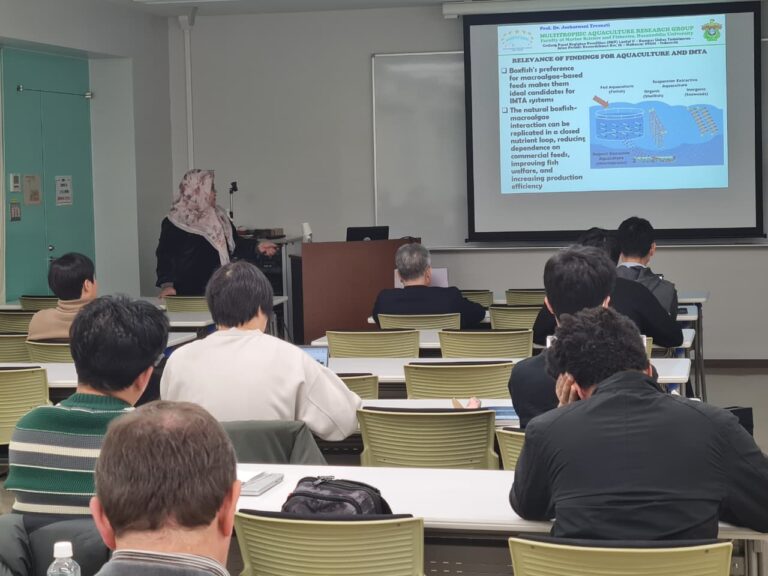
MAKASSAR, Indonesia July 1 2026/MARGO/As global seafood demand surges, modern aquaculture faces a critical dilemma: how can we farm fish intensively without destroying the water environments they depend on? Traditional fish farming often produces high volumes of organic waste, nitrogen, and phosphorus, triggering water degradation and physiological stress in aquatic life. However, an innovative ecological farming technique is charting a cleaner, smarter path forward.
In a groundbreaking study published in the Egyptian Journal of Aquatic Biology & Fisheries on 1 Januari 2026, titled “Seaweed Integration in a Brackish IMTA System Improves Longitudinal Length Growth of Saline Nile Tilapia (Oreochromis niloticus)”, researchers explored the powerful dynamics of Integrated Multi-Trophic Aquaculture (IMTA). By pairing saline Nile tilapia with natural extractive biofilters—specifically red seaweed (Gracilaria changii) and brackish bivalves (Polymesoda erosa)—the team demonstrated how multi-species integration significantly boosts fish growth while stabilizing rearing conditions.
This innovative approach aligns directly with SDG 14: Life Below Water, which advocates for sustainable marine and coastal ecosystem management, the reduction of land-based nutrient pollution, and the advancement of eco-friendly aquaculture technologies. Rather than relying on chemical additives or costly filtration hardware, IMTA harness nature’s design: fish produce waste, while seaweed acts as a biological filter absorbing harmful inorganic nitrogen compounds such as toxic ammonia and nitrate.
Over a 44-day trial, researchers systematically tracked fish length growth across four setup combinations: fish alone, fish with bivalves, fish with seaweed, and a combined seaweed-bivalve system. To capture the complete story of growth over time, scientists utilized longitudinal statistical modeling (UNIANOVA with random effects) across multiple observation days. The statistical results were compelling: tanks incorporating seaweed achieved significantly higher longitudinal length growth in tilapia compared to systems without seaweed. Interestingly, while bivalves assist in filtering suspended organic particles, adding bivalves alongside seaweed yielded no extra growth advantage beyond the seaweed-only treatment. Seaweed proved to be the absolute star player, stabilizing water quality, lowering environmental stress, and driving superior fish development.
Table 1: Key water quality parameters observed during the study, showing significant reduction of toxic ammonia levels in seaweed-integrated treatments.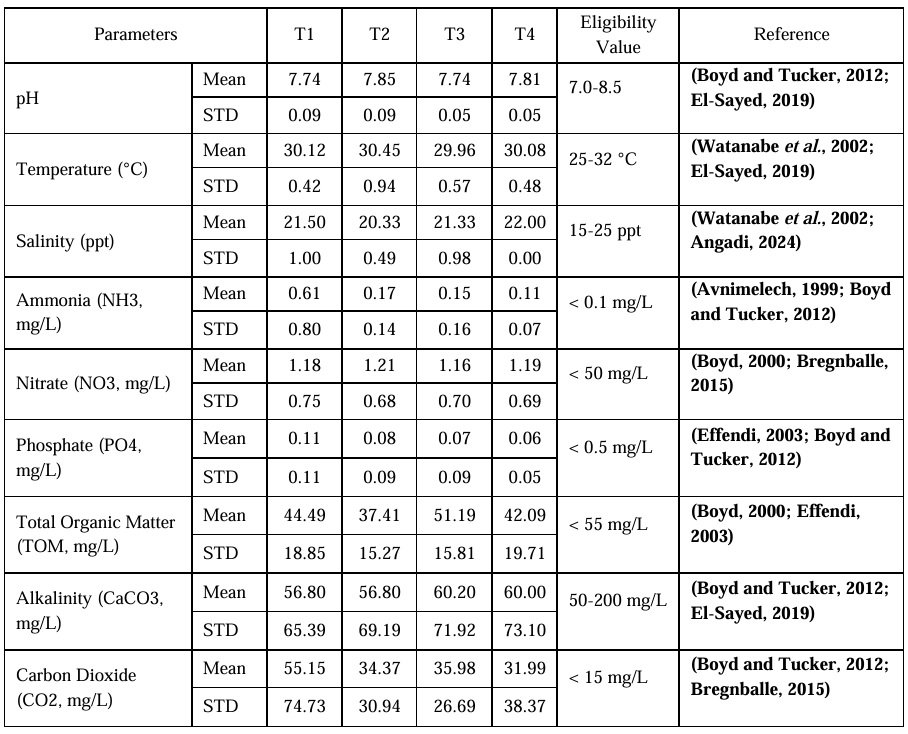
By transforming aquaculture waste into a resource for seaweed cultivation, IMTA presents a sustainable solution for coastal communities worldwide, proving that high-yield fish farming and environmental conservation can thrive hand in hand.
Reference
DOI:
10.21608/ejabf.2026.456865.7294
Contact:
Prof. Dr. Ir. Ambo Tuwo DEA
+628124206391
ambotuwo62@gmail.com