

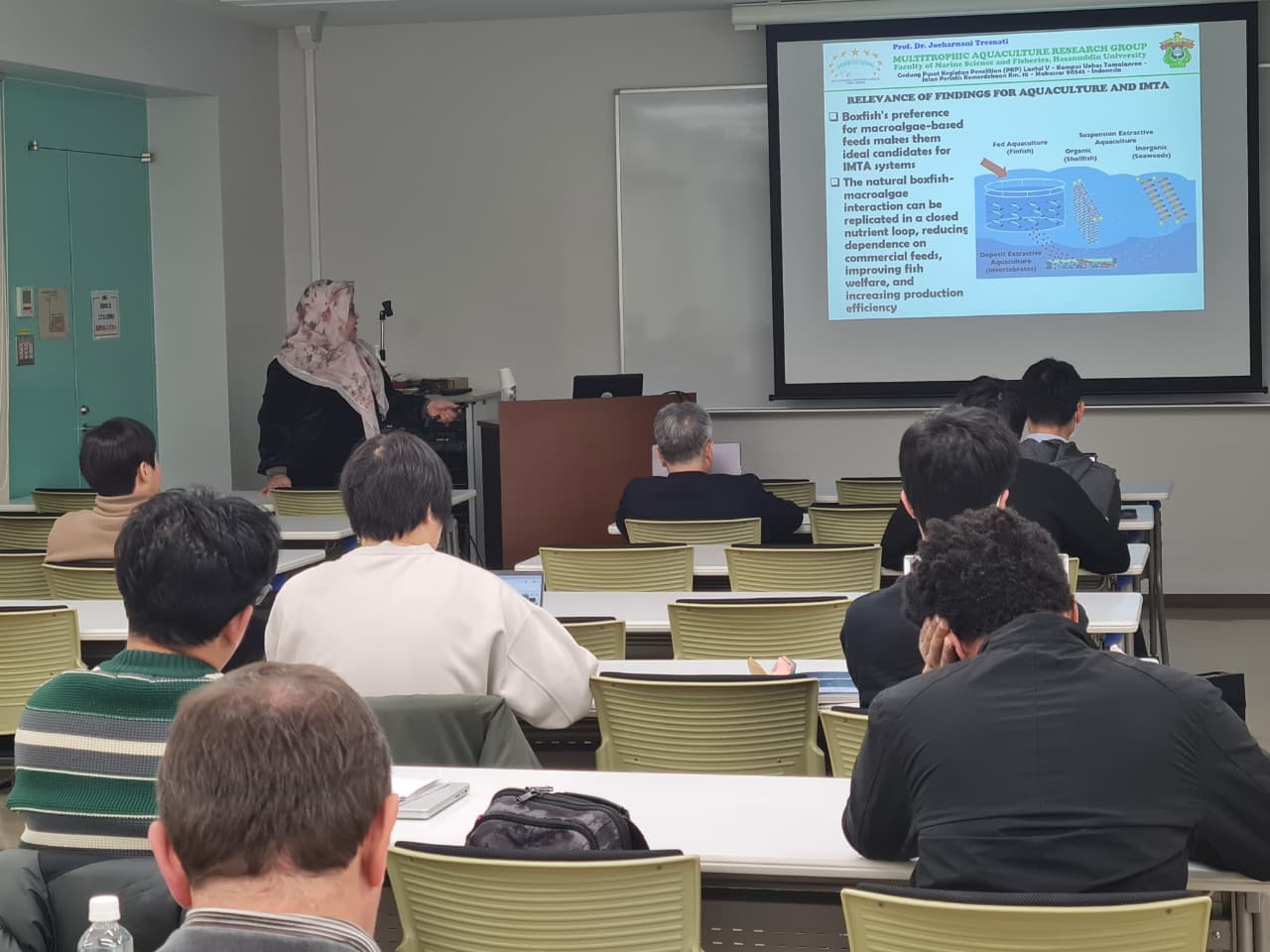
 Tsukuba, Japan — The Program for Promotor Collaboration Enhancement (PKP-PMDSU) was conducted from 6 to 21 December 2025 at the Institute of Life and Environmental Sciences, Tsukuba University, Japan, bringing together 26 participants in an international academic program focused on collaborative research, scientific knowledge exchange, and capacity building in the bioecology and downstream development of flatfish. The program was implemented through collaboration between Hasanuddin University (UNHAS) and Tsukuba University, with Yusaku Miyamae, Ph.D., serving as the international partner.
The PKP-PMDSU program was designed to strengthen the research capacity of UNHAS promoters and PMDSU doctoral students through collaborative research, academic discussions, joint scientific publications, and closer institutional cooperation. One of its central themes was the development of bioecological knowledge and downstream utilization of flatfish, particularly Pseudorhombus arsius (Hamilton, 1822), an economically valuable demersal species found in Indonesian waters. The research theme responds to an important challenge in marine resource management. Increasing demand for seafood must be balanced with the limited capacity of natural fish populations to reproduce and recover from exploitation. The document highlights overfishing and declining fish stocks as major concerns and emphasizes the need to understand reproductive biology, ecology, breeding, and aquaculture potential of flatfish to support sustainable production.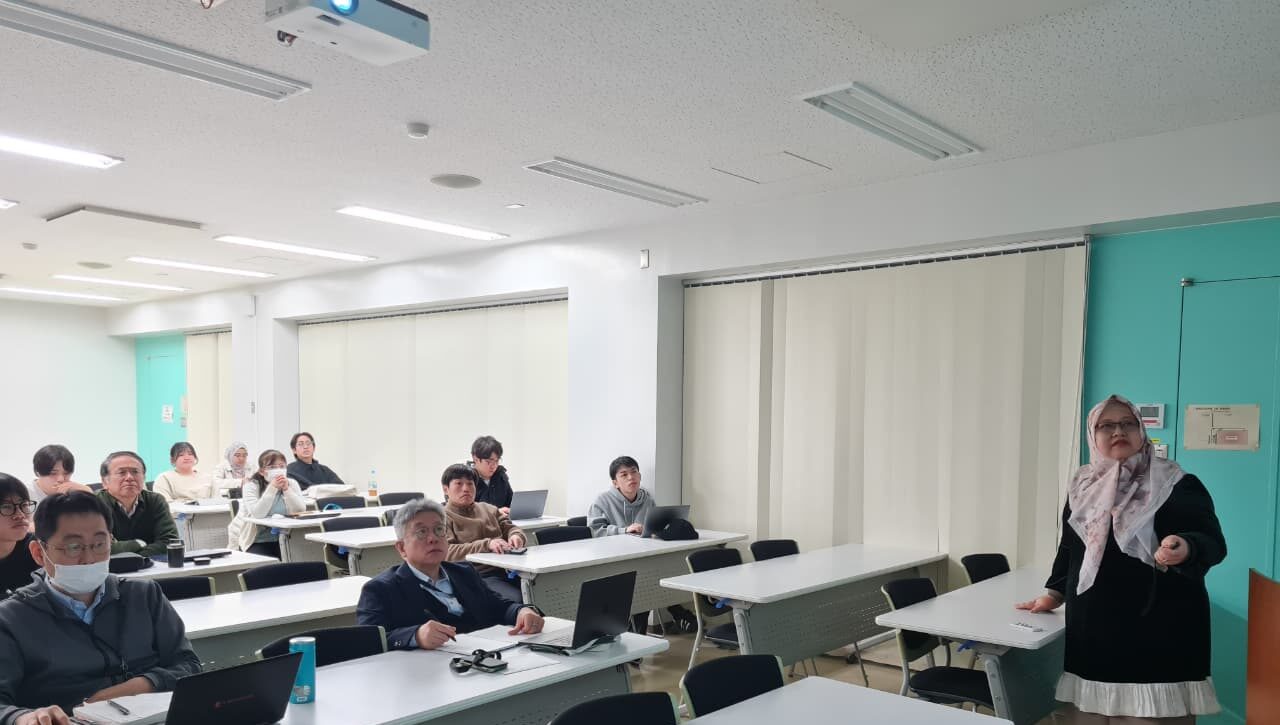
During the program, academic activities included scientific discussions with PMDSU students and faculty members, literature studies, manuscript preparation and revision, and laboratory activities related to the proximate composition of the liver and gonads of P. arsius. These activities provided opportunities to strengthen scientific skills while connecting research findings with broader questions of sustainable fisheries and marine resource utilization. The collaboration also strengthened the long-standing relationship between UNHAS and Tsukuba University, which has been developed since 2017. The program was expected to produce at least one scientific manuscript ready for submission to a reputable international journal while supporting continued joint research and publication after the program.
This initiative contributes to Sustainable Development Goal (SDG) 1: No Poverty by supporting sustainable fisheries knowledge that can contribute to resilient coastal livelihoods. It advances SDG 4: Quality Education through research-based learning, mentoring, scientific discussion, and capacity development. The focus on responsible use of marine fish resources also supports SDG 14: Life Below Water. Furthermore, collaboration between UNHAS and Tsukuba University directly reflects SDG 17: Partnerships for the Goals, demonstrating how international academic partnerships can strengthen research capacity and address shared challenges in sustainable marine resource management. The PKP-PMDSU program therefore represents an important step toward building stronger international research networks, developing future researchers, and generating scientific knowledge to support sustainable fisheries and marine resource management.
