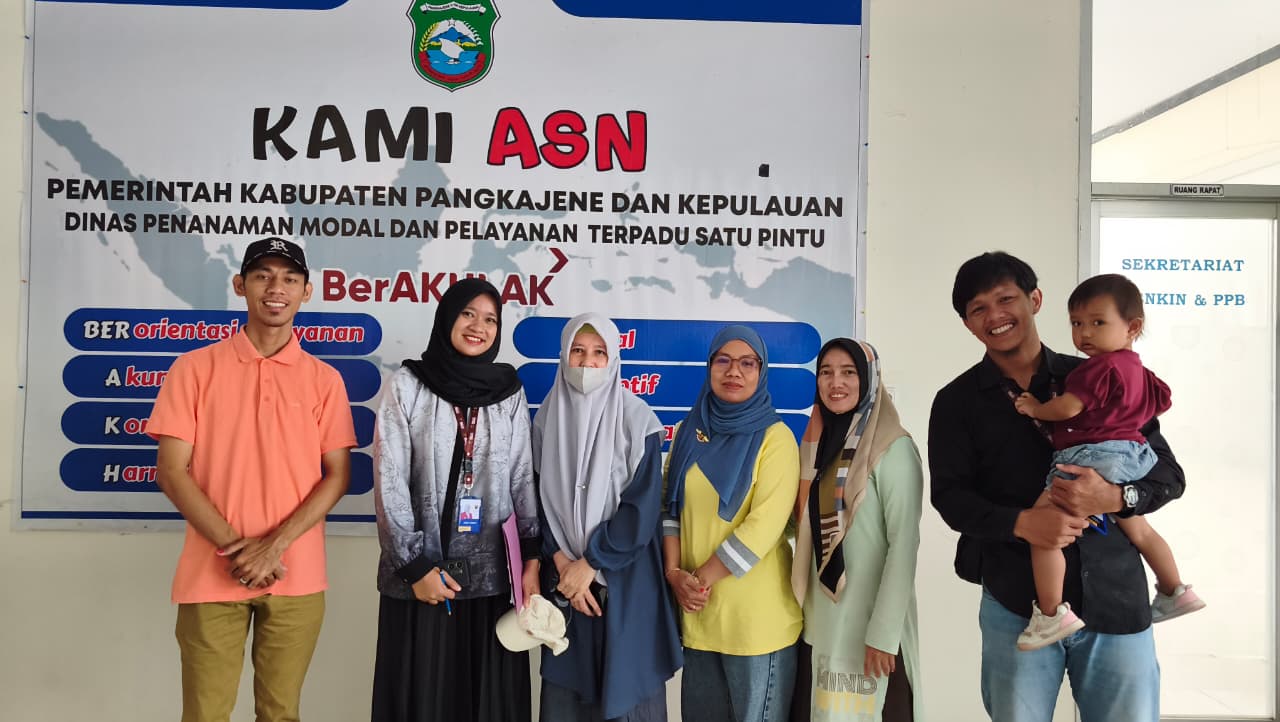
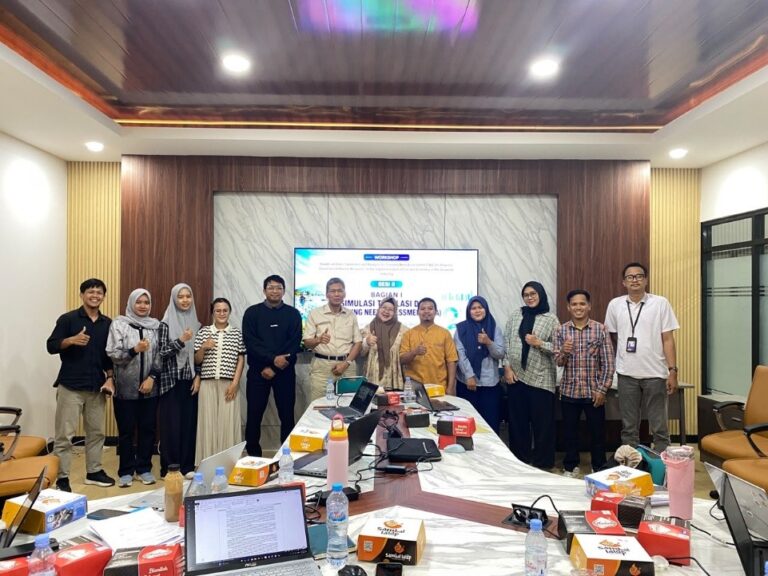
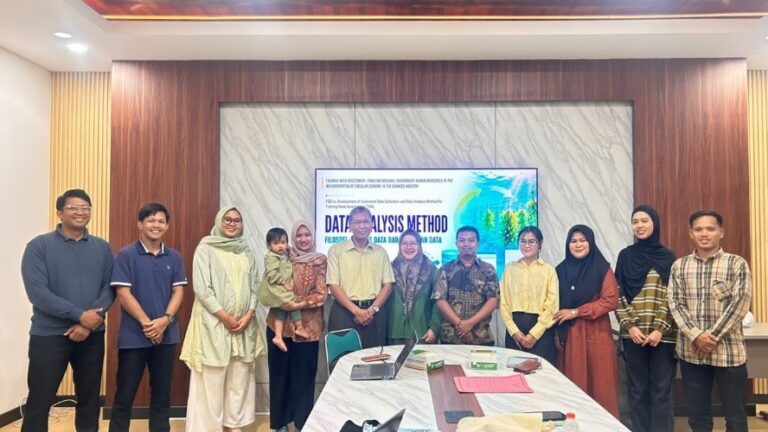
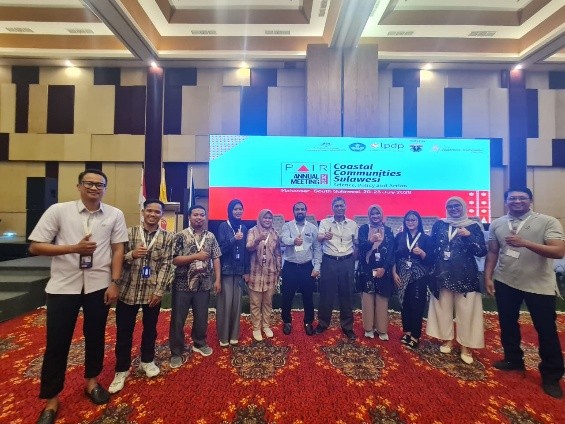
Pangkep, Indonesia — A PAIR Program visit to the One-Stop Integrated Service of Pangkep Regency was conducted on 24 April 2026 as part of a discussion and interview activity aimed at gaining a deeper understanding of policies, institutional roles, and inter-agency linkages in supporting community empowerment, particularly in relation to seaweed farming. The activity involved six participants and provided an opportunity to explore institutional perspectives on how public services and policy frameworks can support the development of economic activities within coastal communities. In coastal development, the success of seaweed farming depends not only on farmers’ production capacity. Institutional factors and governance also play an important role in ensuring that communities can access relevant information, public services, procedures, and government support. In this context, the visit to PTSP provided an important opportunity to understand how public service systems and institutional coordination can contribute to a broader framework of community empowerment.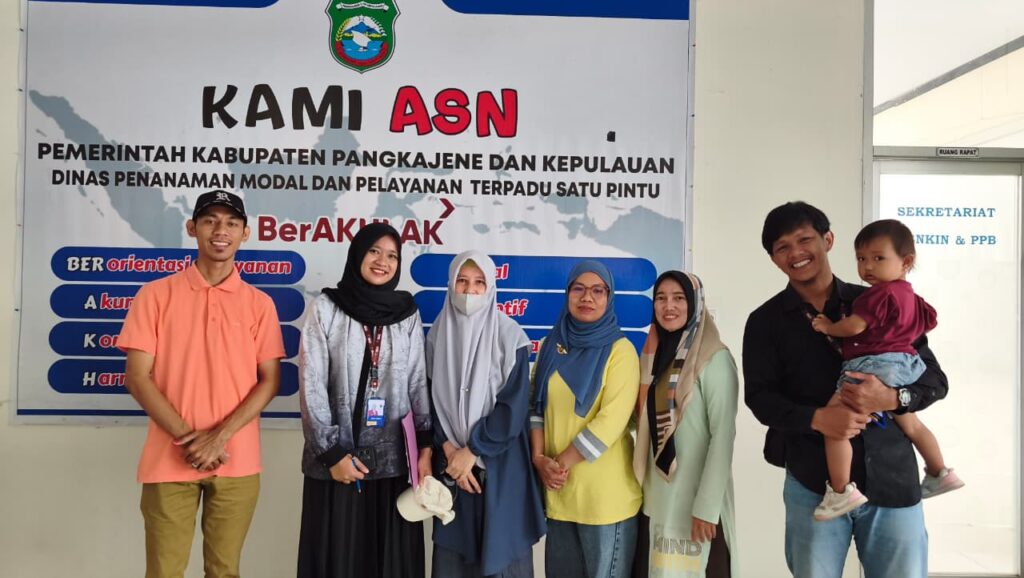 Through discussions and interviews, participants explored the relationship between public services, regional policies, and community needs in the development of the seaweed sector. The interaction also highlighted the importance of connectivity among government institutions. Community empowerment requires policies that are not only established administratively but can also be translated into accessible services and forms of support that are understandable and relevant to local conditions. The activity was closely related to SDG 1 (No Poverty) because stronger governance and access to institutional support can help create a more enabling environment for coastal livelihoods. When communities have better access to information and public services, opportunities to develop economic activities based on local resources can also be strengthened. The knowledge-exchange dimension of the activity supported SDG 4 (Quality Education). Discussions and interviews served as a form of field-based learning that connected academic perspectives with institutional experiences. This process demonstrated that understanding development policies requires more than examining formal documents; it also requires observing how policies, services, and institutional relationships respond to community needs.
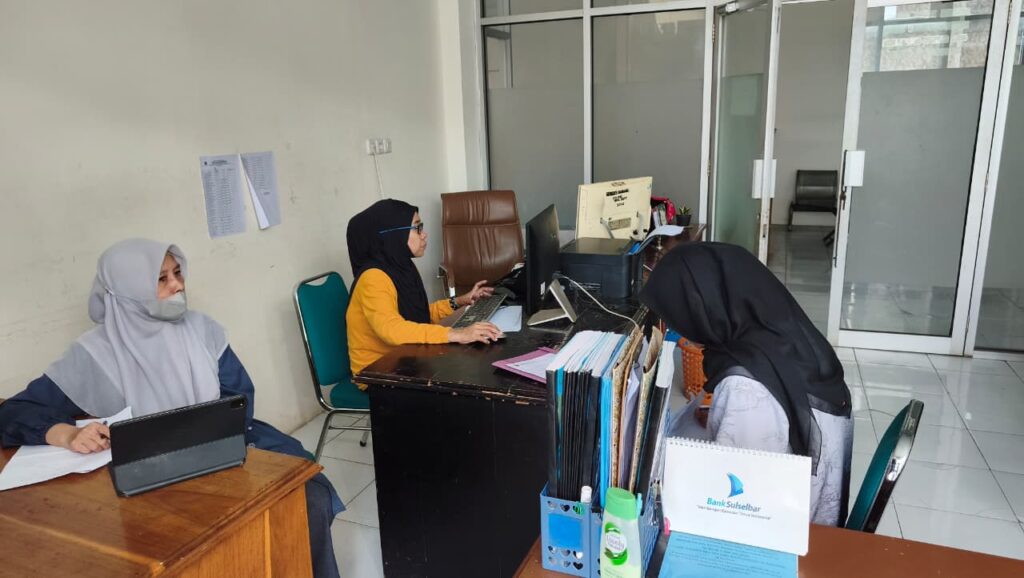 From an environmental perspective, seaweed farming is also connected to SDG 14 (Life Below Water). The use of coastal areas for economic activities needs to be supported by governance approaches that consider the sustainability of marine resources and coastal environments. Institutional coordination can therefore contribute to ensuring that economic development remains aligned with responsible resource management. Furthermore, the visit supported SDG 17 (Partnerships for the Goals) by strengthening communication between the PAIR Program and local government institutions. Cross-institutional collaboration is essential for connecting policies, public services, knowledge, and community needs within a shared development framework. Overall, the PAIR Program visit to PTSP Pangkep provided valuable insight into the importance of integrated governance in supporting community empowerment through seaweed farming. Responsive public services, institutional coordination, and open communication can become important components of an enabling policy ecosystem that supports coastal communities in a more inclusive and sustainable manner.