MAKASSAR, Indonesia September 1 2020/MARGO/ Beneath the turquoise waters off the coast of South Borneo lies a hidden treasure—not of gold or pearls, but of something equally valuable in today’s global economy: seaweed. Kappaphycus alvarezii, the red seaweed that produces carrageenan—a jelly-like substance used in ice cream, toothpaste, cosmetics, and pharmaceuticals—is in high demand worldwide. But in the Kotabaru Regency of South Kalimantan, a vast potential remains largely untapped.
A study published on 1 September 2020 in the IOP Conference Series: Earth and Environmental Science (Publisher: IOP Publishing) titled “Feasibility study of seaweed farming Kappaphycus alvarezii in Sub-District North Pulau Laut and Sub-District East Pulau Laut Kota baru Regency, South Borneo, Indonesia” set out to change that. Researchers from Hasanuddin University conducted a comprehensive feasibility analysis to determine whether the coastal waters of Pulau Laut Utara and Pulau Laut Timur districts could support large-scale seaweed farming.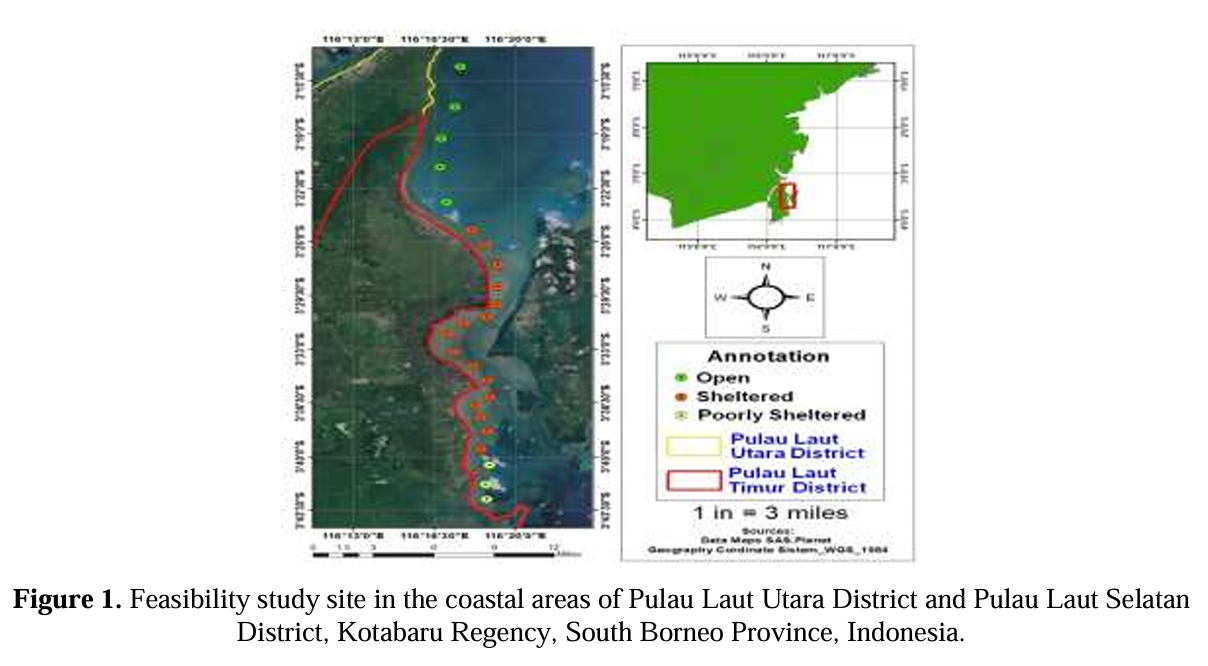
The answer is a resounding yes. After measuring 12 physical and chemical water parameters—including temperature, salinity, current speed, dissolved oxygen, nutrients, and water depth—the researchers found that a staggering 11,499 hectares of coastal waters are suitable for seaweed cultivation. This represents 66% of the total surveyed area. The waters’ carrying capacity can support nearly 19,000 cultivation units, each capable of producing 7 to 8.5 kilograms of dried seaweed per harvest.
The numbers are impressive. With four harvest seasons per year, this area could produce between 79,783 and 96,880 tons of dried seaweed annually. With five harvests, production could reach up to 121,100 tons per year. To put this in perspective, Kotabaru Regency currently produces only 189 tons per year—meaning this region has the potential to increase production by over 500 times.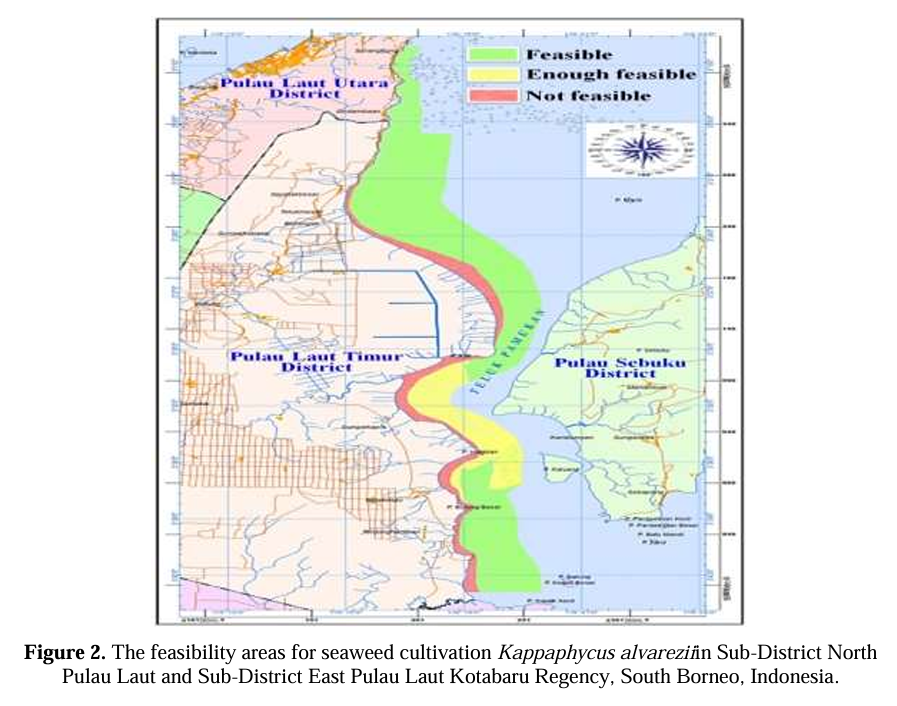
But potential alone is not enough. The study identified three priority strategies to turn this potential into reality: improving both the quantity and quality of seaweed production, utilizing all suitable land based on carrying capacity, and strengthening research and development through partnerships between universities, government, and private companies.
This research directly supports the United Nations’ Sustainable Development Goal 14: Life Below Water. By identifying and promoting sustainable aquaculture areas, it helps protect marine ecosystems from overexploitation while creating economic opportunities for coastal communities. It also contributes to poverty reduction (SDG 1) by providing livelihoods for thousands of farmers. With the right strategies, these waters could transform from a hidden treasure into a thriving, sustainable industry—benefiting both people and the planet.
Reference
DOI:
https://iopscience.iop.org/article/10.1088/1755-1315/564/1/012026/pdf
Contact:
Prof. Dr. Ir. Ambo Tuwo DEA
+628124206391
ambotuwo62@gmail.com