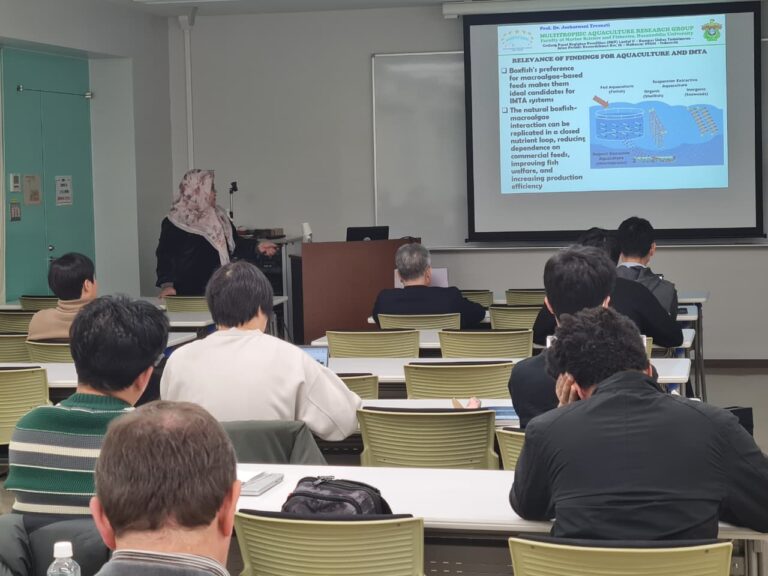
MAKASSAR, Indonesia Mei 1 2021/MARGO/ Imagine a shrimp farmer staring at a pond full of thousands of hungry, growing shrimp. The biggest fear isn’t predators or disease—it’s suffocation. In crowded ponds, shrimp consume oxygen rapidly. If levels drop too low, the entire harvest dies within hours. To prevent this, farmers rely on giant paddlewheel aerators that churn the water like oversized eggbeaters. But these machines come with a massive problem: they are energy guzzlers.
A groundbreaking study published on 1 May 2021 in the journal IOP Conference Series: Earth and Environmental Science (Publisher: IOP Publishing) titled “Environmentally friendly turbo jet aerator for sustainable multitrophic aquaculture” offers a game-changing solution. Researchers from Hasanuddin University in Indonesia have developed a prototype called the RA-TJA-SG1—a submersible turbo jet aerator that consumes just 40 watts of power. To put that in perspective, traditional paddlewheel aerators require 1 horsepower, which is approximately 750 watts, to produce just one ton of shrimp.
The RA-TJA-SG1 works like an underwater jet engine. Its waterproof brushless DC motor draws air from the surface and injects it directly into the water as tiny bubbles. Because the motor sits completely submerged, it stays cool, lasts longer, and runs more efficiently. Even more exciting, the prototype is designed to run on sustainable solar energy or batteries, making it accessible to remote coastal communities. 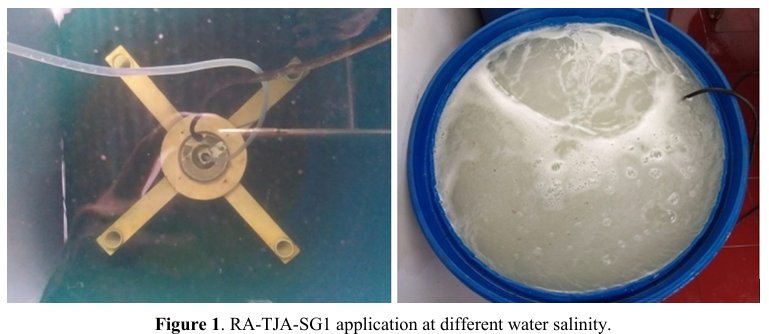
The results from laboratory tests are remarkable. The researchers tested the aerator in water with different salt levels (30 to 45 parts per thousand) to simulate real-world pond conditions. Before turning on the device, dissolved oxygen levels hovered between 2.4 and 4.0 parts per million (ppm). Within just three minutes of operation, the RA-TJA-SG1 boosted oxygen concentrations to over 7 ppm—well above the ideal range of 4 to 6 ppm needed for intensive shrimp farming. Even more impressive, the aerator maintained a constant oxygen supply regardless of water salinity, avoiding the fluctuations that plague traditional paddlewheel systems. 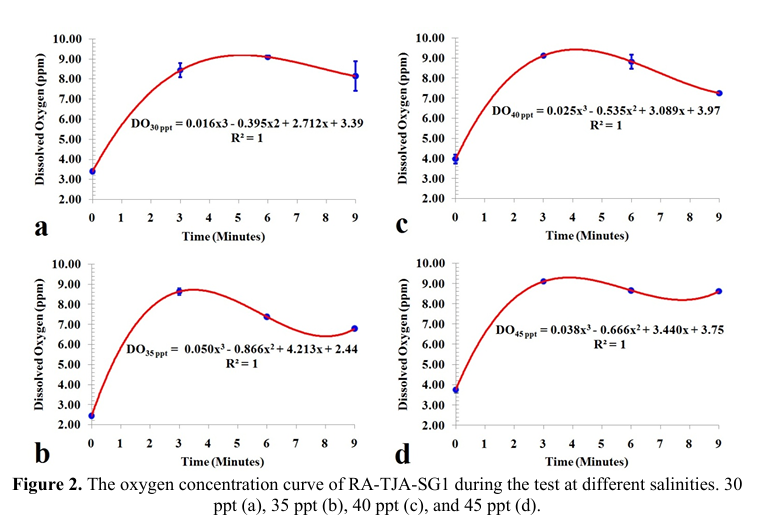
This innovation directly supports the United Nations’ Sustainable Development Goal 14: Life Below Water. By reducing energy consumption and promoting the use of renewable energy in aquaculture, it helps protect marine ecosystems from the environmental damage caused by fossil fuel dependency. Additionally, by lowering production costs, this technology helps small-scale farmers improve their livelihoods (SDG 1) and contributes to building sustainable food systems (SDG 2). 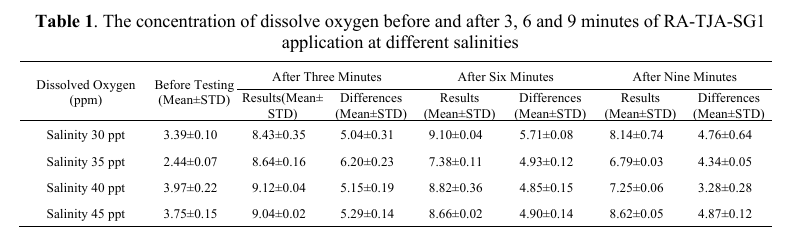
For farmers, this means lower electricity bills, healthier shrimp, and more predictable harvests. For the planet, it means less carbon emissions and more sustainable use of ocean resources. The researchers emphasize that while this is still a laboratory-scale prototype, the pathway to commercial application is clear. A small, affordable, solar-powered aerator could transform shrimp farming from an energy-intensive industry into a model of sustainable blue economy—proving that sometimes, the smallest innovations make the biggest waves.
Reference
DOI:
10.1088/1755-1315/763/1/012035
Contact:
Prof. Dr. Ir. Ambo Tuwo DEA
+628124206391
ambotuwo62@gmail.com