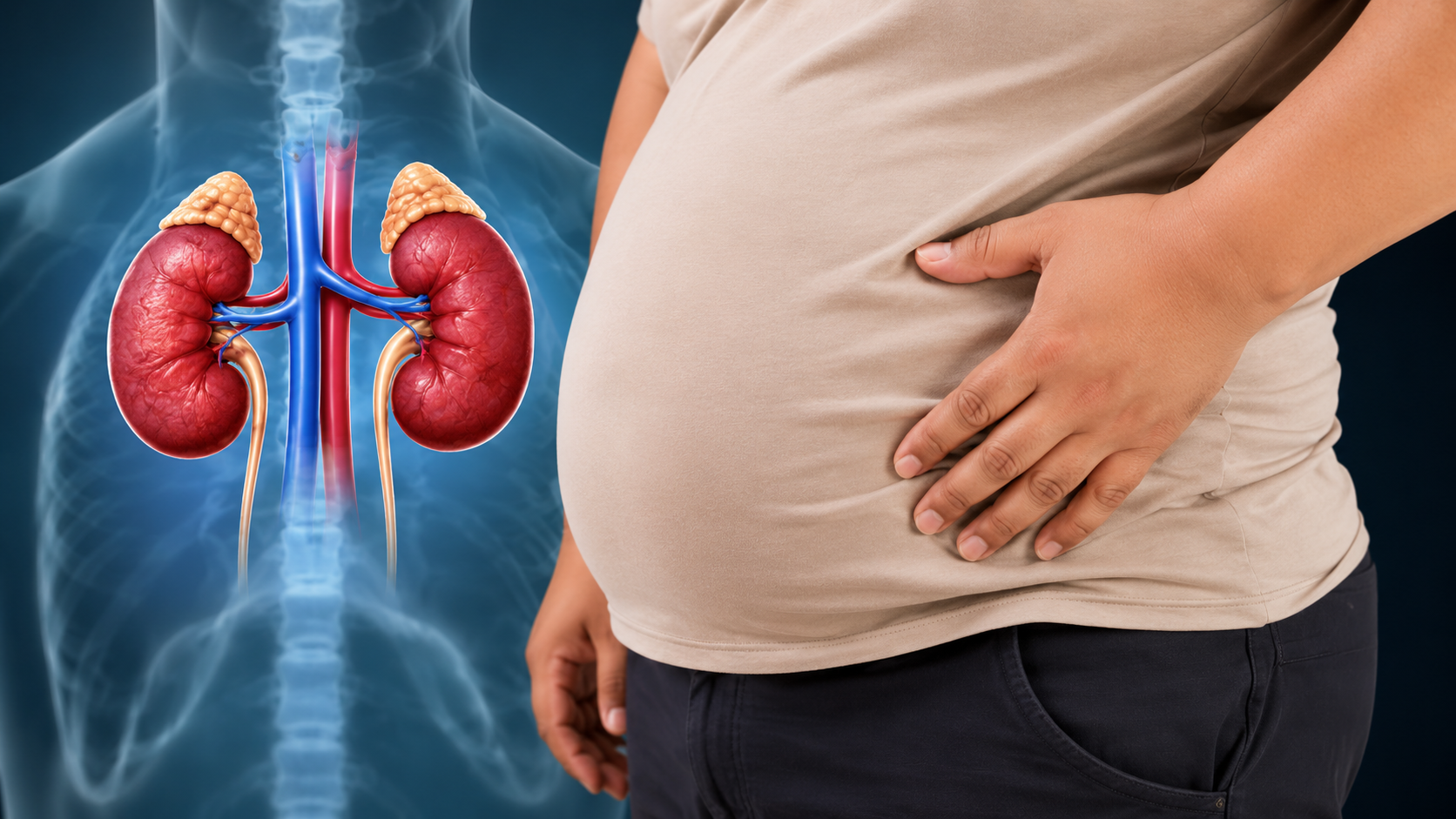

Obesity is often discussed in terms of body weight, appearance, diabetes, or heart disease. But there may be another organ quietly affected by excess body fat: the kidneys.
The kidneys work continuously to filter waste and maintain the body’s fluid balance. Because kidney problems can develop gradually, early warning signs are important. A recent study explored whether a molecule called Endothelin-1 (ET-1) could provide clues about changes occurring in the kidneys of young adults with obesity.
ET-1 is a substance produced by blood vessel cells and other tissues. One of its important actions is narrowing blood vessels. In the kidneys, excessive activity of ET-1 may affect blood flow and contribute to processes associated with kidney damage.
The researchers investigated 58 young adults aged 19–25 years, comparing participants with obesity and those without obesity. They measured ET-1 in urine and assessed kidney function using three common indicators: urea, creatinine, and estimated glomerular filtration rate (eGFR).
The results revealed an interesting pattern. Urinary ET-1 was significantly higher among participants with obesity. The median ET-1 concentration was 92.27 ng/L in the obesity group, compared with 74.41 ng/L in the non-obese group. This difference was statistically significant.
However, the researchers did not find a statistically significant difference in urea, creatinine, or eGFR between the groups. In other words, the participants with obesity had higher urinary ET-1, but their standard kidney-function measurements were not yet clearly worse.
This finding is important because it may suggest that biological changes can appear before obvious kidney-function abnormalities are detected by routine measurements. The researchers note that the young age of the participants and possibly the relatively short duration of obesity could help explain why clear kidney impairment was not yet observed.
Still, ET-1 should not be interpreted as a diagnostic test for kidney disease based on this study alone. The researchers found no significant correlation between urinary ET-1 and urea, creatinine, or eGFR. Larger and longer-term studies are needed to understand whether elevated ET-1 predicts future kidney problems.
The practical message is simple: kidney health deserves attention even when you are young and feel healthy. Maintaining a healthy body weight, staying physically active, eating a balanced diet, and having appropriate health checks can help reduce long-term risks.
This research supports SDG 3: Good Health and Well-Being by highlighting the importance of early awareness of health risks associated with obesity. Protecting health is not only about treating disease after it appears—it is also about recognizing possible warning signals early.
Obesity may not always cause immediate symptoms, but the body can still be changing beneath the surface. Understanding those changes could help us move from late treatment toward earlier prevention.
Article Metadata
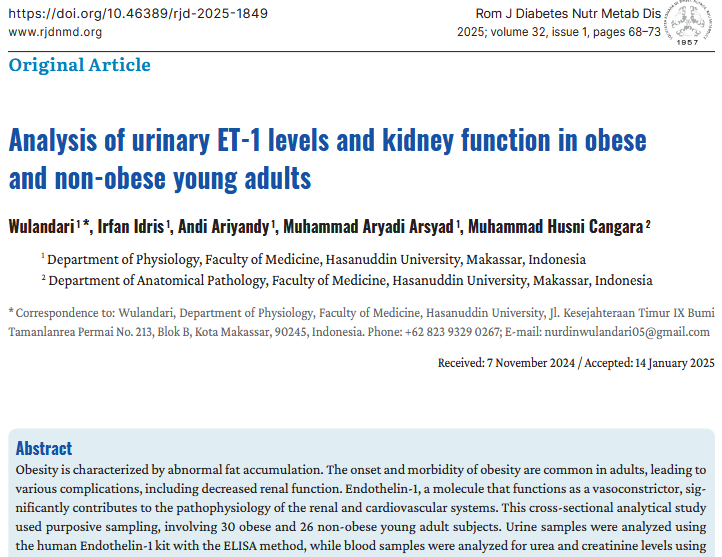
Article title: Analysis of urinary ET-1 levels and kidney function in obese and non-obese young adults
Journal: Romanian Journal of Diabetes, Nutrition and Metabolic Diseases 2025;32(1):68–73
Publisher: Sanatatea Press Group on behalf of the Romanian Society of Diabetes Nutrition and Metabolic Diseases
Publication date: 2025
DOI: https://doi.org/10.46389/rjd-2025-1849
Authors: Wulandari; Irfan Idris; Andi Ariyandy; Muhammad Aryadi Arsyad; Muhammad Husni Cangara
Aryadi Asryad
Email: aryadi.arsyad@med.unhas.ac.id