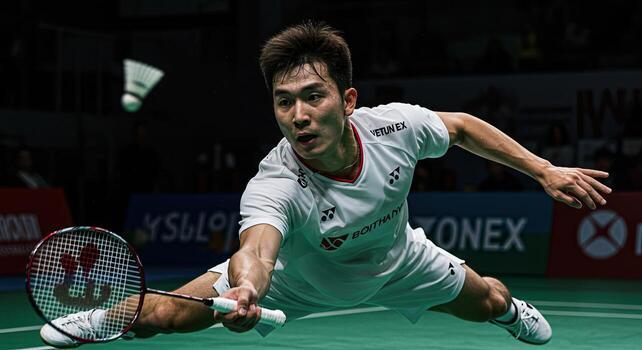

Have you ever wondered whether the time you exercise can affect more than just your performance? For badminton athletes, the answer may be yes. A recent study published in the Journal of Human Sport and Exercise suggests that when athletes train could influence their sleep and the level of oxidative stress in their bodies.
Exercise is widely known as a healthy habit. It can improve fitness, support metabolism, and help people maintain a healthier lifestyle. However, our bodies do not work in exactly the same way throughout the day. Behind our daily activities is a biological clock called the circadian rhythm, which helps regulate sleep, hormones, body temperature, and other physiological functions.
Researchers from Hasanuddin University and several other institutions investigated whether training in the morning or evening produced different physiological responses in junior badminton athletes. The study involved 44 athletes aged 10–16 years, divided into a morning-training group and an evening-training group. The researchers examined melatonin, malondialdehyde (MDA), insomnia, and stress levels.
One of the most interesting findings involved melatonin, a hormone strongly associated with the body’s sleep–wake cycle. Athletes who trained in the morning had higher average melatonin levels than those who trained in the evening. Although the difference was not statistically significant, the pattern suggests that exercise timing may interact with the body’s natural biological rhythm.
The differences became clearer when researchers looked at MDA, a biomarker associated with lipid oxidation and oxidative stress. Evening athletes had higher MDA levels than morning athletes, and the difference was statistically significant. In simple terms, their bodies showed greater signs of oxidative stress after evening training.
Sleep was another important piece of the puzzle. Athletes who trained in the evening recorded substantially higher insomnia scores than those who trained in the morning. The difference was statistically significant. This suggests that intense physical activity later in the day may make it more difficult for some young athletes to obtain good-quality sleep.
Interestingly, stress told a different story. Although morning athletes had a slightly higher average stress score, the difference between morning and evening groups was not statistically significant. This means training time alone cannot be assumed to determine athletes’ stress levels.
The message is not that evening exercise is “bad.” Rather, the findings remind us that timing matters, especially when exercise is intense and performed close to bedtime. For young athletes, balancing training, recovery, and sleep may be just as important as the training itself.
This research supports SDG 3: Good Health and Well-Being by highlighting an often-overlooked part of a healthy lifestyle: not only exercising regularly, but also considering when we exercise and allowing the body enough time to recover.
So, the next time you put on your badminton shoes, ask yourself: Is my body ready to play—or is it already preparing for sleep?
Article Metadata
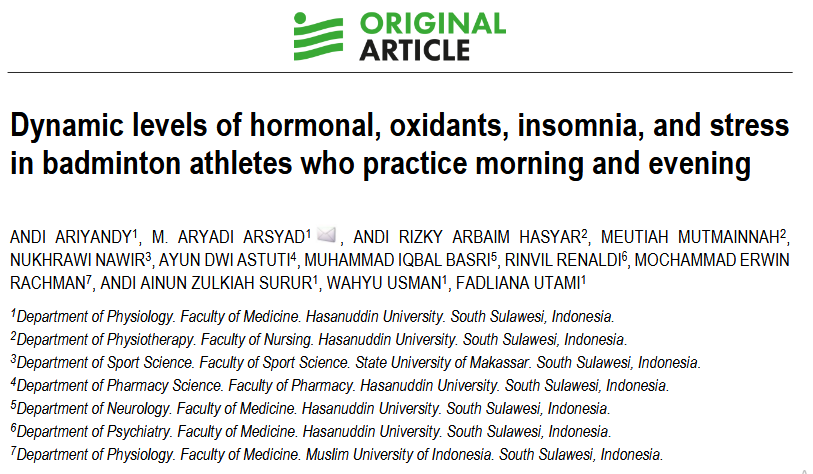
Article title: Dynamic levels of hormonal, oxidants, insomnia, and stress in badminton athletes who practice morning and evening
Journal: Journal of Human Sport and Exercise 2024;19(2):522–535
Publisher: Asociación Española de Análisis del Rendimiento Deportivo, Spain
Publication date: 1 April 2024
DOI: https://doi.org/10.55860/wvm7n911
Authors: Andi Ariyandy; M. Aryadi Arsyad; Andi Rizky Arbaim Hasyar; Meutiah Mutmainnah Abdullah; Nukhrawi Nawir; Ayun Dwi Astuti; Muhammad Iqbal Basri; Rinvil Renaldi; Mochammad Erwin Rachman; Andi Ainun Zulkiah Surur; Wahyu Usman; Fadliana Utami
Aryadi Asryad
Email: aryadi.arsyad@med.unhas.ac.id