

Electronic cigarettes are often marketed as a safer alternative to conventional smoking. Many users believe that vaping reduces health risks, especially compared to traditional cigarettes. However, emerging scientific evidence suggests that this assumption may not be entirely accurate. A recent experimental study published in Gaceta Médica de Caracas provides new insights into how electronic cigarettes may affect brain health more severely than conventional cigarettes.
The study, conducted by Prabawati and colleagues, aimed to compare the effects of electronic cigarette smoke and conventional cigarette smoke on brain tissue and Brain-Derived Neurotrophic Factor (BDNF) levels. BDNF is a protein that plays an important role in maintaining brain cells, supporting learning, and protecting neurons from damage. While higher BDNF levels can indicate protective responses, they may also reflect stress or injury within the brain.
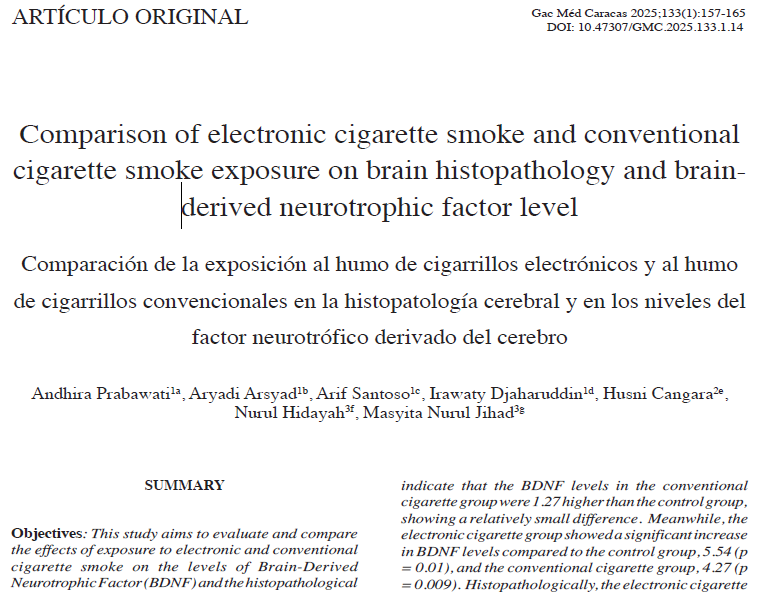
In this study, researchers divided 24 male Wistar rats into three groups: a control group with no smoke exposure, a group exposed to conventional cigarette smoke, and another group exposed to electronic cigarette vapor. The exposure lasted approximately 30 days. The results revealed a surprising outcome. Rats exposed to electronic cigarette vapor showed the highest increase in BDNF levels compared to both the control and conventional cigarette groups. This increase suggested that the brain was responding to potential damage caused by vaping exposure.
More concerning was the histopathological analysis. Brain tissue damage reached 79% in the electronic cigarette group, compared to 75% in the conventional cigarette group and only 25% in the control group. These findings suggest that electronic cigarette exposure may cause more severe brain damage than traditional cigarettes.
These findings challenge the widespread perception that vaping is harmless. Although electronic cigarettes may contain fewer toxic substances than conventional cigarettes, they still expose users to harmful chemicals, nicotine, and fine particles that may affect brain development and function. Health authorities also warn that nicotine exposure can harm attention, learning, and mood regulation, particularly in younger individuals whose brains are still developing.
This research strongly relates to Sustainable Development Goal (SDG) 3: Good Health and Well-Being, which emphasizes reducing harmful substances and promoting healthier lifestyles. Public awareness about vaping risks is essential to prevent long-term neurological damage and reduce nicotine dependence in society.
Furthermore, improving public understanding of vaping risks also supports SDG 4: Quality Education, by promoting evidence-based health literacy, and SDG 17: Partnerships for the Goals, through collaboration between researchers, educators, and policymakers.
In conclusion, while electronic cigarettes are often promoted as safer alternatives, scientific evidence suggests they may pose significant risks to brain health. Public education and evidence-based policy are crucial to protecting communities from emerging health threats related to vaping.
Article Metadata
Article title: Comparison of electronic cigarette smoke and conventional cigarette smoke exposure on brain histopathology and brain-derived neurotrophic factor level
Journal: Gaceta Médica de Caracas 2025;133(1):157–165
Publisher: National Academy of Medicine (Academia Nacional de Medicina), Venezuela
Publication date: March 2025
DOI: https://doi.org/10.47307/GMC.2025.133.1.14
Authors: Andhira Prabawati; Aryadi Arsyad; Arif Santoso; Irawaty Djaharuddin; Husni Cangara; Nurul Hidayah; Masyita Nurul Jihad
Aryadi Asryad
aryadi.arsyad@med.unhas.ac.id