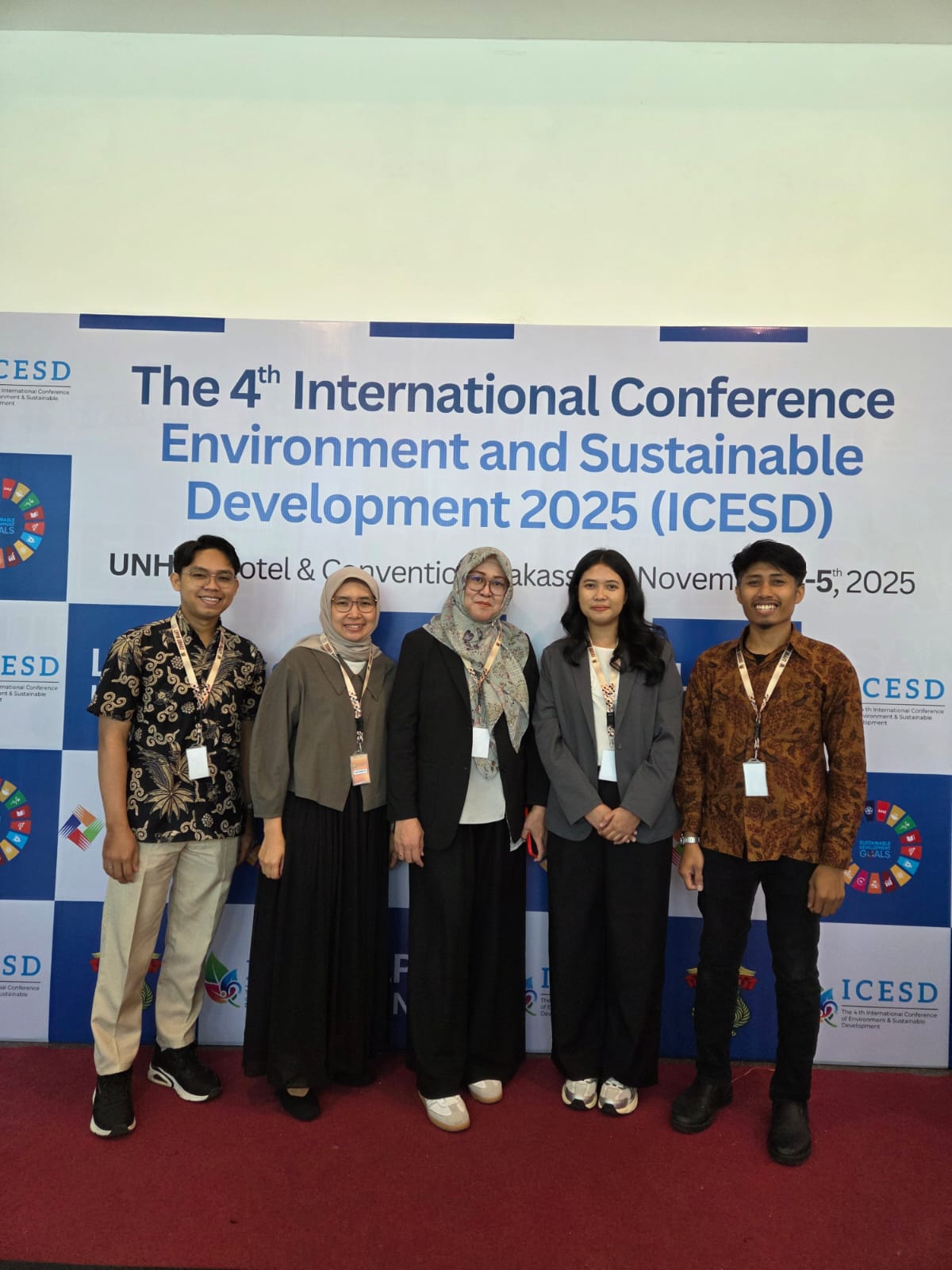

Our research team participated in the 4th International Conference on Environmental and Sustainable Development (ICESD) held at Unhas Hotel, Universitas Hasanuddin, Indonesia. As part of this scientific forum, we presented a poster entitled “Malaria Primates: Zoonotic Malaria Threat in Indonesia” under the Health Awareness topic. The conference brought together researchers, academics, and practitioners from various disciplines, providing a platform for knowledge exchange and interdisciplinary collaboration on issues related to sustainability and public health.
Our poster highlighted the emerging threat of zoonotic malaria in Indonesia, particularly the transmission of malaria parasites from non-human primates to humans. With increasing environmental changes, deforestation, and human encroachment into wildlife habitats, interactions between humans and primates are becoming more frequent. This situation raises concerns about the potential spillover of zoonotic diseases, including malaria caused by species such as Plasmodium knowlesi. Through this presentation, we aimed to raise awareness about the importance of integrating ecological, epidemiological, and molecular approaches to better understand and mitigate this public health risk.
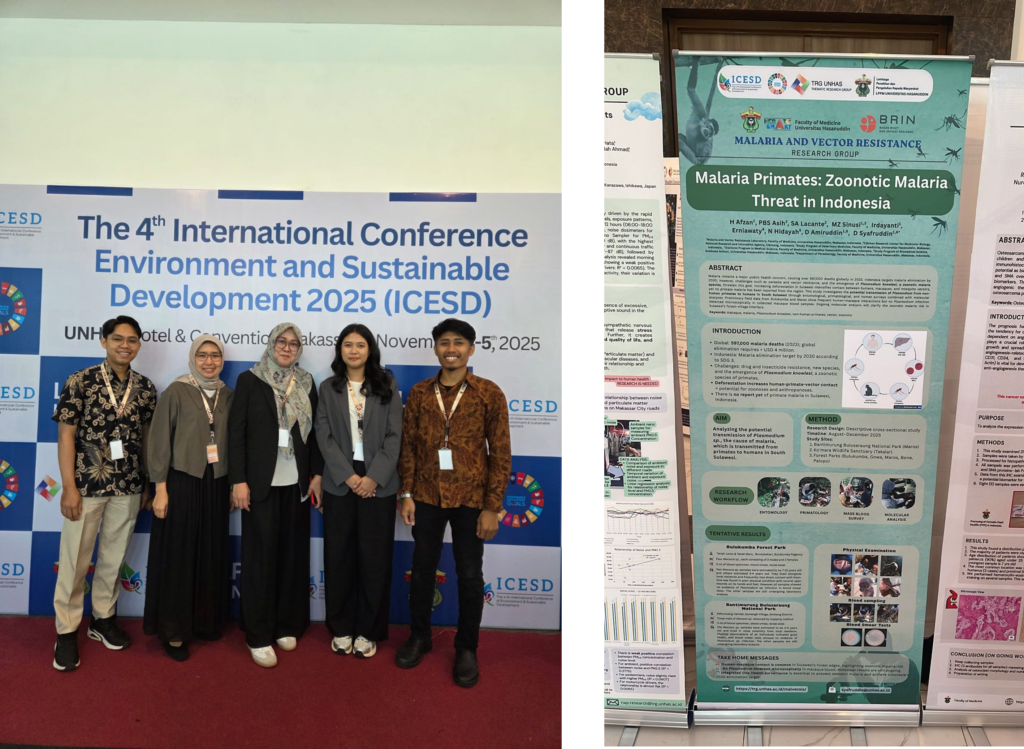
Left: drh. Muhammad Zulfadillah Sinusi, representing the research team, together with colleagues. Right: Poster presented during the Thematic Research Group (TRG) expo session at the 4th ICESD.
During the poster session, we engaged in discussions with fellow participants, including researchers, students, and conference attendees, who showed great interest in the topic. These interactions provided valuable feedback and opened opportunities for future collaboration. The exchange of ideas also allowed us to refine our research perspectives and identify potential areas for further investigation, particularly in the context of zoonotic disease surveillance and prevention strategies in Indonesia.
The activity was attended by a diverse group of participants from different institutions, contributing to a dynamic and inclusive academic environment. Although the number of participants presenting posters varied, the conference successfully facilitated meaningful scientific dialogue and strengthened networks among researchers. The supportive atmosphere encouraged early-career researchers to actively share their work and engage in constructive discussions.
This activity directly contributes to several Sustainable Development Goals (SDGs). It supports SDG 3 (Good Health and Well-being) by promoting awareness and research on zoonotic malaria, which is essential for improving disease prevention and public health strategies. It also contributes to SDG 4 (Quality Education) by providing a platform for scientific learning, knowledge dissemination, and academic exchange. Furthermore, it strengthens SDG 17 (Partnerships for the Goals) by fostering collaboration among researchers, institutions, and stakeholders. In addition, this initiative aligns with SDG 1 (No Poverty), as improved disease prevention can reduce healthcare costs and support community well-being. The topic is also relevant to SDG 15 (Life on Land), as it highlights the importance of maintaining ecosystem balance to reduce human-wildlife disease transmission risks.
Overall, the poster presentation at the 4th ICESD served as an important opportunity to share research findings, raise awareness about zoonotic malaria, and strengthen scientific collaboration. Through this activity, we reaffirm our commitment to advancing research that contributes to both environmental sustainability and public health improvement.