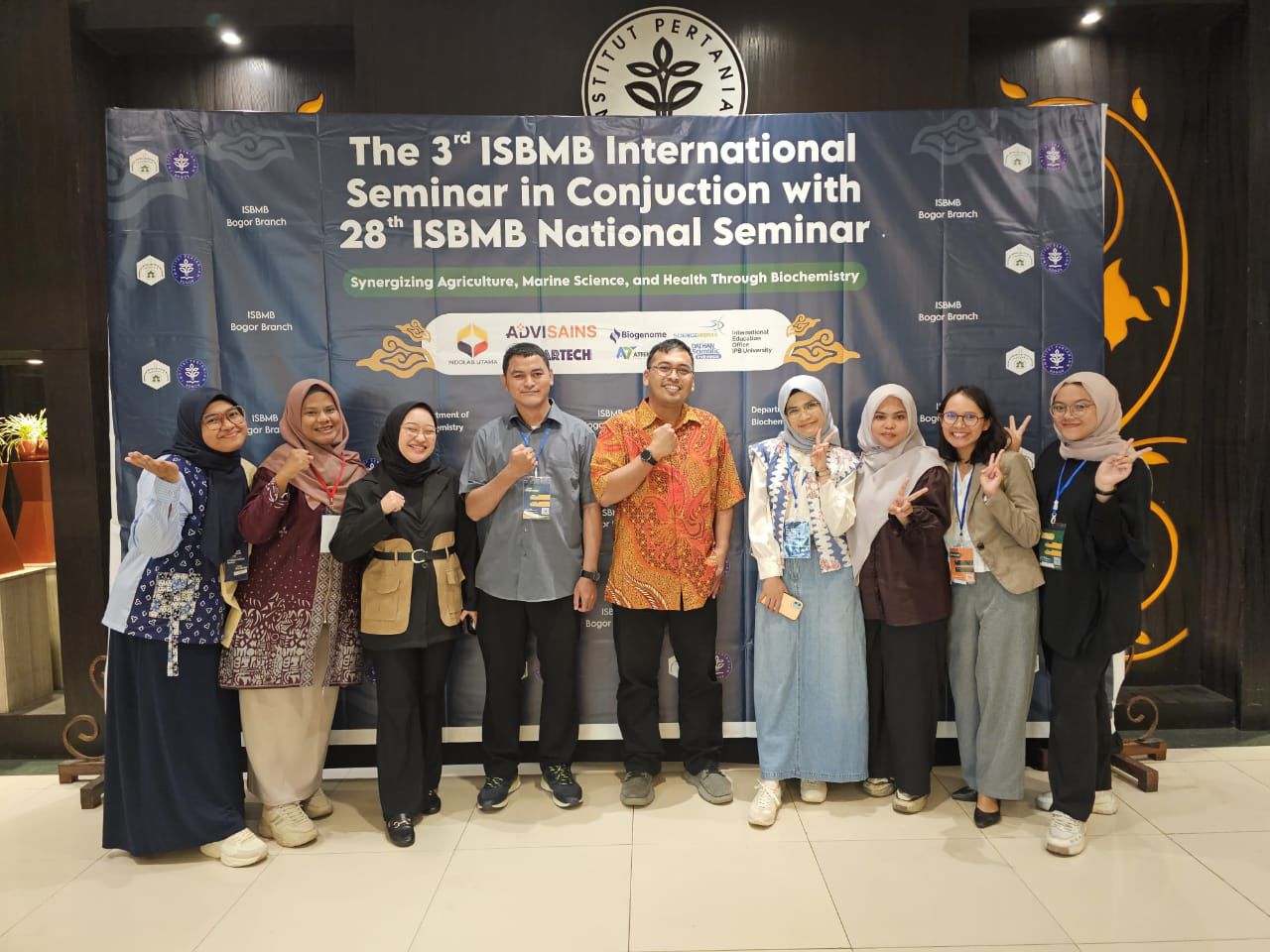

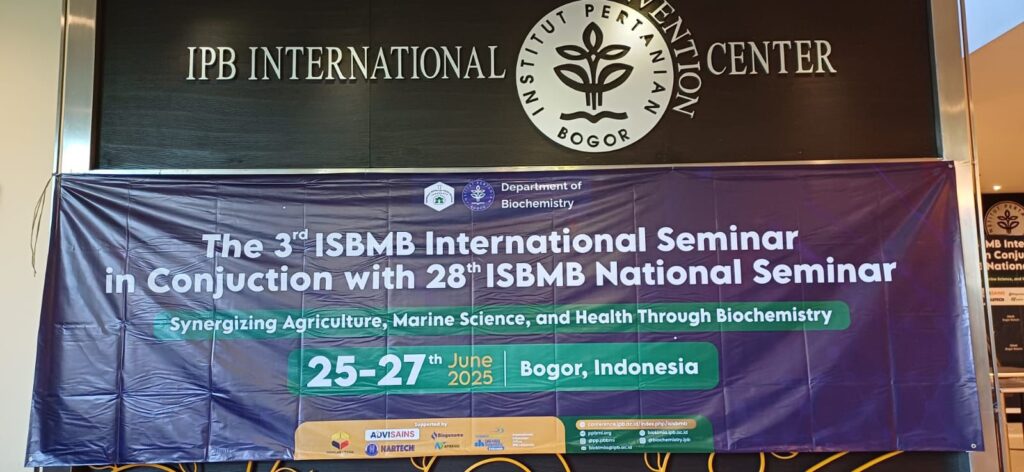
Bogor, June 25-27, 2025
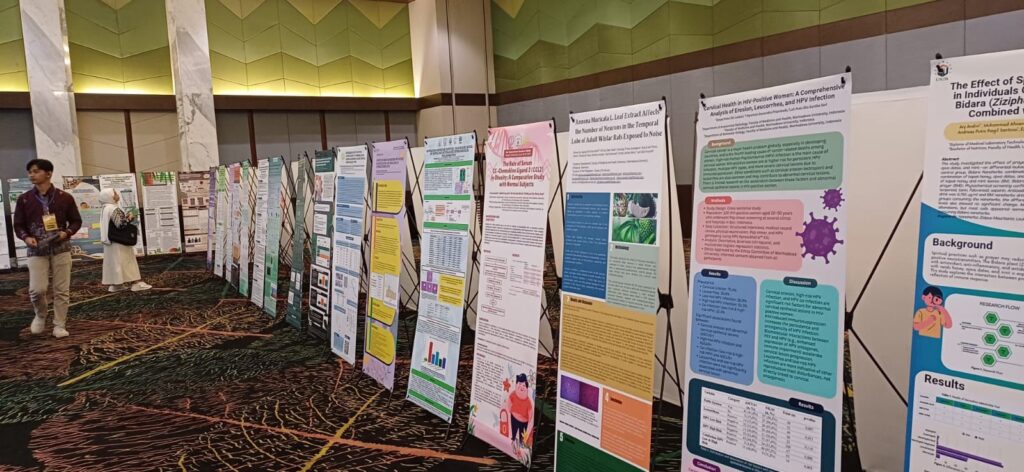
The Malaria and Vector Resistance Research Group actively participated in The 3rd ISBMB International Seminar on Biochemistry in Conjunction with the 28th ISBMB National Seminar, held on 25–27 June 2025 at the IPB International Convention Center, Bogor, Indonesia. Carrying the theme “Synergizing Agriculture, Marine Science, and Health through Biochemistry,” this event brought together 270 participants from universities, research institutions, and private sectors at both national and international levels. The seminar also featured distinguished invited speakers, including Prof. Thomas Günther Pomorski (Bochum University, Germany), Dr. Keni Vidilaseris (University of Helsinki, Finland), and Prof. Suzuki Toshisada (Kagawa University, Japan), fostering a dynamic platform for interdisciplinary knowledge exchange.
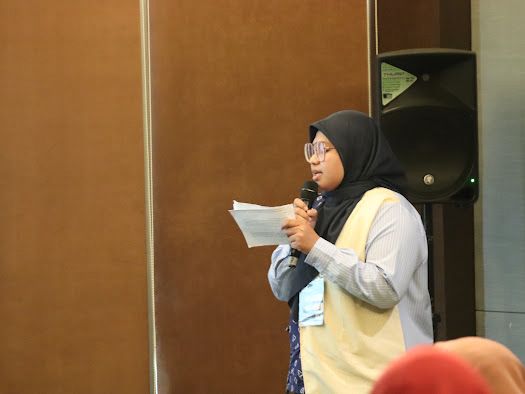
In this forum, the research findings were presented by Irdayanti, a staff member of the Malaria and Vector Resistance Research Group and a Master’s student in Biochemistry at IPB University. She delivered an oral presentation entitled “Genetic Profiles of Plasmodium falciparum Isolates from a Therapeutic Efficacy Study on the Antimalarial Drug Dihydroartemisinin-Piperaquine in the West Sumba and Kupang Districts of East Nusa Tenggara Province, Indonesia.” This study addressed the growing global concern of antimalarial drug resistance, particularly artemisinin resistance, which was first reported along the Thai-Cambodian border in 2009 and has since spread across Southeast Asia.
The presentation highlighted that dihydroartemisinin-piperaquine (DHA-PPQ), Indonesia’s first-line treatment since 2010, remains highly effective, with 100% adequate clinical and parasitological response (APCR) observed among study participants. No mutations associated with artemisinin or piperaquine resistance were detected in the Pfk13 and Pfcrt genes. However, early indications of piperaquine selection pressure were identified through Pfpm2 gene amplification in 24.39% of samples, underscoring the importance of continuous molecular surveillance and the exploration of extended artemisinin-based combination therapy (ACT) regimens.
This scientific contribution reflects a strong commitment to advancing evidence-based malaria control strategies, particularly in endemic regions such as East Nusa Tenggara. By integrating clinical findings with molecular analysis, the study supports the optimization of national treatment policies and reinforces the need for proactive monitoring to sustain the effectiveness of current therapies.
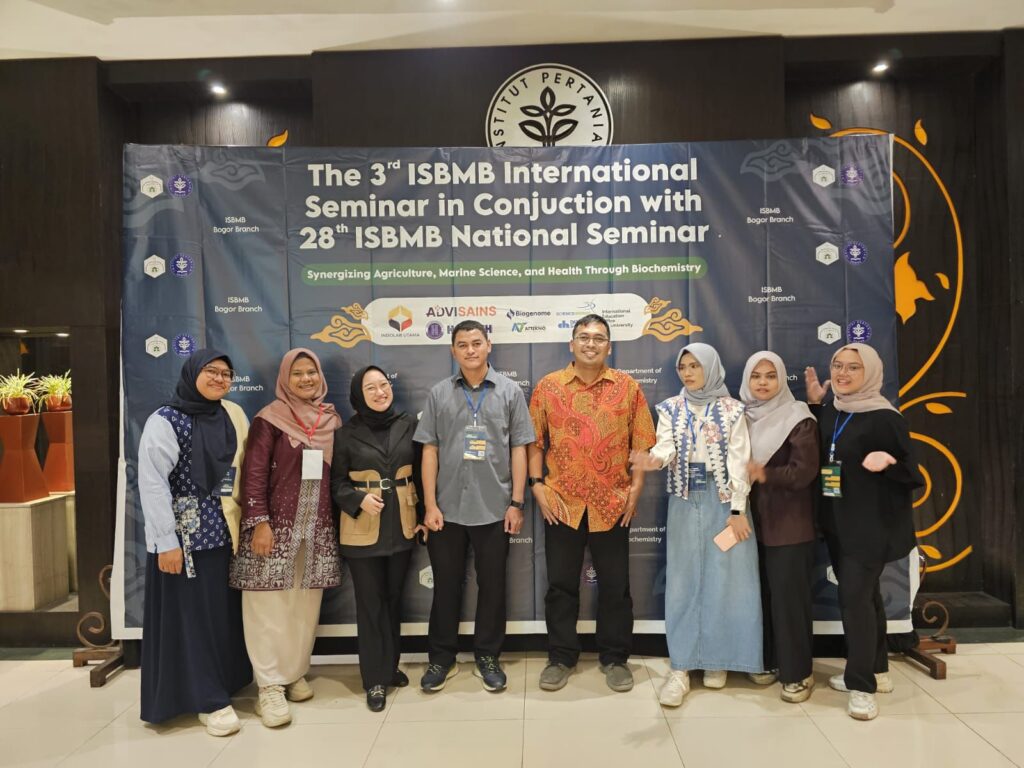
The participation of the research group in this international seminar aligns closely with several Sustainable Development Goals (SDGs). It directly contributes to SDG 3: Good Health and Well-being, by supporting malaria control and improving treatment outcomes. It also advances SDG 4: Quality Education, as the dissemination of scientific knowledge enhances research capacity and academic development, particularly for early-career researchers such as graduate students. Furthermore, it strengthens SDG 17: Partnerships for the Goals, by fostering collaboration with international experts and institutions. In addition, the seminar’s interdisciplinary approach resonates with SDG 14 (Life Below Water) and SDG 15 (Life on Land), highlighting the interconnectedness of environmental and human health, while indirectly supporting SDG 1 (No Poverty) by addressing malaria as a key barrier to economic productivity.
Overall, this activity demonstrates the essential role of collaborative research, capacity building, and scientific communication in addressing complex global health challenges. Through active engagement in international scientific forums, the Malaria and Vector Resistance Research Group continues to contribute to sustainable malaria control and global health advancement.