
Bulukumba, Indonesia, 15 February 2025
A small team of three researchers conducted a field survey in Lemo-lemo Village, Bulukumba Regency, with the primary objective of identifying locations with a high presence of macaque populations (Macaca spp.). This activity represents an important preliminary step in ecological and zoonotic research, aiming to better understand the spatial distribution of wildlife that may interact with human populations.
The survey was carried out through direct observation, informal interviews with local residents, and environmental assessment of potential habitats. The researchers involved in this activity included Irdayanti, dr. Hairul, and PhD student Erniawati. They explored forest edges, agricultural areas, and locations frequently reported by the community as common sites of macaque activity. These areas were selected based on their ecological characteristics, including food availability, vegetation cover, and proximity to human settlements. By combining scientific observation with local knowledge, the team was able to identify several key locations where macaques are frequently found.
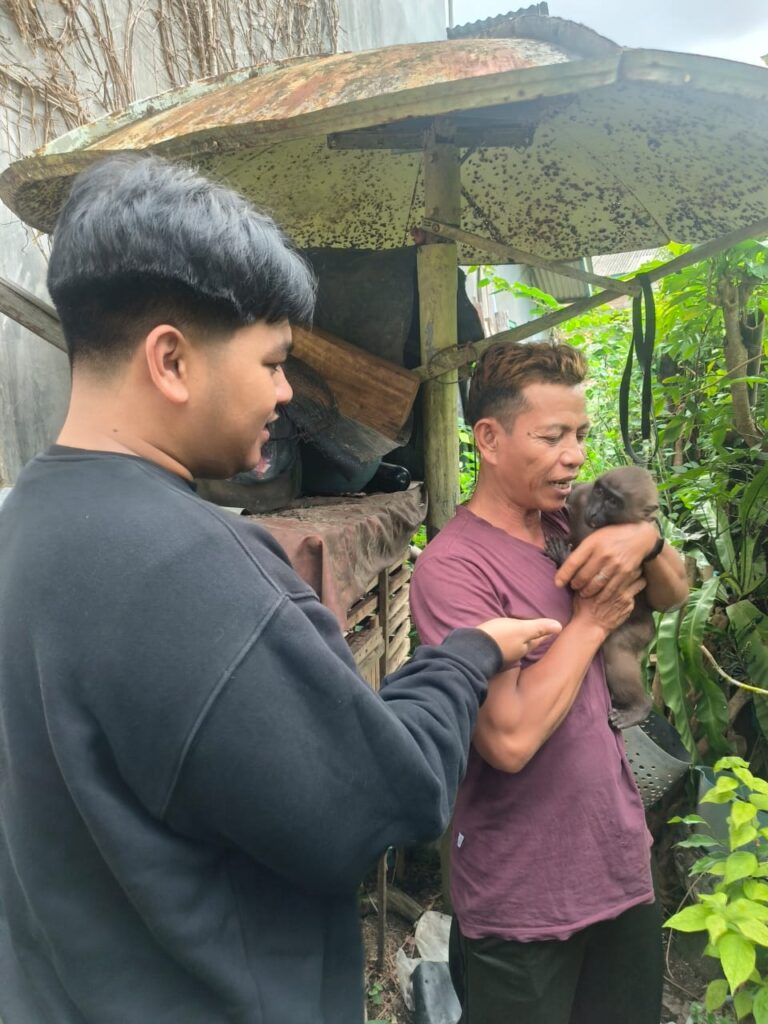
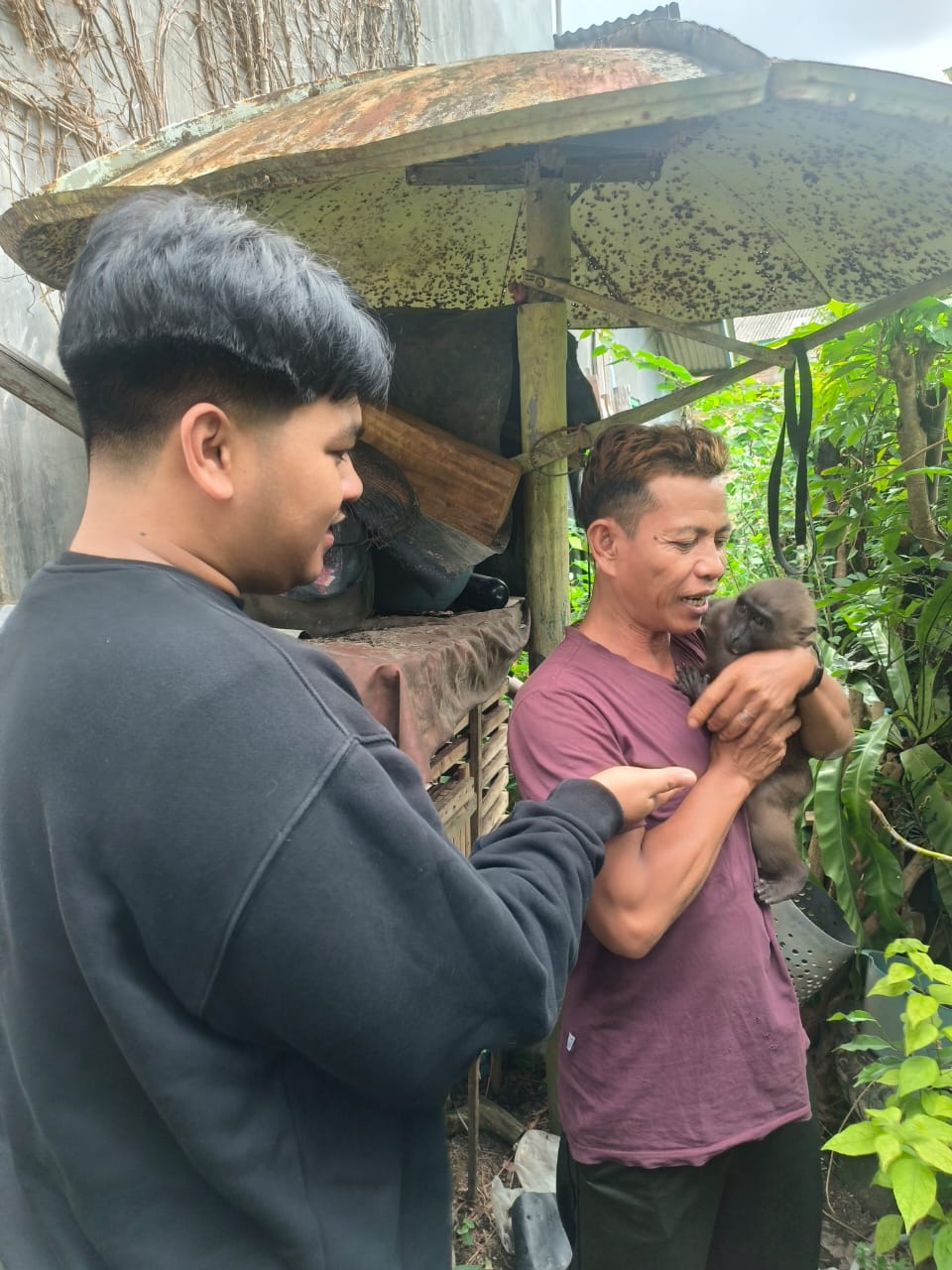
drh. Hairul with a local macaque and its caretaker during the field visit.
Understanding the distribution of macaques is essential for multiple reasons. Ecologically, macaques play a significant role in maintaining forest ecosystems, particularly through seed dispersal and vegetation dynamics. However, their increasing interaction with human environments can also raise concerns related to crop disturbance and potential zoonotic disease transmission. Therefore, identifying their habitats is a crucial step in developing strategies that balance conservation efforts with community well-being.
Despite the small number of participants, consisting of only three researchers, the survey was conducted systematically to ensure accurate and reliable findings. The team documented habitat characteristics, recorded sightings, and noted patterns of macaque activity throughout the day. This information will serve as baseline data for future studies, including more detailed ecological assessments and potential health-related investigations.
This activity contributes directly to several Sustainable Development Goals (SDGs). It supports SDG 15 (Life on Land) by enhancing understanding of wildlife distribution and promoting biodiversity conservation. Additionally, it aligns with SDG 3 (Good Health and Well-being) by providing essential information that can help assess and mitigate potential risks of zoonotic disease transmission between wildlife and humans. The survey also contributes to SDG 4 (Quality Education) by offering practical field experience and promoting scientific learning among researchers. Furthermore, it strengthens SDG 17 (Partnerships for the Goals) through collaboration between researchers and local communities. In the long term, this work may also contribute to SDG 1 (No Poverty), as sustainable management of wildlife and ecosystems can support livelihoods and reduce economic losses caused by human-wildlife conflict.
Overall, this field survey represents an important initial effort to map macaque distribution in Lemo-lemo Village. By integrating scientific methods with local insights, the activity not only generates valuable ecological data but also fosters awareness of the importance of coexistence between humans and wildlife. The findings are expected to inform future research, conservation planning, and community-based strategies that support both environmental sustainability and public health in the region for long-term sustainable development outcomes.