
In collaboration with the World Health Organization (WHO), the Ministry of Health of the Republic of Indonesia, the Eijkman Research Center for Molecular Biology (National Research and Innovation Agency/BRIN), and Hasanuddin University’s Institute for Research and Community Service (LPPM), our research team has officially launched the initial phase of a Therapeutic Efficacy Study (TES) in Keerom and Yapen Districts, Papua. This study aims to evaluate the therapeutic efficacy and safety of three antimalarial drug regimens—Dihydroartemisinin-Piperaquine (DHA-PPQ), Artesunate-Pyronaridine (ASPY), and Artemether-Lumefantrine (AL)—for the treatment of uncomplicated Plasmodium falciparum and Plasmodium vivax malaria infections.
As part of this ongoing research initiative, field activities were initiated at primary health centers (PHCs) to support patient recruitment and the implementation of clinical drug trials. These activities began in Keerom District on April 10 and continued in Yapen Island District on April 15, 2025. Prior to the initiation of fieldwork, the research team from Hasanuddin University and the Eijkman Research Center, BRIN, actively engaged with malaria program officers at the Papua Provincial Health Department and coordinated closely with District Health Office teams in Keerom and Yapen. This coordination ensured readiness at the PHC level and strengthened the integration of research activities within existing health systems.
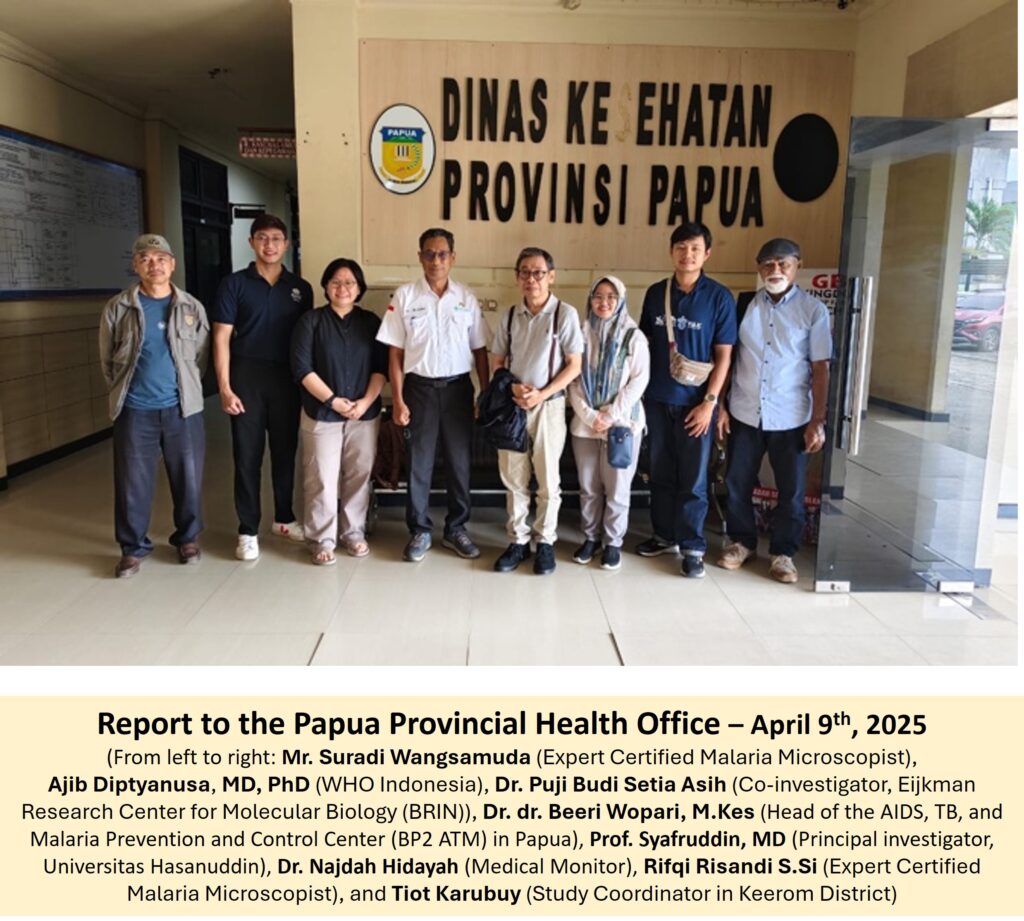
During the field visit conducted from April 9 to April 18, 2025, the research team collaborated with multiple PHCs to identify and engage potential study participants. This activity involved approximately 30 local PHC staff members who were trained to participate in and support this research. In each participating PHC, the team conducted on-site training sessions, including instruction on proper sample collection techniques and microscopy-based malaria diagnosis. These training activities were designed to ensure that all procedures aligned with WHO guidelines and the standardized TES protocol. The trained PHC teams play a crucial role in supporting patient recruitment and conducting follow-up visits, which are scheduled up to ten times over a 42-day period after treatment administration to monitor patient outcomes and drug efficacy.
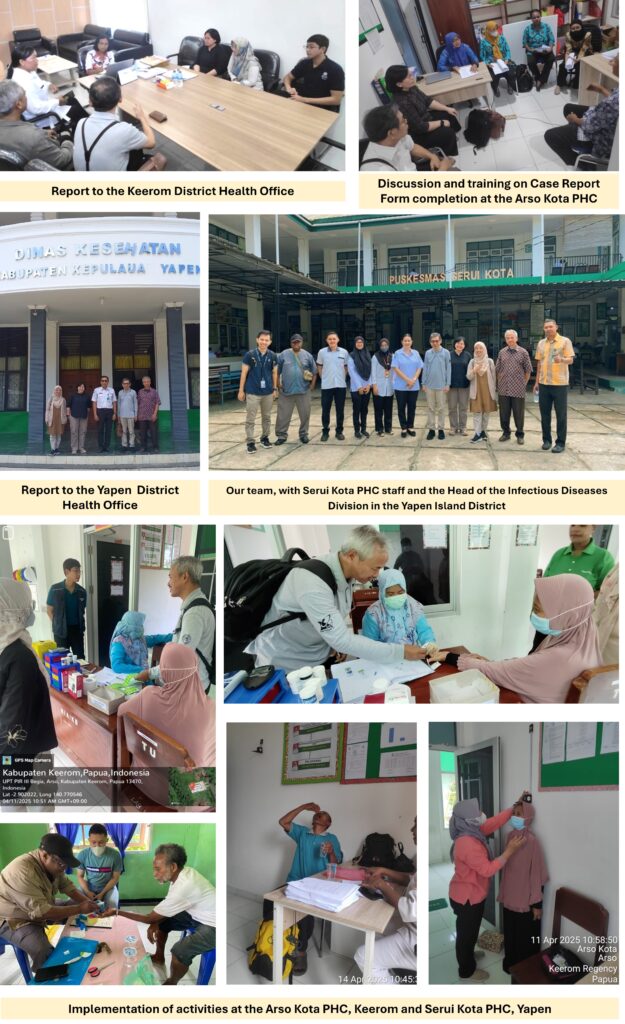
The successful implementation of this study relies heavily on strong collaboration and local engagement. We extend our sincere appreciation to the Papua Provincial Health Department, District Health Office teams in Keerom and Yapen, PHC staff, and all patients who have willingly participated in this important research. Their cooperation is essential for generating high-quality data that will inform national malaria treatment policies.
This activity directly contributes to several Sustainable Development Goals (SDGs). It strongly supports SDG 3 (Good Health and Well-being) by advancing efforts to improve malaria treatment and reduce disease burden. It also contributes to SDG 4 (Quality Education) through capacity building and hands-on training for healthcare workers in malaria diagnosis and research implementation. Furthermore, the study strengthens SDG 17 (Partnerships for the Goals) by fostering collaboration between international organizations, national institutions, and local health systems. In the long term, this research also aligns with SDG 1 (No Poverty), as reducing malaria incidence can lower healthcare costs and improve economic productivity in endemic communities.
Overall, the initiation of this TES marks a significant step toward strengthening malaria control strategies in Papua. By integrating research, training, and collaboration, this initiative is expected to generate critical evidence that will support more effective and sustainable malaria treatment policies in Indonesia.