


UNHAS Faculty of Animal Husbandry Students Participate in International Training at NTUA, Greece under the Erasmus+ ELEGTEG Program
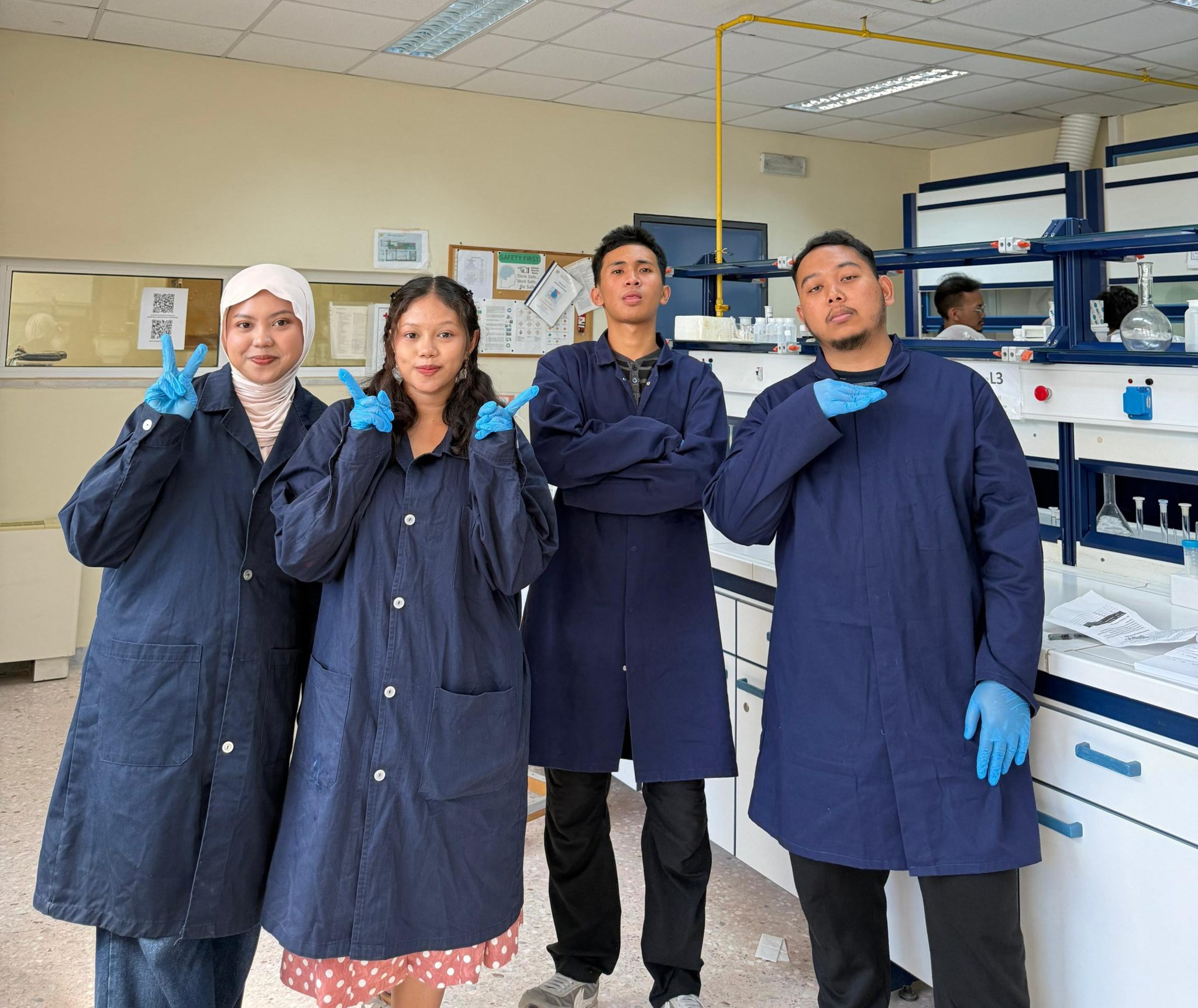
As part of its commitment to strengthening international academic engagement and preparing future professionals for global challenges, students from the Faculty of Animal Husbandry, Universitas Hasanuddin (UNHAS) successfully participated in an international training program at the National Technical University of Athens (NTUA), Greece, held on 28 June–12 July 2025. This activity formed an important component of the Enhancing Leather Technology Sustainability and Eco-Friendly Development in Indonesia (ELEGTEG) Project, an initiative supported by the Erasmus+ Program to strengthen educational quality and technological innovation in sustainable leather development.
The international training was designed to enhance students’ capacity to address emerging challenges in Indonesia’s sustainable leather industry through scientific exposure, international collaboration, and practical learning experiences. Through this program, participants gained insights into environmentally responsible approaches to leather technology while strengthening competencies that support future innovation and industrial transformation.
The ELEGTEG Program involved an international consortium consisting of 10 institutions from Indonesia and Europe, reflecting a collaborative effort to strengthen educational capacity and sustainable industrial development. Among the Indonesian institutions, Universitas Hasanuddin (UNHAS), Universitas Gadjah Mada (UGM), and Universitas Mataram (UNRAM) each selected and sent four students, resulting in a total of 12 student participants in the international training program.
Representing Universitas Hasanuddin, the participating students were Gabriella Romaito Manalu, Andi Nurazizah Taufiq, Fadli Hasdin, and Andi M. Nurcholis Pasha. Throughout the training period, students actively engaged in academic discussions, laboratory observations, intercultural exchange, and collaborative learning activities designed to broaden their technical knowledge and global perspectives.
Hosted at National Technical University of Athens (NTUA), Greece, the training exposed participants to international academic environments and introduced contemporary approaches in sustainable leather technology. Students explored scientific concepts, industrial challenges, and innovation pathways relevant to improving leather production systems in environmentally responsible and economically viable ways.
The activity was further enriched through support from international experts and institutional partners, including Prof. Dr. Constantina Kollia, Michail Delagrammatikas, Maya Dimitriadou, Dimos Papakonstatinou, and Vera Lymperopoulo. Their contributions provided participants with valuable perspectives on research collaboration, sustainable industrial practices, and the role of higher education in supporting technological advancement.
Beyond technical knowledge development, the training strengthened intercultural understanding and encouraged students to become agents of change capable of connecting scientific innovation with community and industrial needs. Participants were encouraged to bring back acquired knowledge and contribute to advancing sustainable leather development in Indonesia.
This activity contributes directly to the achievement of the Sustainable Development Goals (SDGs). The program supports SDG 1 – No Poverty by strengthening future workforce capacity and creating pathways toward sustainable economic opportunities; SDG 4 – Quality Education through international mobility, experiential learning, and academic excellence; SDG 15 – Life on Land by encouraging environmentally sustainable industrial practices and responsible resource use; and SDG 17 – Partnerships for the Goals by strengthening long-term collaboration among universities and international institutions.
Through this international training experience, Universitas Hasanuddin continues to empower students with global competencies, scientific knowledge, and collaborative values to contribute to sustainable innovation and future industry transformation.


