
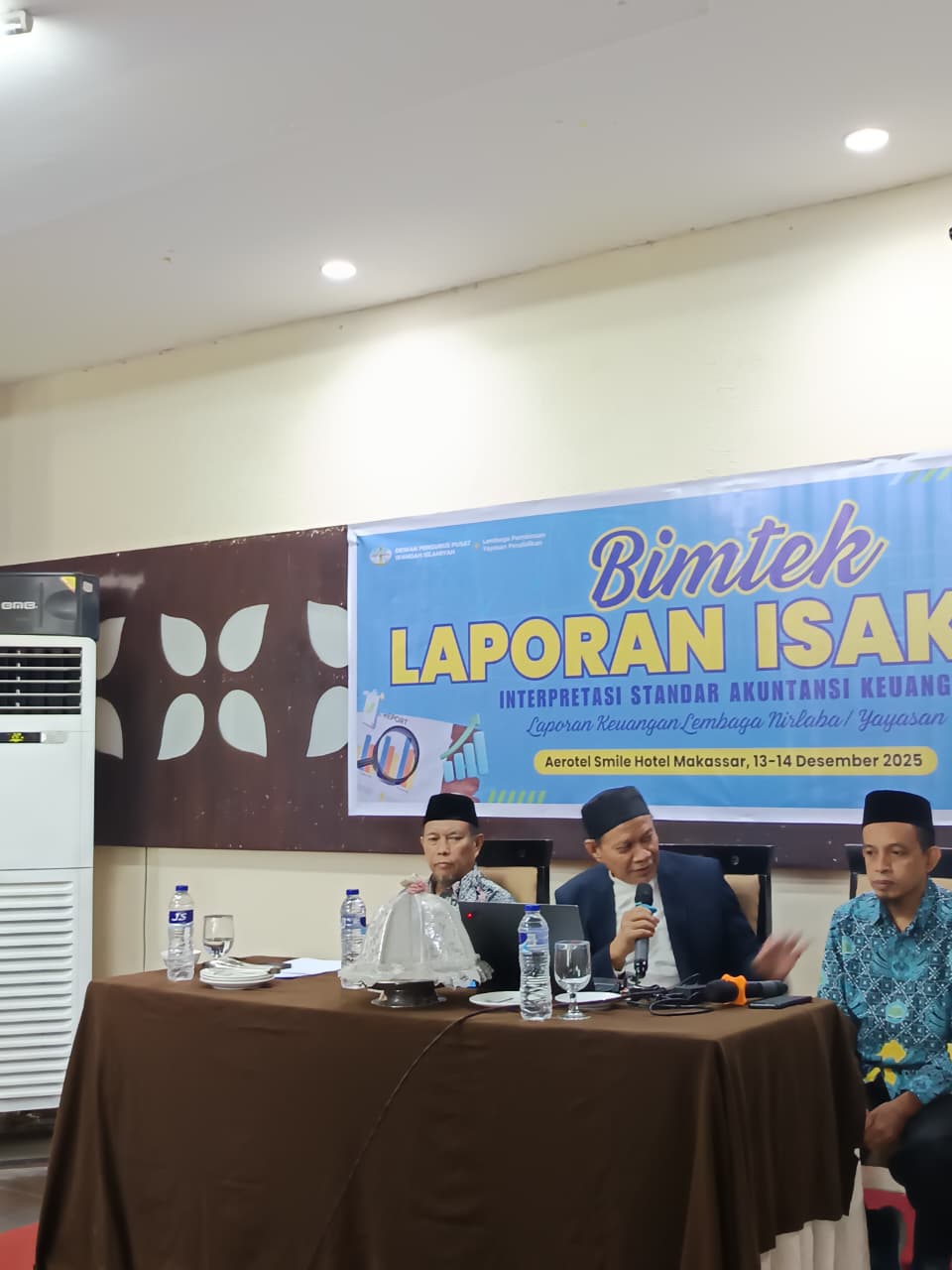

A technical guidance program titled “Bimbingan Teknis: Interpretasi Standar Akuntansi Keuangan (ISAK-35)” was successfully conducted to strengthen financial reporting practices within non-profit educational institutions. Held at Aerotel Smile Hotel Makassar, this initiative reflects a strategic commitment to improving transparency, accountability, and governance in the financial management of Islamic educational foundations.
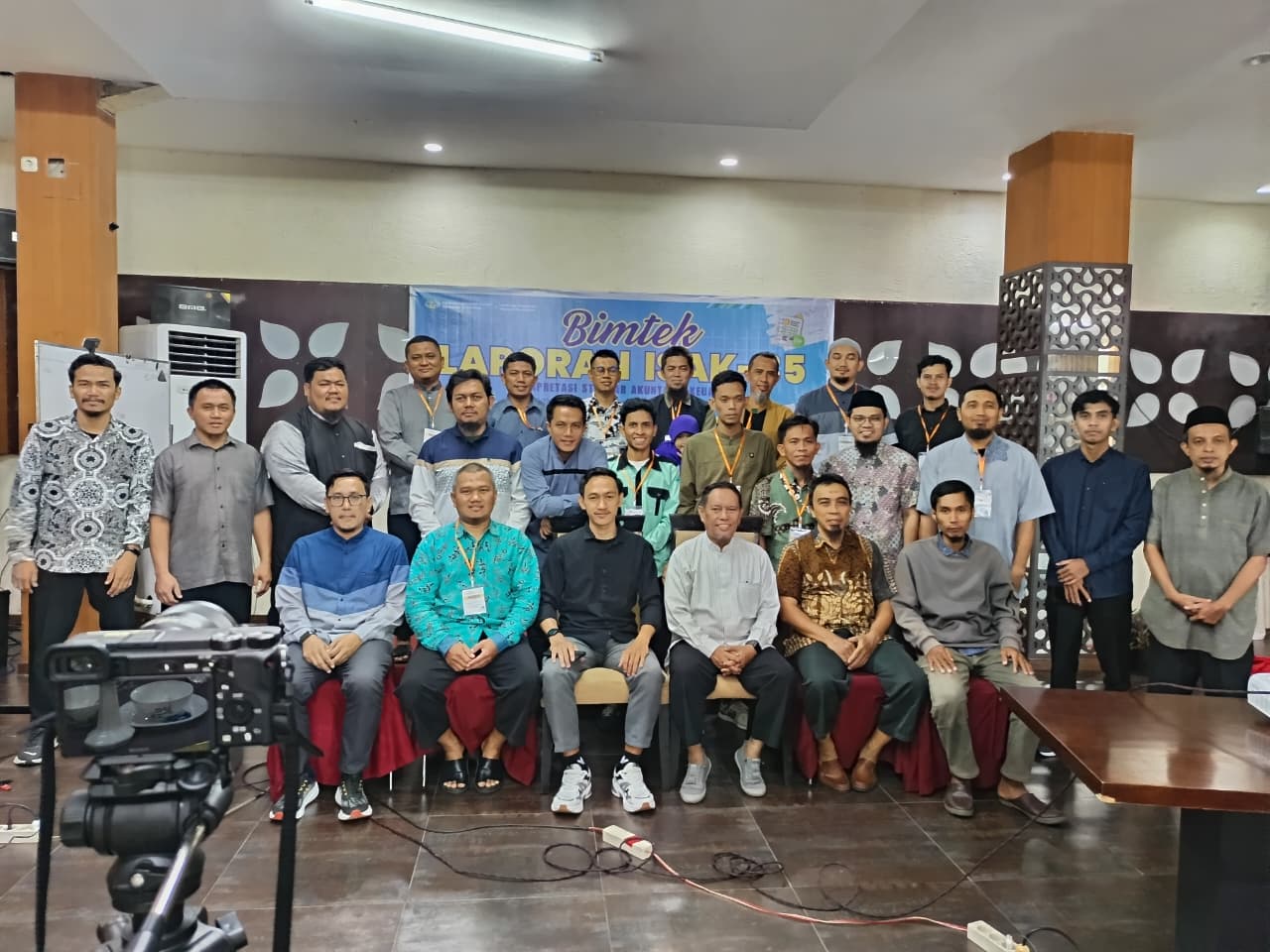
The activity took place on 13–14 December 2025, bringing together 21 participants, consisting of treasurers and accounting staff from various Wahdah Islamiyah Islamic boarding school foundations across Eastern Indonesia. These participants play a critical role in ensuring that financial statements are not only accurate but also aligned with applicable accounting standards.
The primary objective of this program was to enhance the quality and accountability of financial reports in non-profit educational foundations, particularly through the correct interpretation and application of ISAK 35. This standard provides guidance on the presentation of financial statements for non-profit-oriented entities, ensuring that reporting reflects the unique nature of such institutions, including the management of donations, endowments, and restricted funds.
Throughout the two-day session, participants were introduced to fundamental concepts of ISAK 35, practical case studies, and hands-on exercises. These activities were designed to bridge the gap between theoretical understanding and real-world application. As a result, participants gained a clearer perspective on how to prepare structured, transparent, and compliant financial reports that can support decision-making and institutional sustainability.
This initiative is closely aligned with several Sustainable Development Goals (SDGs), particularly SDG 1: No Poverty, SDG 4: Quality Education, and SDG 17: Partnerships for the Goals. By strengthening financial accountability, educational foundations can better allocate resources to support students from underprivileged backgrounds, thereby contributing to poverty reduction (SDG 1). Moreover, improved financial governance ensures that educational programs are sustainably funded and effectively managed, directly supporting inclusive and equitable quality education (SDG 4).
Equally important, this activity demonstrates the value of collaboration and knowledge-sharing among institutions. The involvement of participants from various regions highlights a collective effort to build stronger governance systems, embodying the spirit of partnership emphasized in SDG 17. Through such collaborative initiatives, institutions can learn from one another and adopt best practices that elevate overall organizational performance.
In conclusion, this technical guidance program represents a significant step toward strengthening institutional capacity in financial management within non-profit education sectors. By equipping participants with the knowledge and skills to implement ISAK 35 effectively, the program not only improves reporting standards but also reinforces trust, accountability, and long-term sustainability in educational institutions.
Abdul Hamid Habbe
0811469002
This is the heading
Lorem ipsum dolor sit amet, consectetur adipiscing elit. Ut elit tellus, luctus nec ullamcorper mattis, pulvinar dapibus leo.


