
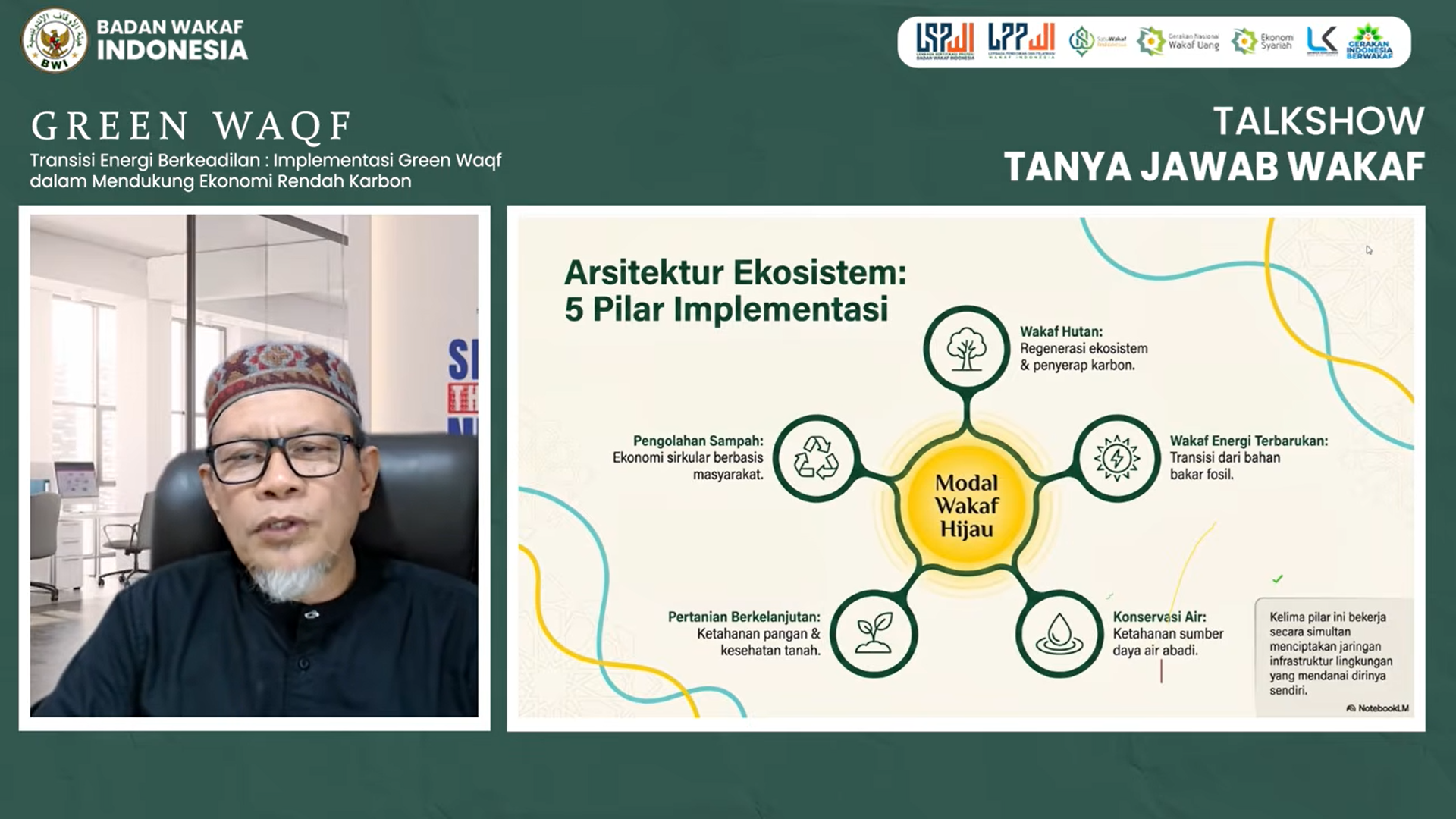

On April 15, 2026, a landmark virtual symposium brought together a diverse cohort of 320 participants to explore the intersection of Islamic finance and environmental stewardship. This gathering, titled “Just Energy Transition: Implementing Green Waqf in Supporting a Low-Carbon Economy,” served as a critical platform for Board Members of the Indonesian Waqf Board (BWI), Environmental Agencies, Lecturers, Students, and Waqf Managers to deliberate on sustainable financial innovations.
The session was led by the distinguished Prof. Abdul Hamid Habbe, S.E., M.Si., who navigated the complex synergies between traditional endowment structures and modern climate imperatives. Conducted Online, the event emphasized that a “Just Transition” is not merely a technical shift from fossil fuels to renewables, but a socio-economic evolution that ensures no community is left behind. Central to this vision is the concept of Green Waqf—a contemporary application of perpetual charitable endowments directed specifically toward eco-friendly projects, such as solar energy grids and reforestation.
A primary pillar of the discussion was the alignment of Islamic social finance with the United Nations Sustainable Development Goals. By mobilizing waqf assets for renewable energy, the initiative directly addresses SDG 7 (Affordable and Clean Energy), ensuring that the transition to a low-carbon economy remains inclusive. Prof. Habbe articulated that the sustainability of our planet is intrinsically linked to how we manage our collective resources. In this regard, Green Waqf acts as a catalyst for SDG 13 (Climate Action), providing the necessary liquidity to fund carbon-sequestration projects that mitigate the escalating risks of global warming.
Furthermore, the program emphasized the eradication of economic disparities. By channeling waqf funds into productive green sectors, we can create sustainable livelihoods, thereby fulfilling the objectives of SDG 1 (No Poverty). The speakers noted that economic resilience is a prerequisite for environmental preservation. To ensure these concepts are deeply rooted in society, the event underscored the importance of SDG 4 (Quality Education). By educating Lecturers and Students, the symposium fostered a new generation of scholars equipped to integrate ethical finance with environmental science.
The success of the Green Waqf model relies heavily on collaborative frameworks. This event served as a testament to SDG 17 (Partnerships for the Goals), as it united regulators from the Indonesian Waqf Board with academic experts and grassroots Environmental Agencies. This multi-stakeholder synergy is essential for creating a robust ecosystem where low-carbon initiatives can thrive.
In conclusion, the implementation of Green Waqf represents a profound shift toward a more equitable and sustainable future. By integrating the timeless principles of waqf with the urgent demands of the climate crisis, we provide a blueprint for a low-carbon economy that honors both the earth and its inhabitants. Through continued partnership and education, the seeds sown during this virtual forum will undoubtedly grow into a resilient, green legacy for generations to come.
Abdul Hamid Habbe
0811469002


