
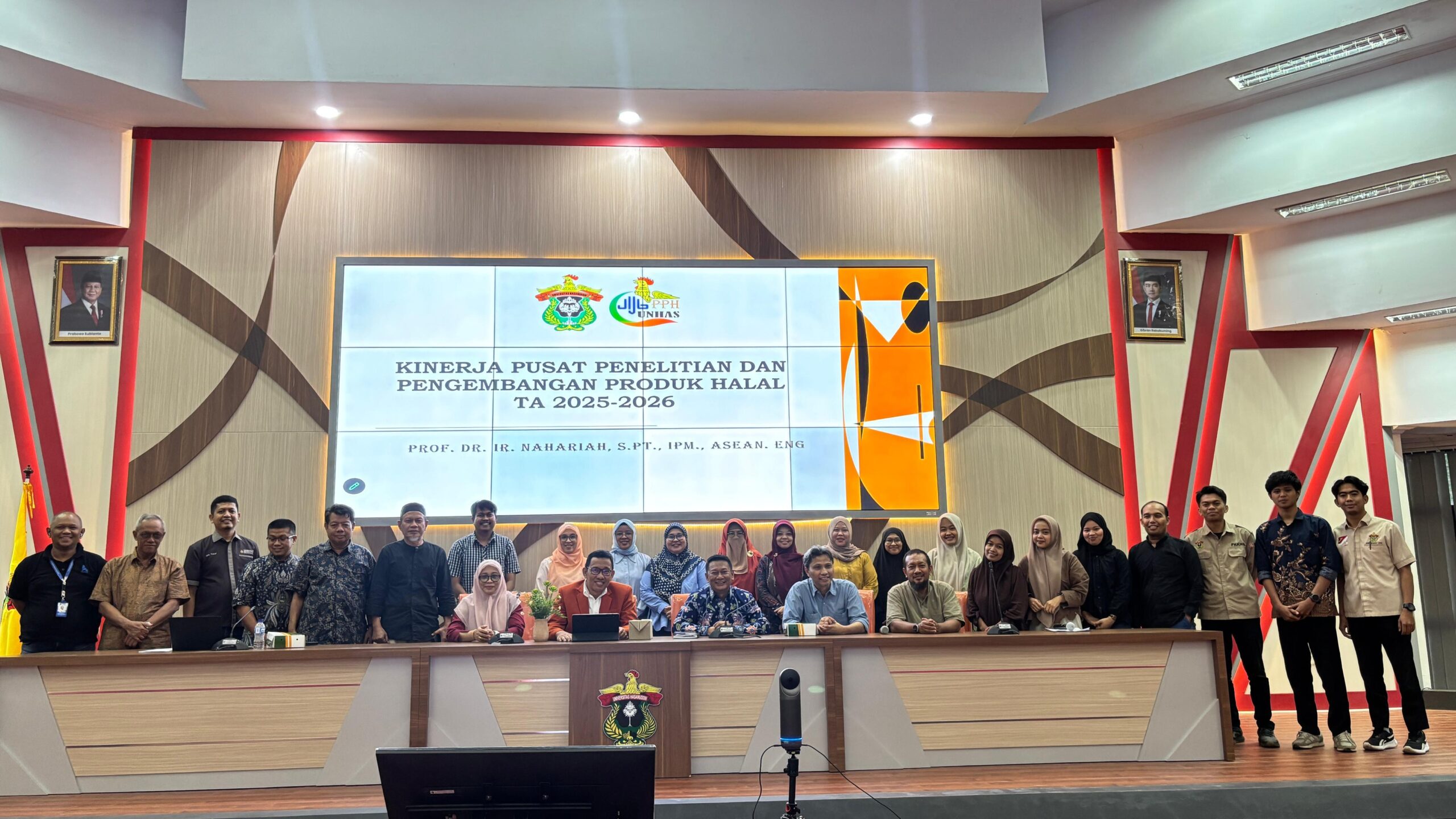

The Workshop on the Review of Halal Product Inspection Agency (LPH) Service Management as a Leading LPH was successfully conducted as part of a strategic effort to enhance institutional performance and reinforce its role in supporting Indonesia’s mandatory halal certification program. Held on 16 April 2026 at LPPM Universitas Hasanuddin (conducted hybrid), the workshop brought together key stakeholders to critically evaluate current practices and identify pathways for future development.
This activity aimed to assess the performance and explore the development potential of the Halal Product Research and Development Center of Universitas Hasanuddin (Unhas). In doing so, the workshop contributed to strengthening institutional readiness in addressing the growing demand for halal certification, a critical component in ensuring consumer protection and economic inclusivity in Indonesia’s halal ecosystem.
The workshop featured distinguished speakers, including Prof. Dr. Eng. Ir. Adi Mulana, S.T., M.Phil as Vice Rector, Prof. dr. Muh. Nasrum Massi, Ph.D., St.M(K) as Chairman of LPPM, and Prof. Dr. Ir. Nahariah, S.Pt., MP., IPM., ASEAN.Eng. as Head of LPH – Halal Inspection Center of Universitas Hasanuddin. Their insights emphasized the importance of integrating academic excellence, governance, and innovation in improving halal service management systems.
A total of 46 participants, consisting of LPH administrators, halal auditors, sharia human resources, legal experts, and other related professionals, actively engaged in the discussions. The diversity of participants fostered a multidisciplinary exchange of ideas, enabling a more comprehensive evaluation of operational challenges and opportunities for improvement.
Throughout the workshop, several key issues were highlighted, including the need for standardized service procedures, enhanced auditor competency, digital transformation in halal certification processes, and stronger collaboration between academic institutions and government bodies. These discussions reflect the urgency of building a resilient and credible halal assurance system that aligns with both national regulations and global standards.
Importantly, this workshop aligns with several Sustainable Development Goals (SDGs), particularly SDG 1: No Poverty, SDG 4: Quality Education, and SDG 17: Partnerships for the Goals. By strengthening halal certification systems, the initiative contributes to economic empowerment and poverty reduction (SDG 1), especially for small and medium enterprises seeking market access. The involvement of academic institutions underscores the role of continuous learning and capacity building (SDG 4), while the collaborative nature of the workshop highlights the importance of multi-stakeholder partnerships (SDG 17) in achieving sustainable development outcomes.
In conclusion, this workshop represents a meaningful step toward enhancing the effectiveness and credibility of halal service management at Universitas Hasanuddin. By fostering collaboration, improving institutional capacity, and aligning with global development goals, LPH Unhas is well-positioned to play a pivotal role in advancing Indonesia’s halal industry and supporting sustainable economic growth.
Abdul Hamid Habbe
0811469002


