
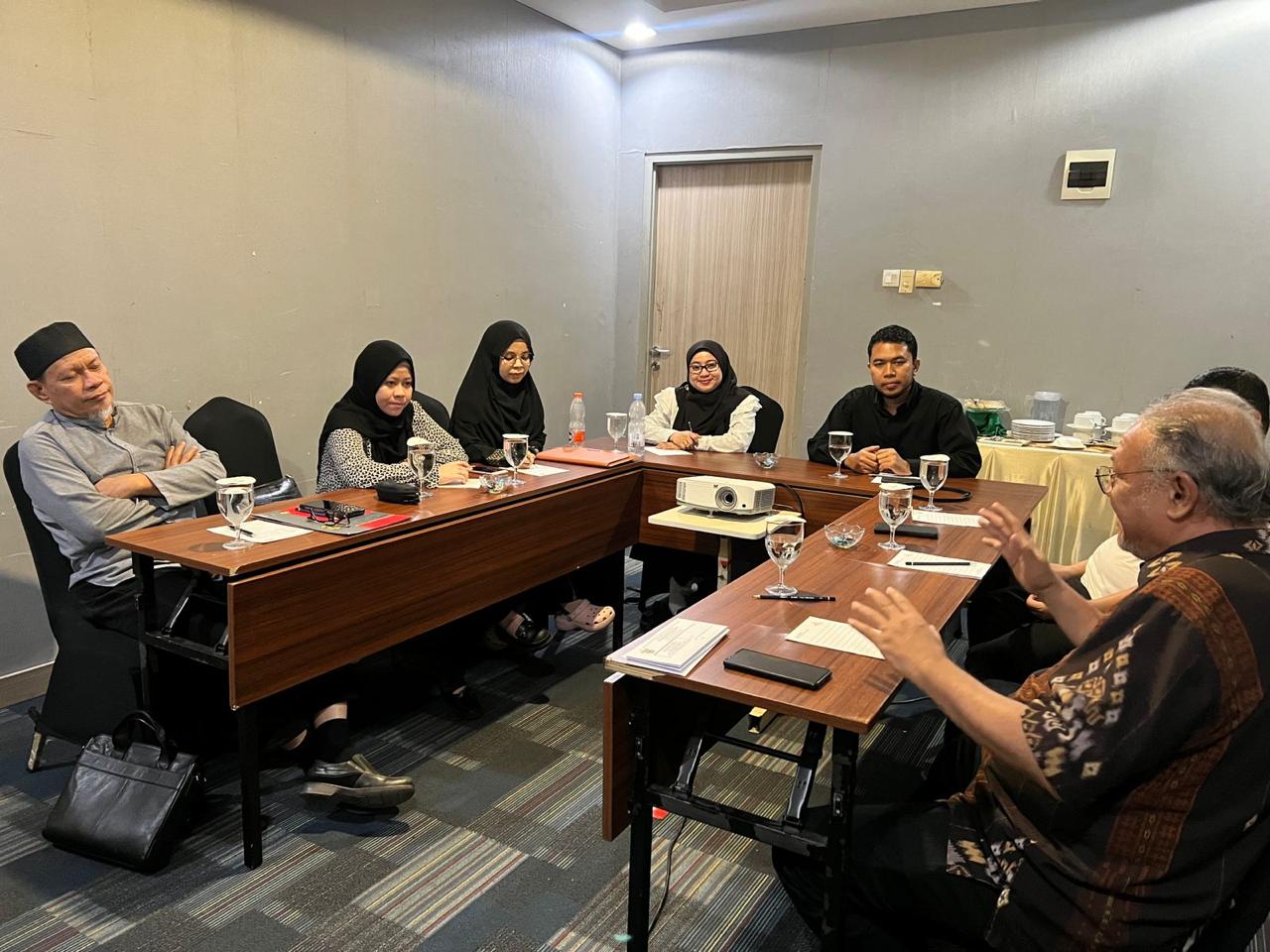

A focused academic and policy-oriented discussion titled “Diskusi Efektivitas Kebijakan Zakat” was convened to explore practical solutions for improving the effectiveness of zakat management, particularly in terms of collection and distribution. The event was held at Hotel Khas Makassar on 18 January 2024, gathering key scholars and practitioners committed to advancing Islamic social finance.
The discussion featured Prof. Tjiptohadi Sawarjuwono, Drs., M.Ec., Ph.D., Ak as the keynote speaker, a prominent academic with extensive expertise in accounting and public sector governance. His insights provided a comprehensive analytical framework for understanding the structural and operational challenges faced in zakat management institutions today.
The forum was attended by 8 participants, including Prof. Dr. Abdul Hamid Habbe., Hermita Arif, M.Com, Rizky Utami, M.Acc.Fin, Salman Samir, M.Sc, and several doctorate students. Despite its relatively small size, the discussion maintained a high level of intellectual rigor, allowing for in-depth exchange of ideas and critical reflections.
The primary objective of this activity was to formulate actionable solutions that enhance the effectiveness of zakat management, particularly in optimizing both fundraising strategies and distribution mechanisms. Participants critically examined current practices, identifying gaps in governance, transparency, and data integration that often hinder the full potential of zakat as a socio-economic instrument.
One of the key highlights of the discussion was the emphasis on adopting a more data-driven and accountable approach in managing zakat funds. Strengthening institutional capacity, improving reporting systems, and fostering trust among donors were identified as crucial factors in increasing zakat collection. At the same time, participants underscored the importance of targeted and impact-oriented distribution to ensure that zakat reaches the most vulnerable segments of society.
This initiative is strongly aligned with several Sustainable Development Goals (SDGs), particularly SDG 1: No Poverty, SDG 4: Quality Education, and SDG 17: Partnerships for the Goals. Zakat, as an Islamic financial instrument, plays a vital role in alleviating poverty by redistributing wealth to those in need, directly contributing to SDG 1. Moreover, effective zakat allocation can support educational programs and scholarships, thereby enhancing access to quality education (SDG 4).
Furthermore, the collaborative nature of this discussion reflects the essence of SDG 17, which emphasizes partnerships among stakeholders to achieve sustainable development outcomes. By bringing together academics, practitioners, and students, this forum fostered a multidisciplinary approach to addressing complex socio-economic challenges.
In conclusion, the “Diskusi Efektivitas Kebijakan Zakat” serves as an important platform for advancing the discourse on Islamic social finance. The insights generated from this discussion are expected to contribute to more effective, transparent, and impactful zakat management practices, ultimately supporting broader efforts toward social welfare and sustainable development
Hermita Arif
085298590726


