

Strengthening Sharia Economic Excellence: A Strategic Training for Educators
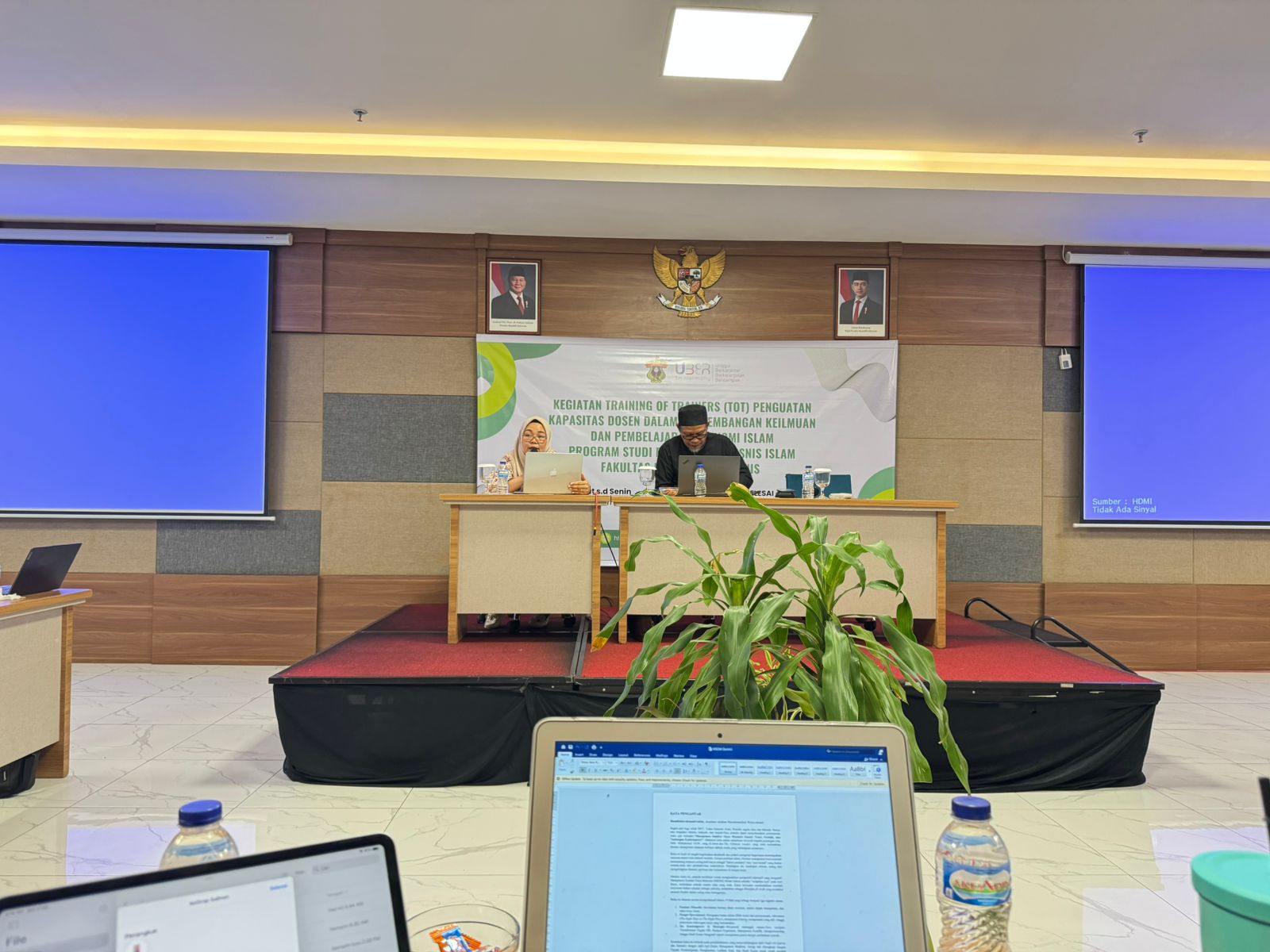
The landscape of global finance is undergoing a profound transformation, shifting toward ethical frameworks and sustainable models that prioritize social equity alongside economic growth. At the heart of this evolution is Islamic Economics and Business, a discipline that integrates moral imperatives with market dynamics. To ensure that academic institutions remain at the forefront of this shift, a specialized Training of Trainers (ToT) for Islamic Economics and Business was successfully convened. This strategic initiative, held at the Unhas Hotel Makassar, served as a critical platform for academic advancement and institutional capacity building.
The primary objective of the program was to increase the scientific capacity of the Islamic Economics and Business study program faculty members. By equipping educators with advanced pedagogical tools and deep-seated theoretical insights, the training ensures that the next generation of students receives a world-class education rooted in both classical wisdom and modern financial innovation. This focus on high-quality instruction directly addresses SDG 4 (Quality Education), as it ensures that the teaching staff can provide inclusive and equitable education while promoting lifelong learning opportunities within the university ecosystem.
Beyond the classroom, the training deeply resonates with the global mission to eradicate poverty. Islamic financial instruments, such as Zakat, Waqf, and Murabahah, are inherently designed to redistribute wealth and foster financial inclusion for the unbanked. By refining the expertise of lecturers in these areas, the program contributes to SDG 1 (No Poverty). The faculty members are now better prepared to conduct research and community service projects that empower small-scale enterprises and vulnerable populations, creating a ripple effect of economic resilience throughout the region.
The event, which was conducted over two days from February 6 – 9, 2026, emphasized the power of collective knowledge. Despite the focused nature of the workshop, it brought together a total of 15 participants, each representing a diverse niche within the economics faculty. This collaborative environment facilitated the sharing of best practices and the development of multidisciplinary approaches to complex financial challenges. Such internal and external cooperation is a testament to the principles of SDG 17 (Partnerships for the Goals), highlighting how institutional synergy is essential for achieving the ambitious targets of the 2030 Agenda.
In conclusion, the training at the Unhas Hotel Makassar was more than a professional development seminar; it was a commitment to the future of ethical finance in Indonesia. By aligning academic rigor with the Sustainable Development Goals, specifically in the realms of Quality Education, No Poverty, and Global Partnerships, the study program is setting a new benchmark for excellence. As these 15 participants return to their respective lecture halls, they carry with them the renewed energy and scientific depth necessary to lead the Islamic economic discourse into a new era of sustainability and social justice.
Abdul Hamid Habbe
0811469002


