


MAKASSAR, Indonesia May 20 2026/IDLF-RG/-For generations, the people of Polewali Mandar have relied on a simple system: someone provides the goats, someone raises them, and they share the profits. No lawyers. No paperwork. Just trust. But can this tradition survive in a changing world?
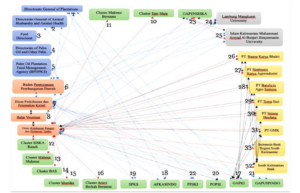
MAKASSAR, Indonesia May 13 2026/IDLF-RG/- A new study from South Kalimantan maps 33 stakeholders in the cattle-oil palm integration program and reveals a surprising truth: coordination is strong, but real cooperation is weak. Government agencies hold the reins. Find out why this matters.
MAKASSAR, Indonesia February 28 2026/IDLF-RG/- Why are farmers burning corn straw while their cattle go hungry? A new scientific study points to a simple answer: lack of tools and knowledge. And fixing it could be the most effective way to fight poverty and hunger in rural communities.

A 2025 study in Advances in Animal and Veterinary Sciences reveals that Indonesia's revolving cattle program is economically unsustainable with a score of only 23.23% proving that giving cows alone is not enough to achieve SDG 1 (No Poverty) without better training, infrastructure, and fair profit distribution.
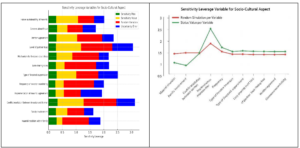
A 2025 study in the Journal of Global Innovations in Agricultural Sciences reveals that poor communication of standard operating procedures is the biggest risk for smallholder cattle farmers in Indonesia and that livestock management training is the most effective solution, directly supporting SDG 8 (Decent Work and Economic Growth).
A 2025 study in the Journal of Advanced Veterinary Research reveals that the traditional goat profit-sharing system (Maambi) in Indonesia increases farmers' income by 30–50% without requiring any upfront capital proving that trust-based partnerships can directly support SDG 1 (No Poverty).

A 2025 study in the Journal of Global Innovations in Agricultural Sciences reveals that sustainable silk farming in Indonesia depends on strong collaboration between 15 different actors proving that SDG 17 (Partnerships for the Goals) is the real key to preserving tradition and fighting rural poverty.
A 2025 study in the Journal of Global Innovations in Agricultural Sciences reveals that sago contributes 23% of staple food expenditure in an Indonesian village proving that this forgotten superfood can directly support SDG 2 (Zero Hunger) by reducing dependence on rice and strengthening household food security.
A 2026 study in the journal Tropical Agriculture reveals that black sticky rice tapai businesses in Indonesia are financially viable with an R/C ratio of 1.40—proving that traditional food enterprises can directly support SDG 1 (No Poverty) by generating stable incomes for small-scale entrepreneurs, especially women.
A 2026 study in the Transactions of the Chinese Society of Agricultural Machinery reveals that coffee sustainability in East Timor depends more on fair land rights and strong cooperatives than on farming techniques alone directly supporting SDG 15 (Life on Land).
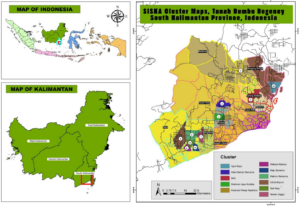
A 2026 study in the Journal of Sustainable Agriculture reveals that Indonesia's cattle-oil palm integration system fails not because of technology, but due to weak institutional coordination—and the key solutions are access to capital, training, and partnerships supporting SDG 1 (No Poverty).
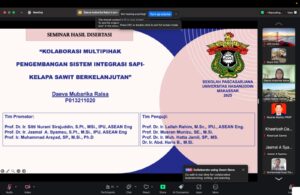
Daeva Mubarika Raisa, who is a student in Team IDLF-RG, conducted a research seminar with the title “Multistakeholder Collaboration for the Development of a Sustainable Cattle-Palm Oil Integration System”.
Attended by the Promoter Team Prof. Dr. Ir. Sitti Nurani Sirajuddin, S.Pt., M.Si., IPU., ASEAN Eng.; Prof. Dr. Ir. Jasmal A. Syamsu, M.Si., IPU., ASEAN Eng.; Prof. Ir. Muhammad Arsyad, SP.., M.Si., Ph.D. and Examiner Team Prof. Dr. Ir. Lellah Rahim, M.Sc., IPU., ASEAN Eng.; Prof. Dr. Musran Munizu, SE., M.Si.; Prof. Dr. Ir. Muh. Hatta Jamil, SP., M.S.; Dr. Ir. Abd. Haris B., M.Si.
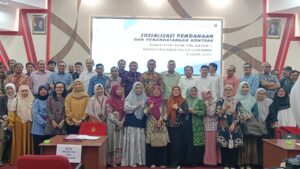
IDLF-RG Team attended the Socialization of Funding and Signing of the SKIM Team Research Group Batch 1 Research Contract Hasanuddin University Grant Year 2025
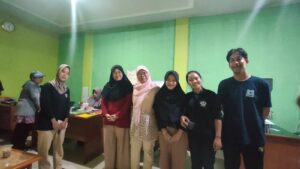
This activity aims to analyze the role of beef cattle agribusiness institutions in supporting the achievement of beef self-sufficiency in Barru District. The main focus is to evaluate the structure, function and effectiveness of institutions involved in the beef cattle value chain, ranging from farmers, cooperatives, government, to the private sector.
The initial step of this activity was to map the institutions that play a role in beef cattle agribusiness, including economic institutions such as farmer groups, livestock cooperatives and financing service providers. Next, interviews and surveys were conducted with stakeholders to identify institutional barriers in beef production, marketing and distribution.
Analysis is conducted using descriptive and qualitative approaches to understand the linkages between institutions and the role of regulations and policies in supporting self-sufficiency. This activity will also evaluate the support provided by local governments in strengthening agribusiness institutions.
The results of this activity are expected to be a recommendation in the formulation of effective institutional strengthening strategies, in order to increase the productivity and competitiveness of beef cattle farmers in supporting the beef self-sufficiency program in Barru District.
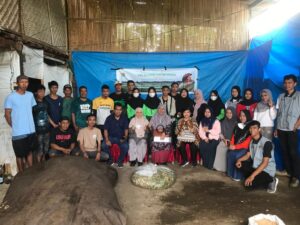
This activity aims to strengthen partnership institutions in beef cattle business in South Sulawesi through collaboration between farmers, government, financial institutions and related industries. The main focus is to improve the institutional capacity of farmers, strengthen sustainable partnership patterns, and encourage a competitive business ecosystem.
This activity includes business management and financial literacy training for farmers, facilitation of cooperative formation, and preparation of fair partnership agreements. In addition, technical assistance is provided in production and marketing aspects, as well as facilitating access to business financing through cooperation with financial institutions and investors.
Implementation methods include workshops, field assistance, and periodic evaluation monitoring in areas with high beef cattle populations. This program is expected to improve the welfare of farmers, strengthen their bargaining position in the supply chain, and create mutually beneficial and sustainable partnerships.
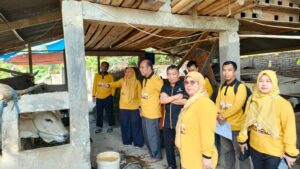
This activity aims to improve the application of biosecurity in beef cattle farming in Luwu District to prevent the spread of disease and improve livestock health. Biosecurity includes prevention, control and monitoring of potential disease risks that could threaten beef cattle populations.
The main activities include training and counseling farmers on the basic principles of biosecurity, such as cage sanitation, feed management, disease vector control, and the use of personal protective equipment. In addition, periodic livestock and environmental health audits are conducted to detect the potential spread of disease early.
Facilitation of procurement of tools and materials for the implementation of biosecurity, such as disinfectants, body temperature measuring instruments, and livestock health facilities is also carried out to support this program. This activity is complemented by strengthening the livestock health recording and reporting system to facilitate disease detection and countermeasures.
Through this activity, it is hoped that farmers in Luwu District can understand the importance of biosecurity in maintaining beef cattle health and increasing livestock productivity in a sustainable manner.
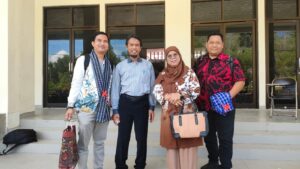
This activity aims to build a local wisdom-based partnership model between universities and cattle farmers in Enrekang Regency with a mutually beneficial profit-sharing system. Within this framework, universities provide training and counseling to farmers on modern livestock technology that is in accordance with the principles of local wisdom, such as sustainable utilization of surrounding natural resources.
This partnership model involves equitable profit sharing, with calculations based on each party\'s contribution to livestock management, operational costs, and production output. The university will conduct research to identify appropriate solutions in livestock management that can be applied by farmers, including in the aspects of feed, animal health, and environmental management.
In addition, the implementation of this activity also includes the application of local wisdom in livestock management, such as the utilization of local plants for animal feed and the principle of mutual cooperation in cattle raising. With this profit-sharing system, it is expected that there will be an increase in livestock productivity, farmer welfare, and sustainable preservation of local wisdom.
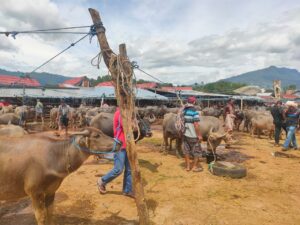
This activity aims to analyze the supply chain of buffalo cattle used in Toraja traditional feasts. The main focus is to understand the distribution process of buffalo cattle from farmers to end consumers, as well as the factors that influence the availability and price of buffalo cattle in the local market.
The first step in this activity is to survey buffalo farmers, traders and transportation service providers to identify the stages of livestock distribution. Next, the marketing system, the influence of cultural, economic and social factors in determining prices and demand patterns during certain seasons, especially before major traditional events, will be analyzed.
In addition, this activity will also evaluate challenges in the supply chain, such as logistical constraints, feed supply uncertainty and price fluctuations that can affect the sustainability of livestock supply. The results of this study are expected to provide recommendations for more efficient buffalo supply chain management that supports the smooth supply of livestock for traditional feasts without compromising farmer welfare and production sustainability.
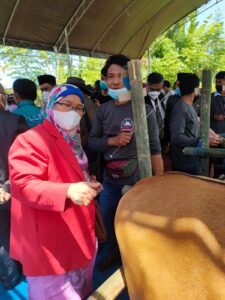
This activity aims to analyze the behavior of beef cattle farmers in Bone Regency related to handling Foot and Mouth Disease (FMD) outbreaks. The main focus of this activity was to identify farmers\' knowledge, attitudes, and actions in dealing with FMD outbreaks and the factors that influence their decisions in managing livestock health.
The activity begins with a survey of beef cattle farmers in several sub-districts in Bone Regency to gather information on their understanding of FMD, including symptoms, prevention and treatment of the disease. In addition, this activity will evaluate farmers\' responses to government and animal health officials\' recommendations for dealing with outbreaks, as well as their level of compliance with biosecurity and vaccination policies.
Qualitative and quantitative approaches will be used in this study to analyze the data obtained, as well as identify the barriers farmers face in implementing preventive measures. The results of this activity are expected to provide insights into farmer behavior, and suggest more effective communication and education strategies to improve the response to FMD outbreaks in Bone District.