MAKASSAR, Indonesia May 13 2026/IDLF-RG/-Imagine walking through a vast oil palm plantation in South Kalimantan, Indonesia. The neatly planted trees stretch as far as the eye can see. But beneath them, something unusual is happening. Cows are grazing peacefully among the palm trunks, eating the weeds that would otherwise need to be cut by hand. This is not a random sight it is a carefully planned system called SISKA-KUINTIP, where cattle and oil palm production are integrated to benefit both.
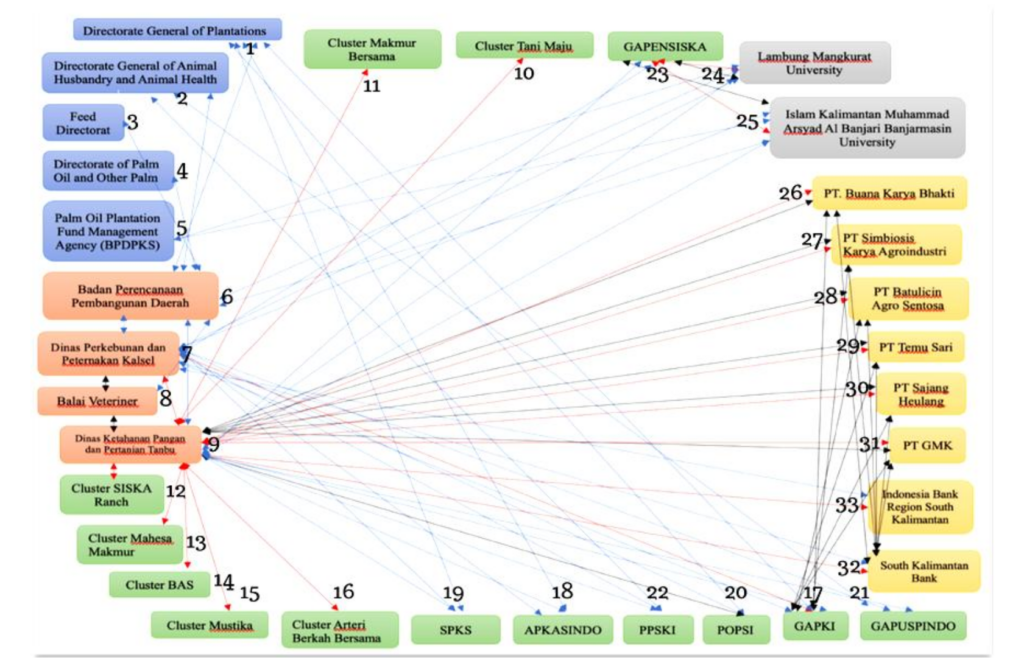
A recent study published in the International Journal of Agriculture and Biosciences in 2026 takes a close look at how this system works. The researchers discovered something fascinating: success depends not just on the cows and the palm trees, but on the relationships between the people involved. They identified 33 different stakeholders from government agencies and universities to farmer groups and banks all playing different roles in making this integration work.
This matters because Indonesia faces two big challenges. First, the demand for beef is rising, but most cattle farms are small and struggle with feed shortages. Second, oil palm plantations often face criticism for environmental issues. The SISKA-KUINTIP system offers a solution. Cattle eat the weeds growing under the palm trees, which reduces the need for herbicides. Meanwhile, the cattle’s manure fertilizes the soil, reducing the need for chemical fertilizers. It is a win-win for farmers, the environment, and the economy.
However, the study found that not all stakeholders are equally powerful. The network analysis showed that local government agencies especially the Food Security and Agriculture Office and the Plantation and Livestock Office are the most central players. They coordinate planning, provide technical support, and connect different actors. Meanwhile, farmer groups are heavily involved in implementation but have less influence in strategic decision-making. Banks and universities play important supporting roles, but the system remains heavily state-centered.
This is where the United Nations Sustainable Development Goals (SDGs) come in. This story connects directly to SDG 17: Partnerships for the Goals. The SISKA-KUINTIP program is a living example of how partnerships between government, private sector, academic institutions, and local communities can create sustainable solutions. It also supports SDG 2 (Zero Hunger) by improving beef production and SDG 15 (Life on Land) by promoting sustainable land use. Additionally, SDG 4 (Quality Education) is reflected through the training and extension services provided to farmers.
The researchers recommend strengthening cooperation networks so that farmer groups and producer organizations have a stronger voice in strategic planning. They also suggest more inclusive governance, better access to credit, and formalized long-term partnerships. These steps would make the system more resilient and reduce dependence on a few government agencies.
In essence, the SISKA-KUINTIP program shows that sustainable agriculture is not just about technology—it is about people working together. When different stakeholders communicate, coordinate, and cooperate effectively, they can turn challenges into opportunities. As the study concludes, the future of cattle-oil palm integration depends on the strength and balance of relationships among all actors. This is a powerful lesson for anyone working to build a more sustainable and equitable world.
Reference:
https://doi.org/10.47278/journal.ijab/2026.119
Contact:
Prof. Sitti Nurani Sirajuddin
+62 813-8965-4334
sitti.nurani@unhas.ac.id