


MAKASSAR, Indonesia March 06 2025/IDLF-RG/- Imagine receiving a cow for free, raising it until it has calves, then passing the offspring to another poor family. That is the “revolving system” a cattle assistance program designed to lift farmers out of poverty. But does it actually work?
A 2025 study published in Advances in Animal and Veterinary Sciences (Links Research) analyzed this program in Gilireng District, Wajo Regency, Indonesia. Researchers interviewed 50 farmers and assessed sustainability across three dimensions: ecological (environment), economic (money), and social (community). The results were mixed and concerning.
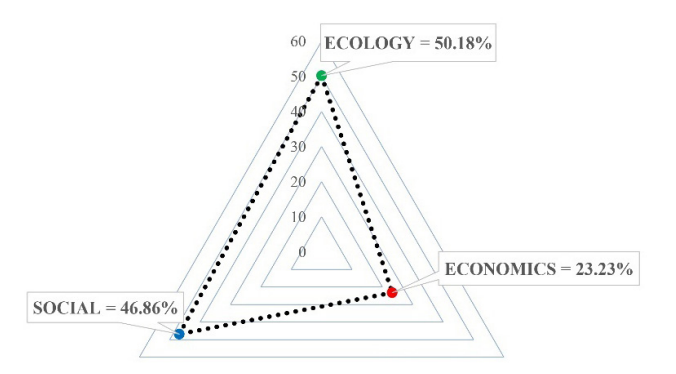
The study found that the economic dimension scored only 23.23%, which falls into the “unsustainable” category. That means most farmers are not earning enough to escape poverty. The social dimension scored 46.86% (“less sustainable”), while ecology scored 50.18% (“moderately sustainable”). In other words, the environment is doing okay, but the farmers are not.
This directly challenges SDG 1: No Poverty. Why? Because a program meant to reduce poverty is failing to do so. The main economic problem is profit transfer the benefits are not staying with the poorest families. Farmers receive only one cow, which is not enough to generate a living income. Most still rely on farming as a side job, not a main livelihood. Without enough cattle, they cannot break the poverty cycle.
The study also identified other barriers. Farmers lack training and counseling (social dimension). Waste management facilities like slaughterhouses and wastewater treatment plants are missing (ecological dimension). Without proper infrastructure, cattle die from disease, and the environment suffers.
But there is hope. The researchers recommend increasing the number of cattle per family, providing regular training, building slaughterhouses, and involving women more actively. These interventions could turn an unsustainable program into a real poverty-killer.
Revolving cattle programs have good intentions. But good intentions are not enough. If we truly want to achieve SDG 1, we must invest in economic viability, not just animal distribution. A cow is a start. But a cow alone cannot end poverty.
Reference
Contact:
Prof. Sitti Nurani Sirajuddin
+62 813-8965-4334
sitti.nurani@unhas.ac.id