



MAKASSAR, Indonesia Aug 30 2026 /HORTICULTURAL BREEDING AND BIOTECHNOLOGY-RG/– Maize is more than a crop. It is food, animal feed, energy, and an industrial raw material. Yet as climate change brings drought, heat, poor soils, pests, and disease, breeders face a growing challenge: how can they create maize that is productive today and still resilient tomorrow?
But what if the answer is already hidden inside maize DNA?
A study titled “Diversity Analysis of Convergent-Derived Breeding Maize Inbred Lines using SSR Markers,” published in the International Journal of Agriculture and Biosciences by Unique Scientific Publishers on March 17, 2025, explored the genetic diversity of maize lines developed through convergent breeding. This breeding approach brings desirable traits from different genetic sources together into improved lines, with the goal of producing maize that is more productive, adaptable, and resilient.
The researchers examined 30 selected maize inbred lines from a convergent-breeding population in South Sulawesi. Instead of relying only on what the plants looked like in the field, they examined their DNA using 50 Simple Sequence Repeat, or SSR, markers spread across all 10 maize chromosomes.
SSR markers work like tiny genetic signposts. Because these short DNA sequences vary among plants, they can help scientists identify how genetically similar—or different—two maize lines are. For breeders, this information matters because crossing genetically distinct parents can create new combinations and increase the chance of producing stronger hybrids.
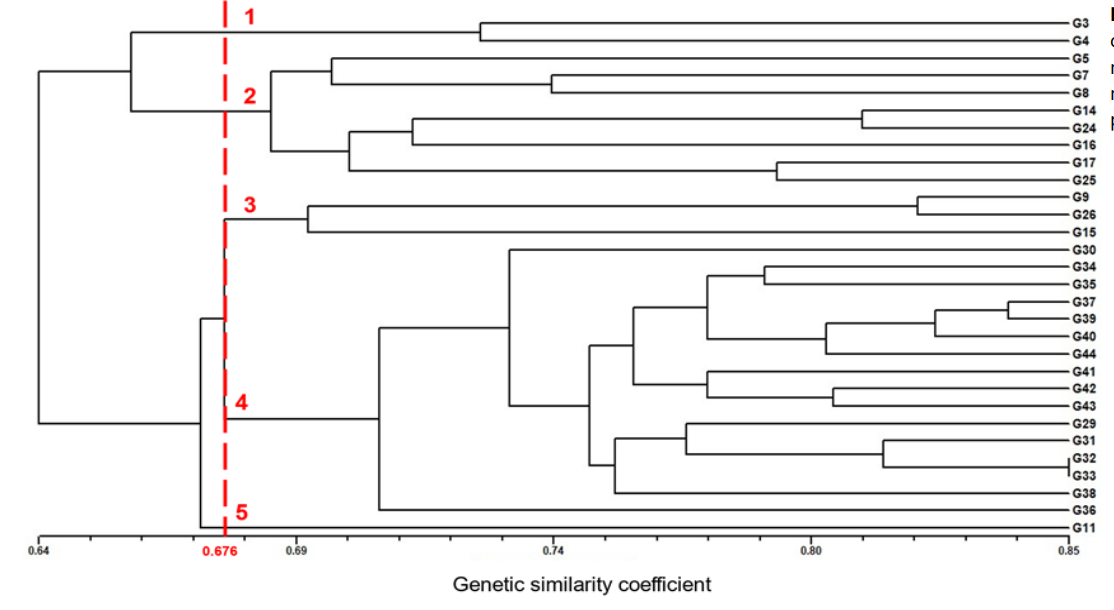
The results revealed substantial genetic variation. Researchers detected 421 alleles, averaging 8.42 alleles per SSR marker. The average Polymorphism Information Content, or PIC, was 0.76, indicating that the markers were highly useful for distinguishing genetic differences. Genetic similarity among the lines ranged from 0.57 to 0.85, and the lines were grouped into five clusters. Some lines, such as G32 and G33, were highly similar, while others showed greater genetic distance and may offer useful opportunities for future crosses.
The study also sends an important warning. Repeated self-pollination can reduce genetic diversity, making inbred lines more vulnerable to environmental stress and limiting future breeding options. Maintaining diverse genetic resources is therefore not simply a laboratory concern—it is an agricultural necessity.
This research is closely connected to SDG 15: Life on Land. Protecting life on land includes preserving genetic diversity that supports sustainable food production. Diverse maize germplasm gives breeders the raw material needed to develop varieties that can tolerate changing climates, resist biological threats, and remain productive in marginal environments.
For farmers and the public, the message is simple: a stronger harvest can begin with genetic diversity that cannot be seen with the naked eye.
By combining convergent breeding with DNA-based SSR analysis, researchers can make smarter choices about which maize lines to preserve, cross, and develop. Sometimes, the future of sustainable farming is written not only in the field, but in the DNA of the seed.
Reference:
DOI: https://doi.org/10.47278/journal.ijab/2025.038
Contact:
Prof. Muh Farid Bdr
+62 813-5504-1712
hortibb@trg.unhas.ac.id


