
Rice is more than just a crop. For millions of people, especially in Indonesia, rice represents daily nutrition, cultural identity, and national food security. However, producing enough rice for a growing population is becoming increasingly challenging. Climate change, drought, declining soil fertility, and limited agricultural resources are creating new challenges for farmers.
A promising solution is not simply using more land or more chemical inputs, but improving the way rice is cultivated. A recent study highlights how smarter water and fertilizer management can help farmers produce better rice while protecting agricultural ecosystems.
The article titled “Rice (Oryza sativa L.) Crop Response in Terms of Growth and Productivity Traits to Field Fertigation System” was published in the SABRAO Journal of Breeding and Genetics, Volume 58 Issue 2, in April 2026. The article was published by the Society for the Advancement of Breeding Researches in Asia and Oceania (SABRAO). The research was conducted by N. Kamariah, M. Farid, and A. Yassi from Hasanuddin University, Indonesia.
The research investigated how a fertigation system, which combines water management and fertilizer application, affects rice growth and productivity. The study was conducted in South Sulawesi, Indonesia, using different irrigation systems, organic fertilizers, and NPK fertilizer doses.
Traditionally, rice farming often depends on continuous flooding of fields. Although effective, excessive water use can become a problem, especially when water availability decreases due to climate change. The researchers explored alternative approaches, including intermittent irrigation and the macak-macak irrigation system, where soil remains moist without excessive standing water.
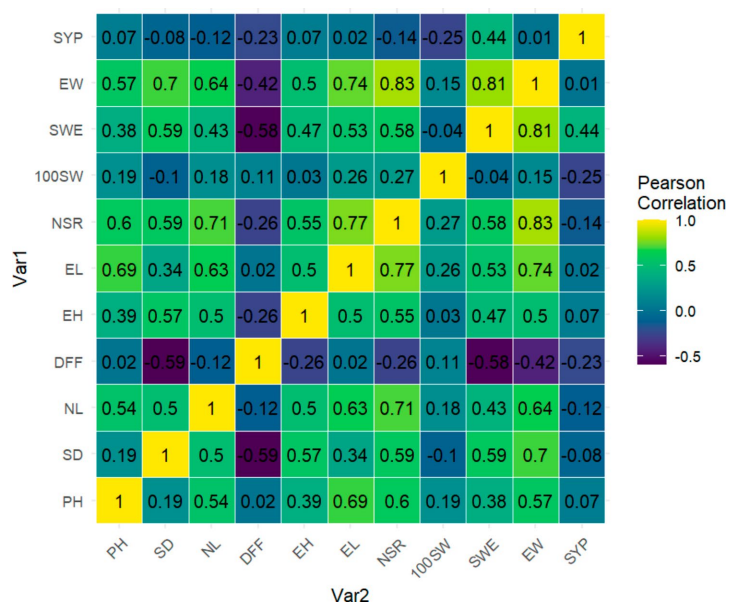
The results showed that combining proper water management with organic and inorganic fertilizers significantly improved several rice growth characteristics, including the number of tillers, panicle development, grain weight, and overall productivity.
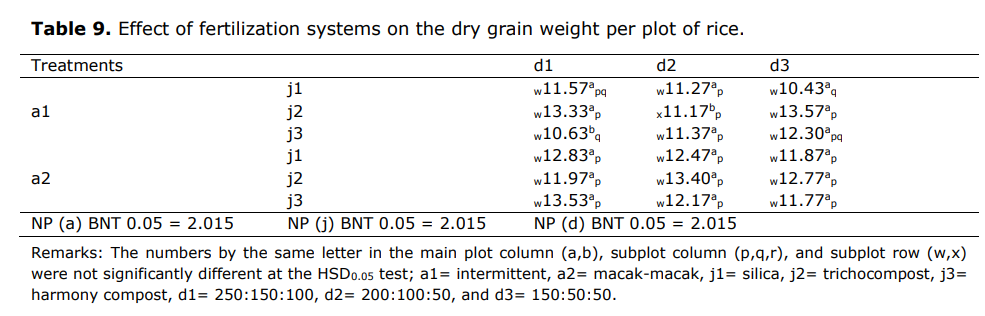
One of the important findings was that the best productivity was achieved through intermittent irrigation combined with trichocompost organic fertilizer and NPK fertilizer at a dose of 150:50:50, producing an average dry grain weight of 13.57 kg per plot. The study also found that the macak-macak irrigation system combined with organic and inorganic fertilizers provided strong results in several productivity indicators.
This research supports SDG 15: Life on Land because sustainable agriculture depends on maintaining healthy soils, using natural resources efficiently, and reducing unnecessary pressure on agricultural land. By improving farming techniques, farmers can increase food production while protecting ecosystems.
The importance of this study goes beyond rice fields. It demonstrates that the future of agriculture does not always require more water, more land, or more fertilizer. Instead, it requires better decisions based on science.
Organic fertilizers such as compost can help improve soil quality, while efficient irrigation ensures that plants receive the water they need without waste. This combination creates a balance between productivity and environmental responsibility.
As climate challenges continue to grow, innovations like fertigation systems provide hope for a more resilient food system. The future of rice farming will depend not only on how much we produce but also on how sustainably we produce it.
Smart farming today can help ensure food security for future generations while preserving the land that supports human life.
Reference:
DOI: http://doi.org/10.54910/sabrao2026.58.2.34
Contact:
Prof. Muh Farid Bdr
+62 813-5504-1712
hortibb@trg.unhas.ac.id