



MAKASSAR, Indonesia Aug 30 2026 /HORTICULTURAL BREEDING AND BIOTECHNOLOGY-RG/– Corn is one of the world’s most valuable crops, serving not only as human food but also as a major ingredient for animal feed and various industries. As demand continues to increase, farmers face a difficult challenge: producing more corn while dealing with climate change, shrinking agricultural land, and changing environmental conditions.
But what if the strongest future corn varieties are already hidden inside existing plants?
A recent study titled “A New Approach for Evaluating Maize Transgressive Segregants and Their Three-Way Cross Potential in the S4 Convergent Breeding Population,” published in BMC Plant Biology by BioMed Central Ltd on January 29, 2025, introduced a new strategy to identify promising maize lines for developing superior hybrid varieties. The research focused on selecting transgressive segregants (TS), which are plants that show better performance than their parent varieties.
In conventional breeding, finding superior plants can take many years because breeders must evaluate thousands of genetic combinations. Transgressive segregation provides a shortcut by searching for exceptional individuals that naturally appear after crossing different genetic backgrounds. These plants may carry valuable combinations of traits such as higher yield, better adaptation, and improved hybrid potential.
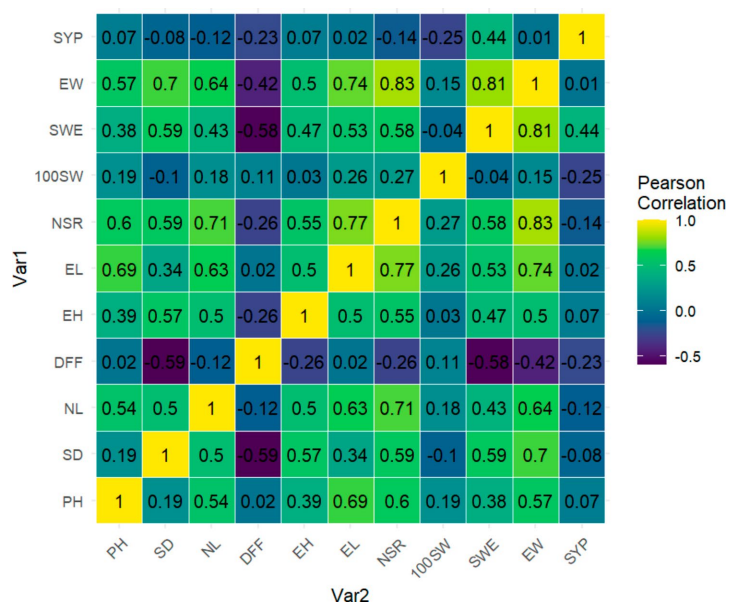
The researchers evaluated S4 generation maize lines developed through convergent breeding. They combined several advanced analysis methods, including ratio analysis, path analysis, Best Linear Unbiased Prediction (BLUP), relative fitness analysis, and selection indices to identify the most promising genetic materials.
The study involved 32 transgressive segregant lines and several comparison varieties, including JH 37, NASA 29, BISI 18, and SINHAS 1. The selected lines were further tested through three-way crosses to evaluate their potential as future hybrid parents.
The results revealed that the selection index successfully identified 11 promising S4 transgressive segregant lines. Among them, CB2.23.1 showed the best potential for further development. In addition, three-way cross evaluation identified promising hybrid combinations, including SG 3.35.12 × JH37 F1 and CB 2.23.1 × JH37 F1, which demonstrated strong hybrid potential.
This innovation supports SDG 15: Life on Land by promoting sustainable agricultural development through better use of plant genetic resources. Instead of expanding farmland, improving existing crop genetics allows farmers to achieve higher productivity while protecting natural ecosystems.
Modern plant breeding is no longer simply about selecting the tallest plant or the largest ear. It is about understanding hidden genetic potential through science and advanced analysis.
The future of corn production may not depend only on growing more plants, but on discovering better ones. By unlocking genetic diversity within maize populations, researchers are creating a pathway toward stronger crops, smarter farming systems, and more sustainable food production for future generations.
Reference:
DOI: https://doi.org/10.1186/s12870-025-06103-x
Contact:
Prof. Muh Farid Bdr
+62 813-5504-1712
hortibb@trg.unhas.ac.id


