


Malino, Gowa, South Sulawesi – As part of the commitment to implementing the Tri Dharma of Higher Education—education, research, and community service, the Horticulture Breeding and Biotechnology Research Group conducted a community engagement activity entitled “Advancing Tomato Production Through Agricultural Innovation.” The program aimed to strengthen tomato production among farmers in Malino, Gowa, South Sulawesi, by introducing innovative agricultural approaches that combine scientific knowledge, research-based technology, and practical field applications.
Tomato cultivation plays an important role in Indonesia’s horticultural sector due to its economic value, nutritional contribution, and market demand. However, farmers continue to encounter various challenges, including fluctuating productivity, environmental changes, pest and disease pressures, and the need for more efficient cultivation management. Improving tomato production requires not only increasing input usage but also applying appropriate innovations that can enhance plant growth, productivity, and sustainability.
The activity was conducted on 28 August 2025 and was led by Prof. Dr. Ir. Muh Farid BDR, MP as the head of the implementation team. The program involved members of the Horticulture Breeding and Biotechnology Research Group, university students, local tomato farmers, and agricultural partners. A total of 30 participants actively participated in this activity, creating a collaborative platform for knowledge exchange, field discussion, and practical learning.
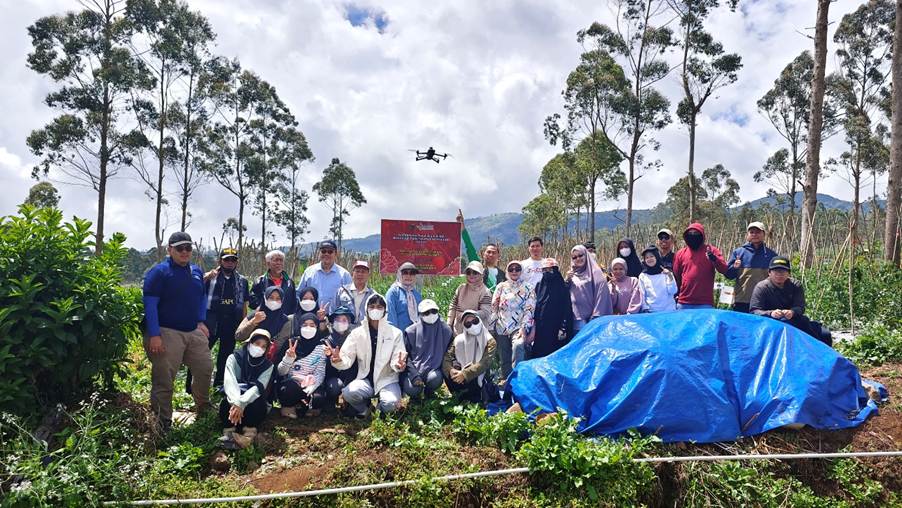
The main objective of this initiative was to increase tomato production on farmers’ land through various agricultural innovations. The activity focused on strengthening farmers’ understanding of improved cultivation strategies, efficient crop management, and the application of science-based technologies that can support better productivity and crop quality.
An important part of this activity was the collaboration with PT Pupuk Indonesia as a strategic partner in supporting agricultural innovation. Fertilizer products from PT Pupuk Indonesia were tested as part of the research activities to evaluate their effectiveness in improving tomato growth, supporting plant development, and increasing productivity under farmer field conditions. This collaboration provided an opportunity to connect scientific research with industrial innovation, ensuring that fertilizer solutions were evaluated through evidence-based approaches before being applied more broadly in agricultural systems.
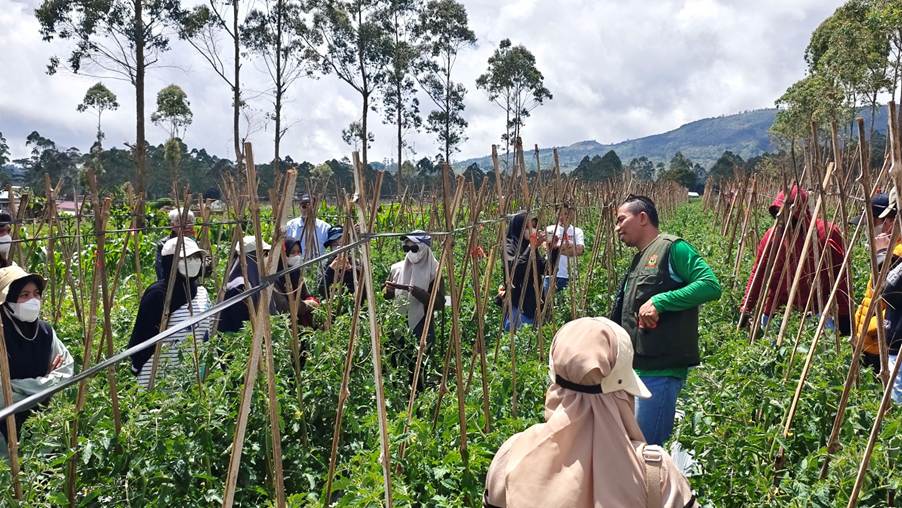
During the program, researchers shared knowledge regarding modern horticultural practices, while farmers contributed valuable experiences related to real field conditions. This two-way interaction allowed the development of solutions that were not only scientifically relevant but also practical and adaptable for local farming environments. The involvement of students also strengthened the educational aspect of the activity by providing them with direct experience in communicating agricultural knowledge and understanding challenges faced by farming communities.
This initiative contributes to the Sustainable Development Goals (SDGs), particularly SDG 1: No Poverty, by supporting farmers’ productivity and creating opportunities to improve agricultural income through better cultivation practices. It also supports SDG 4: Quality Education by facilitating knowledge transfer, practical learning, and capacity building among students and farmers. Furthermore, the program aligns with SDG 17: Partnerships for the Goals through collaboration between researchers, universities, industry partners, students, and farming communities.
Through “Advancing Tomato Production Through Agricultural Innovation,” the Horticulture Breeding and Biotechnology Research Group demonstrates that agricultural development is not only about increasing yields but also about empowering farmers through innovation, collaboration, and sustainable practices.
By strengthening partnerships between academic institutions, industry, and farming communities, this initiative contributes to building a more productive, resilient, and sustainable horticultural sector in South Sulawesi and beyond.


