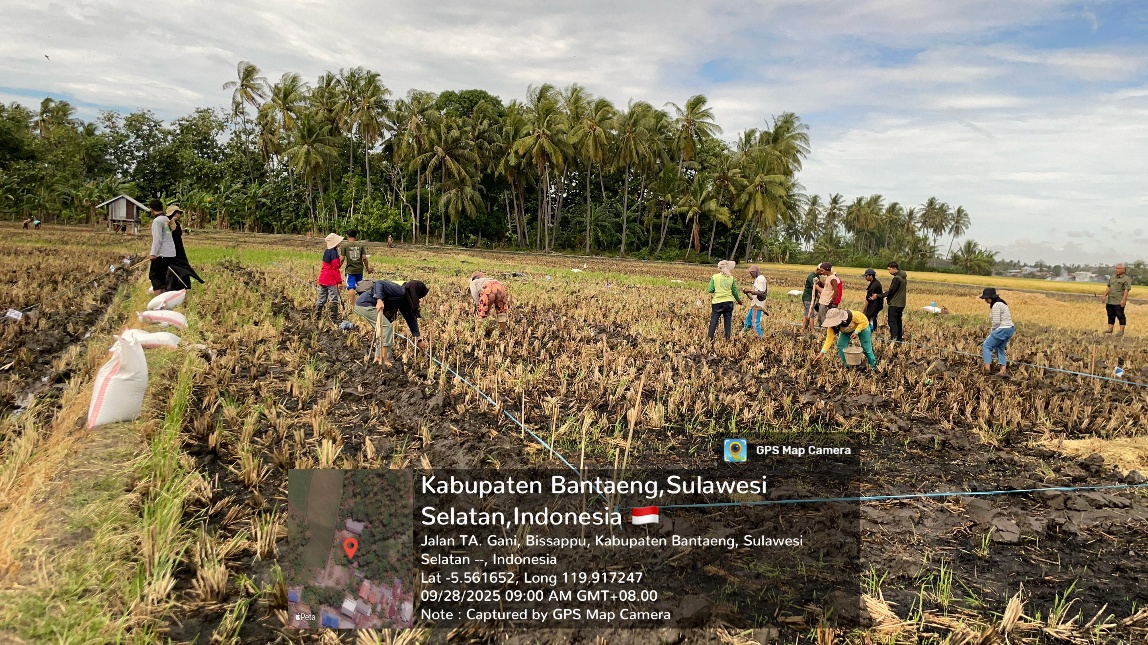

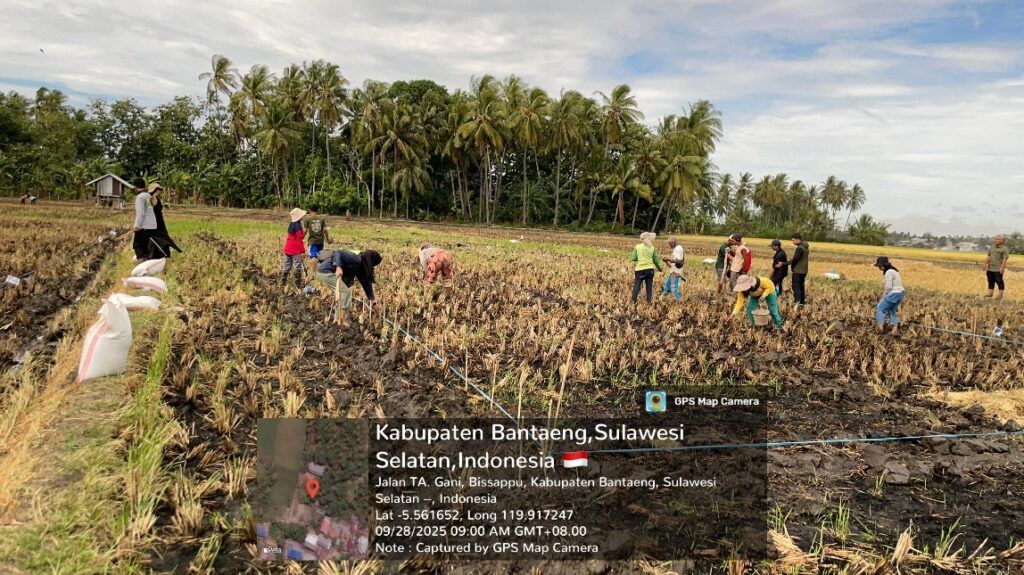
On 28 September 2025, a research team conducted a maize planting activity at a research cultivation site in Bantaeng Regency, South Sulawesi. The activity was part of a research project entitled “Engineering Hydro-, Halo-, Osmo-, and Hormo-Priming in Several Maize Varieties to Induce Abiotic Stress Tolerance on Dry, Acidic, and Saline Soils in Bantaeng Regency.” The planting marked an important beginning of the field research process, establishing the experimental crops needed to study how maize can better adapt to challenging environmental conditions.
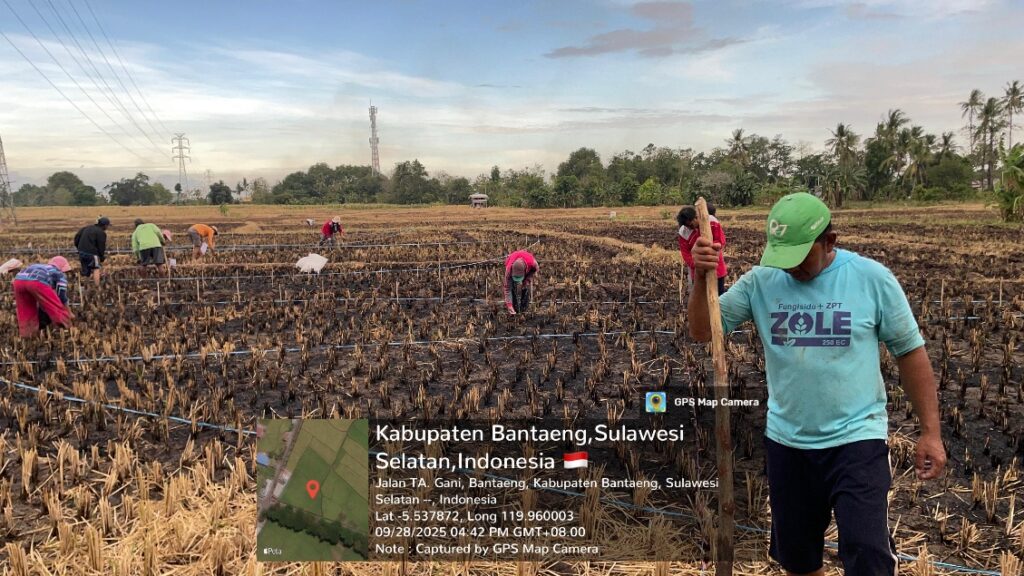
The main objective of the activity was to establish maize crops under controlled field research conditions and evaluate the potential of different maize varieties and priming treatments to improve their ability to withstand abiotic stresses. Hydro-, halo-, osmo-, and hormo-priming are approaches intended to prepare seeds or plants to respond more effectively to environmental challenges. Through field experimentation, the research team aims to understand which combinations can support better plant growth and productivity on dry, acidic, and saline soils.
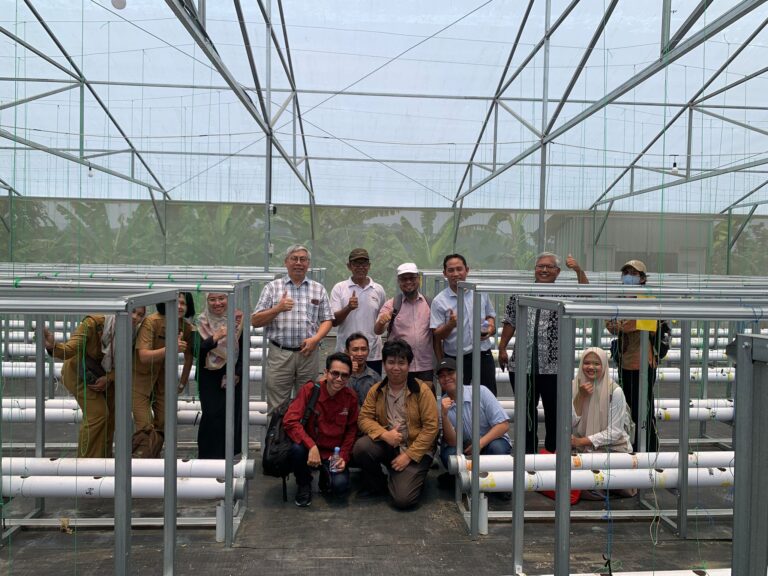
A total of 20 participants were involved in the activity, consisting of four research lecturers, three agricultural extension officers, three student researchers, and ten research assistants. Their involvement demonstrated a collaborative approach in implementing agricultural research, combining scientific expertise, practical knowledge from agricultural extension personnel, student participation, and field support.
The planting process was carefully carried out to establish the experimental plots and ensure that the research treatments could be observed under actual field conditions. The researchers will subsequently monitor plant growth, environmental conditions, and crop responses throughout the cultivation period. These observations will provide important evidence for assessing the effectiveness of the different priming approaches and the adaptability of selected maize varieties to abiotic stress.
The research has broader significance for agricultural development in areas where farmers face difficult soil and water conditions. Improving the ability of maize to grow under environmental stress can contribute to more stable agricultural production and provide knowledge that may eventually support farmers in managing dryland cultivation more effectively. In this context, field research becomes an important bridge between scientific innovation and practical agricultural challenges.
The activity directly contributes to Sustainable Development Goal (SDG) 1: No Poverty by supporting research aimed at strengthening agricultural productivity and resilience, which can contribute to more sustainable rural livelihoods. It also advances SDG 4: Quality Education by providing students with hands-on experience in agricultural experimentation, field observation, and scientific data collection.
The activity further supports SDG 15: Life on Land by promoting research on sustainable agricultural production under challenging soil conditions and encouraging approaches that can improve the efficient use and management of land resources. Equally important, it reflects SDG 17: Partnerships for the Goals through cooperation among lecturers, agricultural extension officers, students, and research assistants.
Through this planting activity, Bantaeng becomes an important field laboratory for exploring innovative approaches to climate-resilient maize cultivation. The research is expected to generate scientific knowledge that can contribute to sustainable agriculture while strengthening education, collaboration, and opportunities for improved agricultural livelihoods.