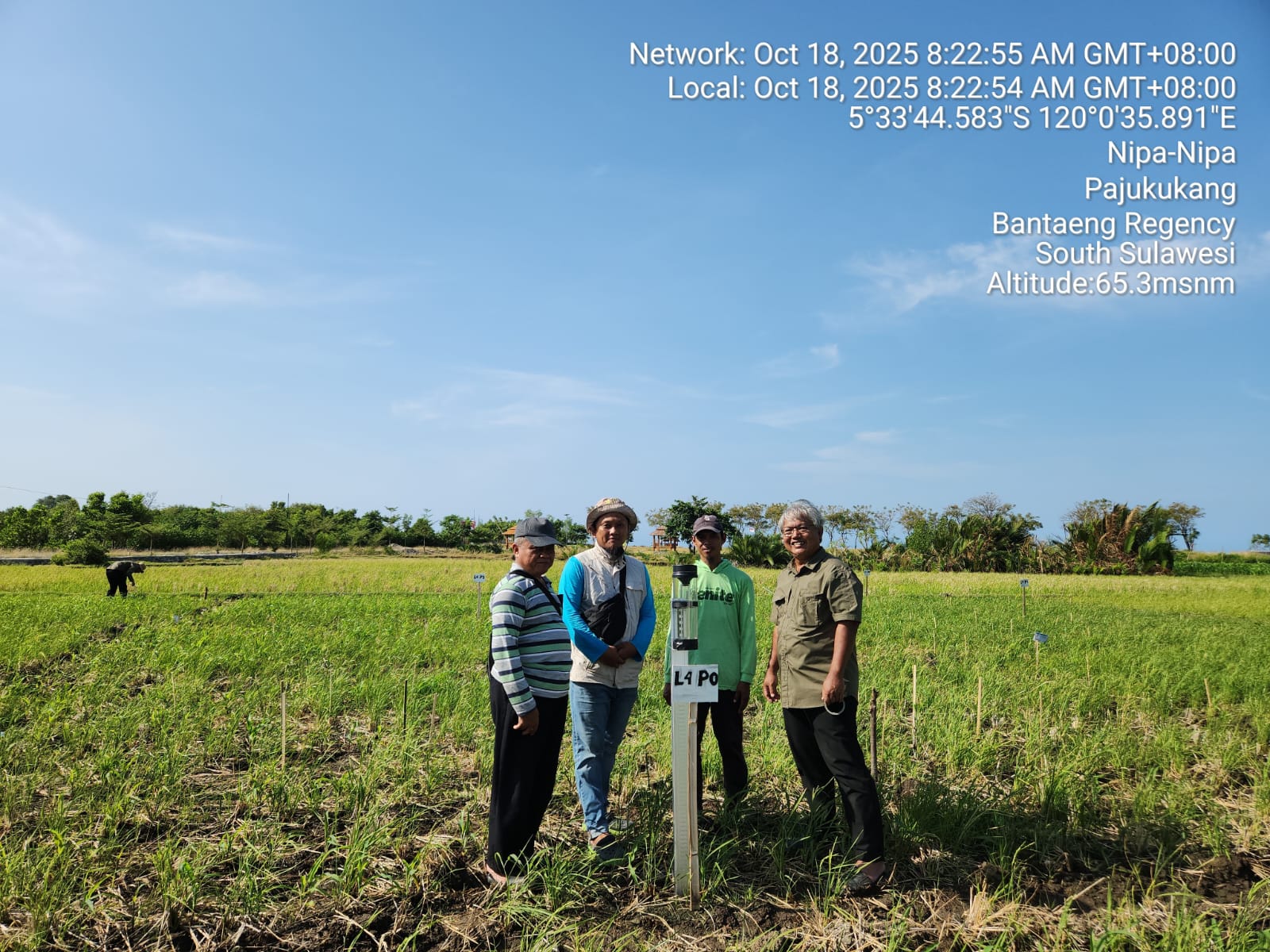

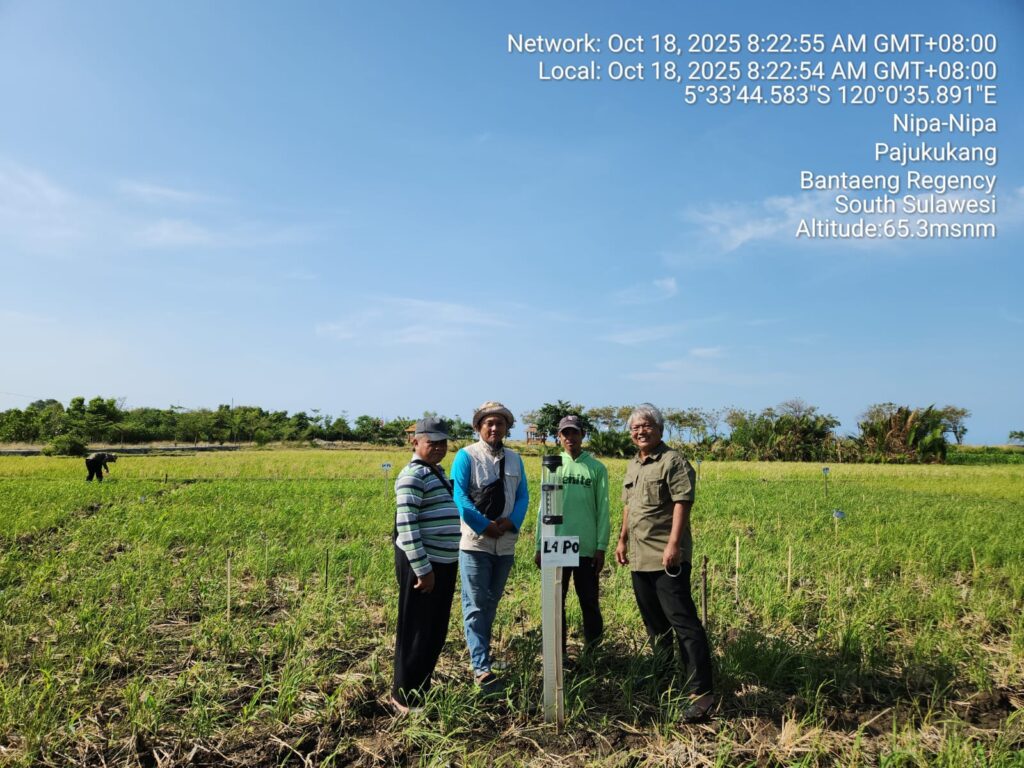
On 18 October 2025, a research team conducted the installation of a rain gauge at a maize cultivation site in Bantaeng Regency, South Sulawesi, as part of the research project entitled “Engineering Hydro-, Halo-, Osmo-, and Hormo-Priming in Several Maize Varieties to Induce Abiotic Stress Tolerance on Dry, Acidic, and Saline Soils in Bantaeng Regency.” The activity represents an important step in generating field-based data to support the development of maize cultivation strategies that are more resilient to challenging environmental conditions.
The primary objective of the activity was to install and prepare a rainfall monitoring instrument at the research location. Accurate rainfall data are essential for understanding the relationship between water availability and maize growth, particularly in dryland areas where rainfall can vary considerably. The data collected through the rain gauge will complement other observations in the field and help researchers evaluate how different maize varieties respond to environmental stresses under hydro-, halo-, osmo-, and hormo-priming treatments.
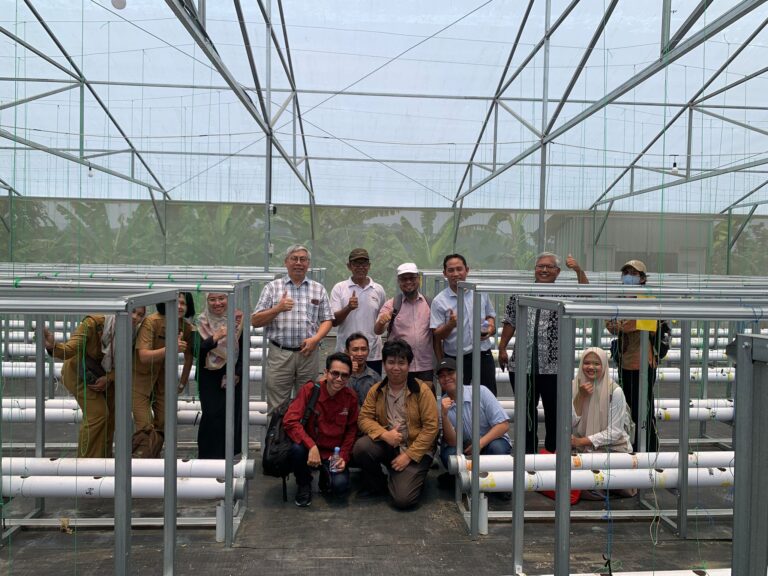
The activity involved 15 participants, consisting of two research lecturers, three agricultural extension officers, three student researchers, and two research assistants, along with supporting participants involved in the field implementation. Their collaboration ensured that the installation process was conducted carefully while also providing an opportunity for knowledge exchange among researchers, students, and agricultural practitioners.
Beyond its scientific purpose, the activity contributes to the broader goal of developing sustainable and climate-resilient agriculture. Reliable rainfall monitoring can help researchers better understand local environmental conditions and develop practical approaches for improving maize productivity in areas affected by water limitations, soil acidity, and salinity. Such research is particularly relevant for strengthening food production and supporting rural livelihoods.
This initiative directly supports Sustainable Development Goal (SDG) 1: No Poverty, as improved agricultural resilience can contribute to more stable production and livelihood opportunities for farming communities. It also supports SDG 4: Quality Education through the active involvement of students in field-based scientific research, allowing them to develop practical skills in environmental monitoring, data collection, and agricultural research. In addition, the activity contributes to SDG 15: Life on Land by promoting agricultural practices that consider soil and environmental sustainability.
Equally important is SDG 17: Partnerships for the Goals. The involvement of lecturers, students, agricultural extension officers, and research assistants demonstrates the value of collaboration in addressing complex agricultural and environmental challenges. By connecting scientific research with field practitioners, the activity creates a stronger pathway for translating research findings into knowledge and practices that can benefit local communities. Through this relatively simple but strategically important installation, the research team is building a reliable foundation for long-term field observation. The rainfall data generated from Bantaeng will contribute to a deeper understanding of maize adaptation and support the development of more resilient agricultural systems for challenging dryland environments.