

MAKASSAR, Indonesia Maret 30 2026/FSRAG/ – Small and Medium Enterprises (SMEs) may not always make headlines, but they play a huge role in everyday economic life. They create jobs, support local communities, and provide income for millions of people. In Indonesia, however, many small businesses still struggle to grow because they face limited financial knowledge, restricted access to formal financing, and difficulties keeping up with rapidly changing technology.
A study by Imansyah, Muhammad Ali, Cepi Pahlavi, and Wardhani Hakim examines how these challenges can be addressed. The research, titled “Financial Literacy, Technology, and SME Performance in Indonesia: The Role of Financial Access,” was published in Advances in Economics, Business and Management Research, Volume 331, pages 2182–2198, by Atlantis Press, part of Springer Nature, on July 30, 2025.
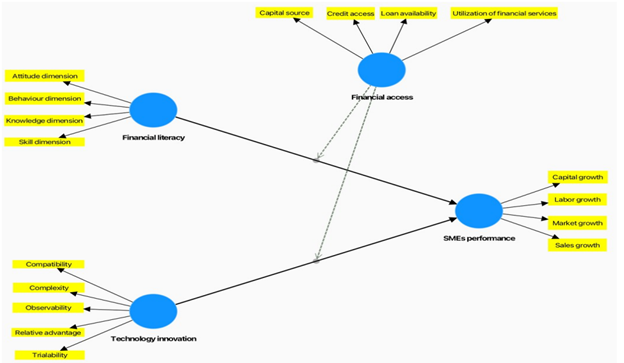
Using Structural Equation Modeling with Partial Least Squares (SEM-PLS), the researchers examined Indonesian SME owners and managers to understand how financial literacy and technological innovation influence business performance. They also investigated whether access to finance strengthens these relationships.
The findings deliver an important message: knowing how to manage money and using technology effectively can make a real difference to business performance.
Financial literacy helps entrepreneurs understand cash flow, create budgets, evaluate risks, and make better financial decisions. For a small business owner, these skills can mean the difference between simply surviving and being prepared to expand.
Technology provides another opportunity. Digital platforms, e-marketing, and technology-based business processes can help SMEs operate more efficiently and reach customers beyond their immediate surroundings. A small shop, for example, can use digital channels to promote its products without needing a large physical store or expensive traditional advertising.
But there is a major missing piece: access to finance.
The study shows that access to banking services, credit, and external capital can strengthen the positive effects of financial literacy and technological capability. An entrepreneur may know exactly what investment is needed and understand how technology could improve the business, but without sufficient funding, turning those ideas into reality can be difficult.
This creates a simple formula for stronger SMEs: knowledge + technology + financial access.
The findings are closely connected to United Nations Sustainable Development Goal 1 (SDG 1): No Poverty, particularly Target 1.4, which promotes equal access to economic resources, financial services, and appropriate technology. Stronger SMEs can provide more stable livelihoods, create employment, and reduce economic vulnerability within local communities.
Achieving this goal requires cooperation among governments, financial institutions, universities, technology providers, and business communities. Financial education programs should be combined with accessible digital tools and financing options that match the realities of small businesses.
Ultimately, giving entrepreneurs money alone is not enough. Giving them technology alone is not enough either. Entrepreneurs need the knowledge to make good decisions, the technology to compete, and the financial access to turn opportunities into action.
For Indonesia’s SMEs, bringing these three elements together could help transform small businesses into more resilient enterprises and turn local economic activity into broader, more inclusive development.
Reference
DOI: 10.2991/978-94-6463-758-8_174
Contact Info
- Name : Prof. Cepi Pahlevi, S.E., M.Si
- Phone/Mobile : +62 813-4193-6368
- Email : cepipahlevi@fe.unhas.ac.id