
Description
MAKASSAR, Indonesia 8 September 2026/FSRAG/ –
Rural economies form the true bedrock of national development, driving community self-reliance and creating vital local livelihoods. Under Indonesia's national agenda to build the country from its periphery, Village-Owned Enterprises (BUMDes) alongside Micro, Small, and Medium Enterprises (MSMEs) have emerged as essential catalysts for grassroots growth. Yet, rural businesses often face intense market challenges, particularly when operating near major multinational industrial zones. Unlike large corporations that rely on vast economies of scale, rural small enterprises must discover unique sources of competitive advantage to survive, grow, and secure consistent market share.
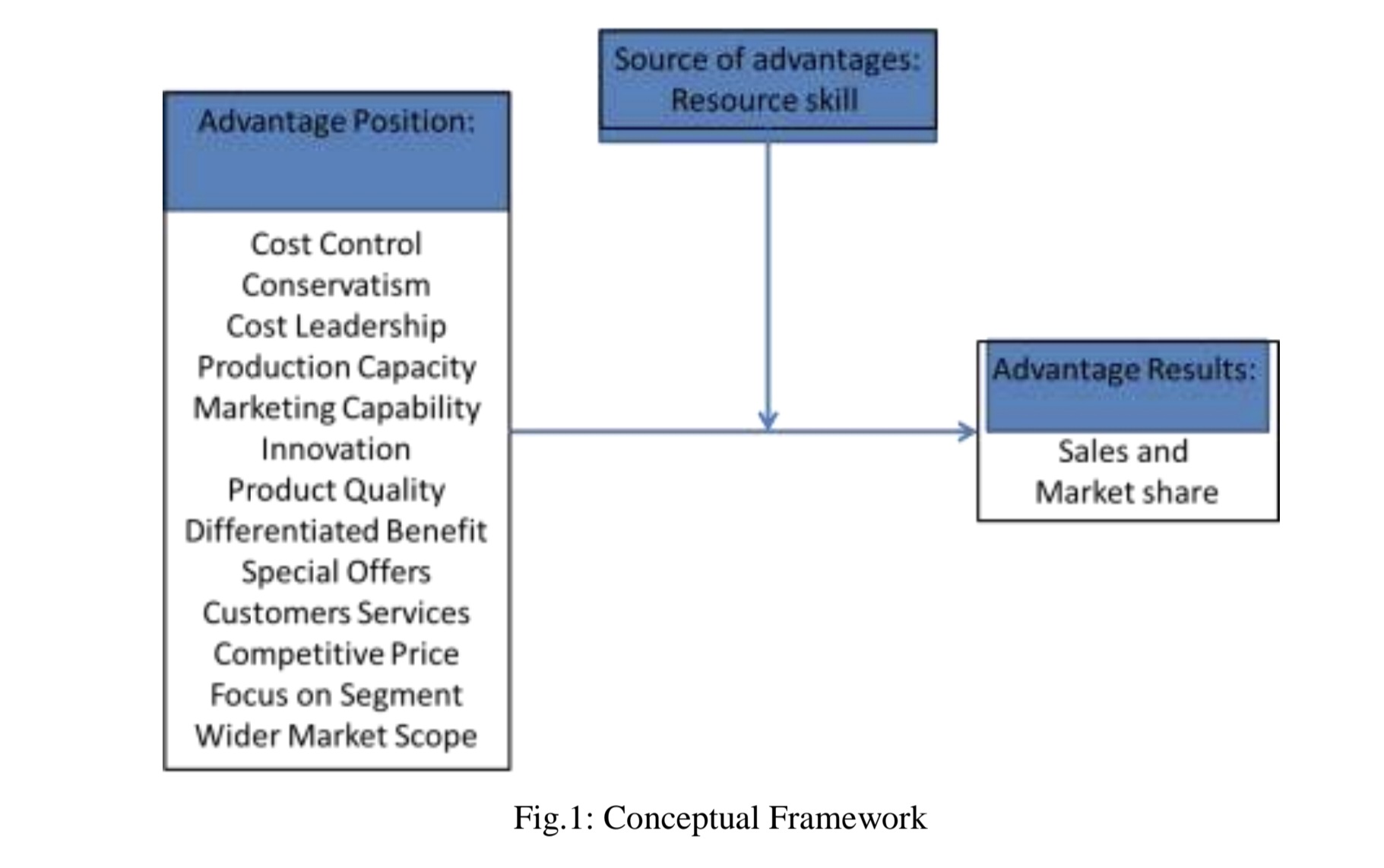
A foundational empirical study authored by Cepi Pahlevi, Otto Randa Payangan, Sabir, and Andi Harmoko Arifin explores these grassroots business mechanics. The research, titled "Competitive Advantages of Small Scale Enterprises (UMKM) and Village Owned Enterprises (BUMDES) as a Central Development Area (NAWACITA) in Luwu Timur District," was published in the Journal of Advanced Research in Dynamical and Control Systems (JARDCS) (Vol. 12, Issue 13, pp. 635–645, ISSN: 1943-023X, DOI: 10.5373/JARDCS/V1213/20201927) by publisher Institute of Advanced Scientific Research on February 27, 2020. Investigating 80 rural enterprise managers and BUMDes directors across Luwu Timur Regency, South Sulawesi, the authors examined how positional advantages and internal resource competencies collectively drive firm performance.
The empirical findings reveal a vital strategic lesson: superficial corporate structures alone cannot guarantee business success for rural enterprises. Formalities like share-based ownership or external capital grants from municipal authorities often showed negligible direct effects on business growth due to bureaucratic delays and access barriers. Instead, sustainable enterprise performance is driven by internal sources of advantage, specifically managerial skill sets and agile resource utilization. Capabilities such as conservative cost control, product innovation, niche market focus, responsive customer service, and reliable product quality directly transform operating positions into superior sales and expanding market reach ($R^2 = 0.848$, $F = 28.295$, $p = 0.000$). When rural enterprises combine practical organizational skills with focused market positioning, the interaction significantly accelerates business performance.
Ultimately, dividends are more than just payments to shareholders. They reflect how a company balances today’s expectations with tomorrow’s opportunities. For Indonesian manufacturers, maintaining healthy liquidity, managing debt wisely, considering shareholder interests, and investing strategically can create a stronger foundation for long-term growth.
Contact Info
-
- Name : Prof. Cepi Pahlevi, S.E., M.Si
-
- Phone/Mobile : +62 813-4193-6368
-
- Email : cepipahlevi@fe.unhas.ac.id
Description
MAKASSAR, Indonesia 3 July 2026/FSRAG/ –
A company can have plenty of cash, manageable debt, and strong financial resources, but does that automatically make it valuable in the eyes of investors? Not necessarily. For manufacturing companies, creating lasting value depends not only on financial strength but also on how effectively managers use company resources and how well corporate governance protects shareholder interests.
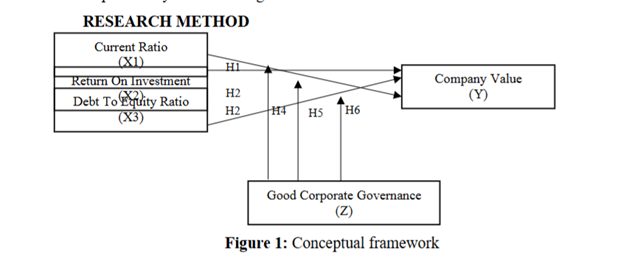
A study by Meliyanti, Cepi Pahlevi, and Fauzi R. Rahim explores this issue in Indonesia’s manufacturing sector. The research, titled “The Influence of Current Ratio (CR), Return On Investment (ROI), Debt To Equity Ratio (DER) on Company Value with Good Corporate Governance as a Moderating Variable (Case Study of Manufacturing Companies Listed on the Indonesian Stock Exchange for the 2016–2020 Period),” was published in Jurnal Penelitian Ekonomi dan Akuntansi (JPENSI), Volume 9, Number 1, pages 14–25, by Universitas Islam Lamongan on February 10, 2024.
The researchers used Moderated Regression Analysis to examine manufacturing companies listed on the Indonesia Stock Exchange (IDX) during 2016–2020. They focused on three financial indicators: Current Ratio (CR), Return on Investment (ROI), and Debt to Equity Ratio (DER). Company value was measured using Price to Book Value (PBV), while managerial share ownership was used to represent Good Corporate Governance.
The results reveal a clear message for investors and business leaders: profitability matters. Return on Investment had a positive and statistically significant effect on company value, with p = 0.001 and t = 3.764. This means companies that use their resources effectively to generate returns are more likely to be viewed positively by investors.
Interestingly, the Current Ratio and Debt to Equity Ratio did not have significant direct effects on company value. In other words, simply having large amounts of liquid assets or maintaining a particular debt level does not automatically make a company more valuable. What matters is how those resources are managed and transformed into productive business activities and sustainable profits.
This is where Good Corporate Governance becomes important. When managers own shares in the company, their interests may become more closely aligned with those of shareholders. This can encourage managers to use resources carefully, control unnecessary risks, and make decisions that support long-term company performance.
The findings are closely connected to United Nations Sustainable Development Goal 17 (SDG 17): Partnerships for the Goals. Strong corporate governance requires trust, accountability, transparency, and cooperation among managers, shareholders, investors, regulators, and other stakeholders. These relationships can help companies make more responsible financial decisions and build sustainable businesses.
Ultimately, financial ratios are only part of the story. A healthy balance sheet does not guarantee strong company value if resources are poorly managed. For Indonesia’s manufacturing sector, the combination of profitability, responsible financial management, and effective governance can create stronger investor confidence and more resilient businesses.
The lesson is simple: financial resources create potential, but good management and good governance turn that potential into lasting value.
Doi: Doi: 10.30736/.v9i1.1854
Contact Info
-
- Name : Prof. Cepi Pahlevi, S.E., M.Si
-
- Phone/Mobile : +62 813-4193-6368
-
- Email : cepipahlevi@fe.unhas.ac.id
Description
MAKASSAR, Indonesia 12 April 2026/FSRAG/ – Smart Banking Needs Smart Customers: Why Digital Literacy Matters
Banking is becoming faster, easier, and increasingly digital. With just a smartphone, people can transfer money, pay bills, check their balance, and manage their finances without visiting a bank branch. But does having access to digital banking automatically mean everyone can benefit from it? Not necessarily.
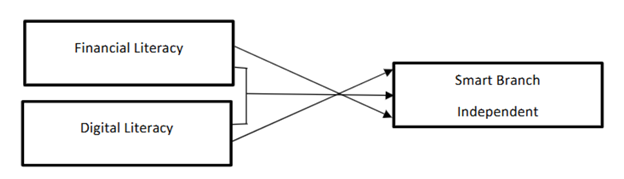
A study by Nahda Alyani Sharfina, Cepi Pahlevi, and Fauzi R. Rahim explores how financial and digital literacy influence people’s readiness to use smart banking services. The research, titled “Analysis Of The Influence Of Financial Literacy And Digital Literacy Of The Community On Smart Branch Mandiri,” was published in the International Journal of Business and Quality Research (IJBQR), Volume 1, Number 3, pages 131–145, by Cita Konsultindo Mandiri on August 4, 2023. The article can be identified through its DOI: https://doi.org/10.63922/ijbqr.v1i03.436.
The researchers focused on Bank Mandiri customers in Mamuju, West Sulawesi, and Kendari, Southeast Sulawesi. Their study examined how financial knowledge and digital skills influence customer readiness to interact with smart branch facilities.
Smart branches are designed to connect traditional banking with digital services. Instead of relying entirely on bank tellers, customers can use automated machines and self-service terminals for various banking activities. These technologies can make banking more convenient and efficient. However, technology alone is not enough.
Customers need the knowledge and confidence to use it.
Financial literacy helps people understand money management, budgeting, and financial transactions. Meanwhile, digital literacy allows customers to interact more comfortably with automated banking systems. People with stronger digital skills may be more willing to explore self-service facilities, while those unfamiliar with digital interfaces may feel hesitant or even avoid them.
This creates an important lesson for banks: digital transformation must go hand in hand with customer education.
Smart branches should not only be viewed as places for automated transactions. They can also become learning spaces where customers gradually develop confidence in using digital financial services. With appropriate guidance and support, customers who once depended heavily on conventional banking counters may eventually become more independent digital banking users.
This issue is closely connected to United Nations Sustainable Development Goal 1 (SDG 1): No Poverty, particularly Target 1.4, which promotes equal access to economic resources, financial services, and appropriate technology. Improving financial and digital literacy can help communities participate more actively in the formal financial system and manage their resources more effectively.
The study therefore highlights a simple but powerful idea: financial inclusion is not only about providing technology it is also about ensuring people have the ability to use it.
As Indonesian banking continues to move toward smarter and more automated services, banks, governments, educators, and local communities need to work together. Combining accessible technology with financial and digital education can reduce adoption barriers and ensure that digital transformation benefits a wider part of society.
In the end, the smartest banking system is not necessarily the one with the most advanced technology. It is the one that makes people feel capable, confident, and included.
Description
MAKASSAR, Indonesia 22 Agustus 2026/FSRAG/ – From ESG Rules to Business Strength: Why Risk Management Matters
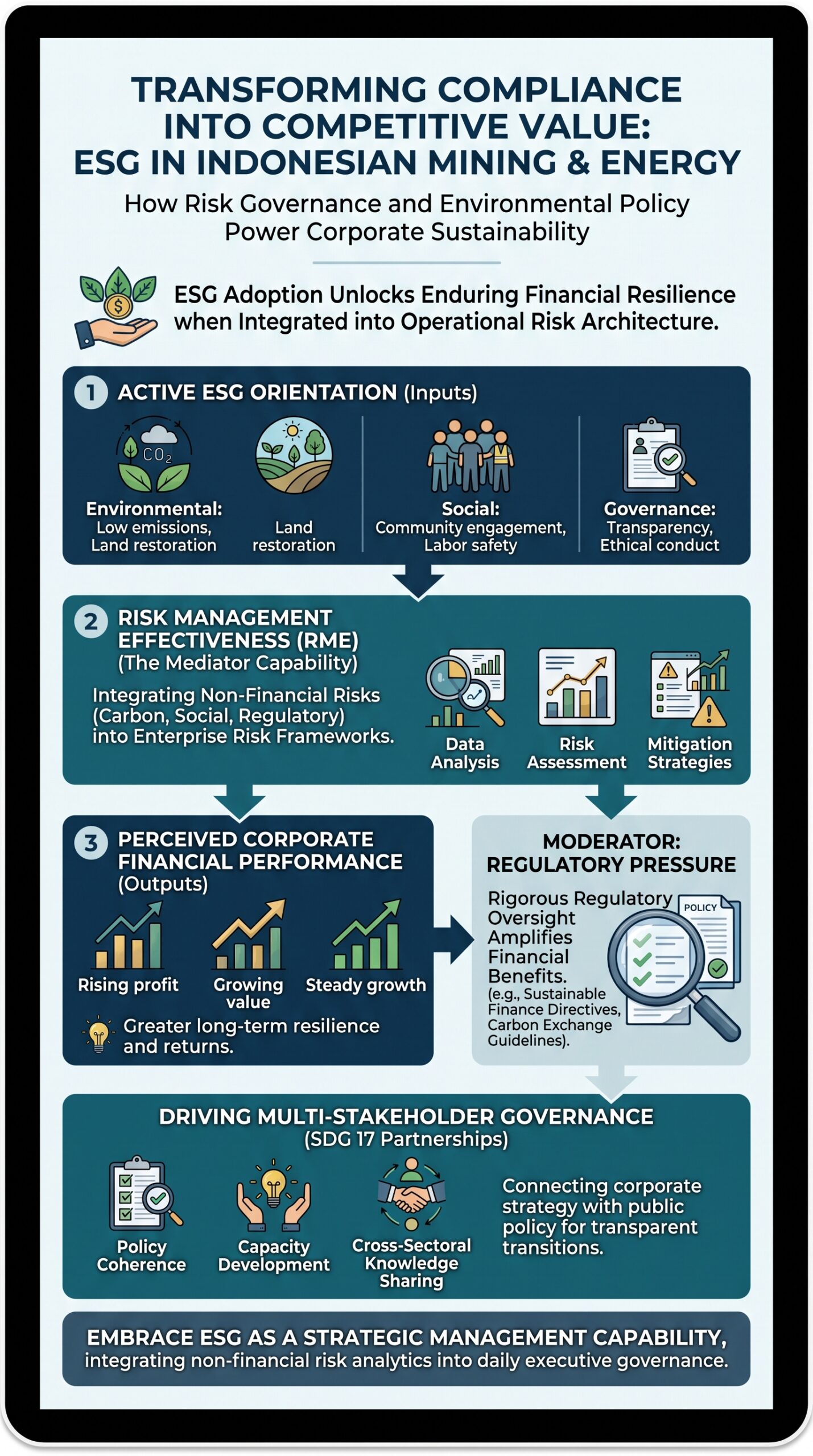
Mining and energy companies are among the most important contributors to economic development, but they also face serious environmental and social challenges. Coal, nickel, oil and gas, and other resource-intensive industries can affect ecosystems, local communities, and climate conditions. As pressure for sustainable business practices grows, companies are being asked an important question: Can environmental responsibility also strengthen financial performance?
Research by Nur Ashari Hijrah and Cepi Pahlevi suggests that the answer can be yes, especially when Environmental, Social, and Governance (ESG) practices are connected to effective risk management.
The study, titled “When Risk Management and Regulation Shape ESG Performance Links in Indonesian Mining and Energy,” was published in the proceedings Advances in Economics, Business and Management Research, Volume 388, pages 258–273, by Atlantis Press, part of Springer Nature, in 2026. The article has the DOI 10.2991/978-94-6239-709-5-19.
The researchers analyzed responses from 143 executives representing 50 publicly listed mining and energy companies on the Indonesia Stock Exchange (IDX). Using Partial Least Squares Structural Equation Modeling (PLS-SEM), they examined whether ESG orientation could improve perceived financial performance and whether risk management and regulatory pressure played important roles in this relationship.
The findings provide an important lesson for businesses: ESG can create greater value when it becomes part of everyday risk management rather than simply a compliance requirement.
Consider a mining company facing stricter environmental regulations, community concerns, or climate-related risks. If these issues are treated as separate sustainability problems, the company may react only after damage has occurred. But when environmental and social risks are included in the company’s risk-management system, managers can identify potential problems earlier and prepare better responses.
The study found that Risk Management Effectiveness (RME) plays a key mediating role between ESG orientation and financial performance. In simple terms, ESG practices can contribute to better financial outcomes when companies know how to identify, assess, and manage the risks associated with sustainability.
Regulation also matters. Stronger regulatory pressure can reinforce the relationship between effective risk management and financial performance. Instead of seeing regulations as burdens, companies can use them as incentives to improve governance, strengthen internal systems, and prepare for future risks.
These findings are closely connected to United Nations Sustainable Development Goal 17 (SDG 17): Partnerships for the Goals, particularly Targets 17.14 and 17.16. Sustainable development requires cooperation among governments, companies, investors, financial institutions, researchers, and communities. Strong partnerships can help transform sustainability policies into practical business strategies.
For Indonesia’s mining and energy sector, the message is clear: sustainability should not stop at producing ESG reports. Companies need to integrate environmental and social considerations into their strategic decisions and risk-management systems.
Ultimately, ESG is not only about protecting the environment or satisfying regulators. It can also be a tool for building stronger, more resilient businesses. Companies that combine sustainability, effective risk management, and collaboration may be better prepared for regulatory change, environmental uncertainty, and growing stakeholder expectations.
Description
MAKASSAR, Indonesia 22 June 2026/FSRAG/ – Every day, people buy food and drinks without thinking much about the companies behind these products. The food and beverage industry is one of the more resilient parts of the economy because demand for essential consumer products can remain relatively stable even when economic conditions become uncertain. But for these companies, an important question remains: does taking on more debt or increasing operating leverage actually make a company more valuable?
A study by Sun Dewi Putri, Cepi Pahlevi, and Fauzi R. Rahim provides an interesting answer. The research, titled “Effect of Operating Leverage and Financial Leverage on Firm Value through Financial Performance,” was published in Advances in Economics, Business and Management Research, Volume 331, pages 1130–1148, by Atlantis Press, part of Springer Nature, on July 30, 2025. The article’s DOI is 10.2991/978-94-6463-758-8_92.
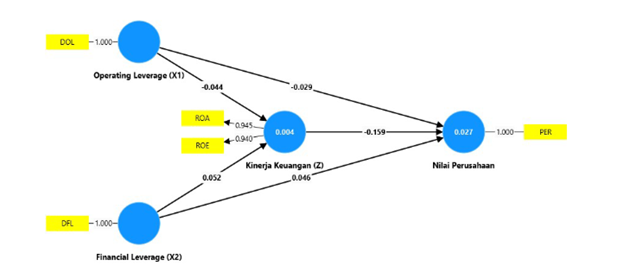
The researchers examined 34 food and beverage companies listed on the Indonesia Stock Exchange (IDX) using 170 audited financial reports covering 2019–2023. They focused on two types of leverage: operating leverage, which relates to how fixed operating costs affect business performance, and financial leverage, which reflects the use of debt to finance a company. They also examined financial performance through Return on Assets (ROA) and Return on Equity (ROE).
The most interesting finding is that profitability matters more than leverage alone.
Financial performance had a positive and statistically significant effect on firm value, with p = 0.009 and t = 2.630. This means companies that can efficiently use their assets and generate sustainable profits are more likely to receive positive attention from investors.
However, operating leverage and financial leverage did not have significant direct effects on financial performance or firm value. Financial performance also did not significantly mediate the relationship between leverage and firm value.
What does this mean in everyday business terms? Simply having more debt does not automatically make a company more valuable. Borrowing can provide additional capital, but if that money does not generate stronger profits, investors may see little reason to increase the company’s valuation.
For food and beverage companies, the lesson is particularly important. Rather than focusing excessively on increasing debt, managers should concentrate on using assets efficiently, controlling operating costs, protecting profit margins, and generating consistent returns.
These findings are also relevant to United Nations Sustainable Development Goal 17 (SDG 17): Partnerships for the Goals, particularly Targets 17.16 and 17.17. Strong financial governance depends on cooperation and transparent communication among companies, investors, financial institutions, regulators, and other stakeholders. Reliable financial information helps these groups make better decisions and build greater trust.
Ultimately, the study offers a simple message: leverage may provide financial power, but profitability creates value. For Indonesia’s food and beverage industry, sustainable earnings, efficient operations, responsible financial management, and transparent governance may be more important for long-term success than simply taking on more debt.

Description
MAKASSAR, Indonesia 30 June 2026/FSRAG/ – The financial services industry is entering a new era. As Industry 5.0 brings humans and intelligent technologies closer together, financing companies are being challenged to rethink how they make money. Success is no longer simply about cutting expenses. Companies must understand where their money goes, how it attracts customers, and how technology can help turn spending into sustainable profit.
A study by Rajaman, Muhammad Ali, Cepi Pahlevi, and Andi Reni explores this challenge in Indonesia’s financing sector. The research, titled “Analysis of the Influence of COF, OPEX, TAC, and NCL on Profits, Relationship to the Industrial Revolution 5.0. on Financing Companies in Indonesia,” was published in the Journal of Information Systems Engineering and Management, Volume 10, Number 40, e-ISSN 2468-4376, by JISEM on February 28, 2025. The article’s DOI is 10.52783/jisem.v10i40s.7456.
The researchers examined financial data from PT Adira Dinamika Multi Finance Tbk covering 2010–2022. They analyzed four factors that could influence net profit: Cost of Funds (COF), Operating Expenses (OPEX), Total Acquisition Cost (TAC), and Net Credit Loss (NCL).
One finding stands out: customer acquisition spending can actually help generate profit.
Total Acquisition Cost (TAC) had a positive and statistically significant effect on net profit, with p = 0.040 and β = 1.679. In simple terms, money spent to attract new customers should not always be viewed as an unwanted expense. When customer acquisition is carefully targeted, promotional activities and onboarding processes can bring in new customers and ultimately generate additional revenue.
The finding challenges the traditional idea that companies become more profitable simply by spending less. Instead, the important question is: Does the money being spent create value?
This idea becomes even more relevant in Industry 5.0. Financing companies can use technologies such as Artificial Intelligence (AI), predictive analytics, automated customer scoring, and data-driven marketing to identify potential customers and understand their needs. Technology can help companies determine which customers are more likely to respond to specific offers, allowing acquisition budgets to be directed toward opportunities with greater potential returns.
Interestingly, COF, OPEX, and NCL did not show statistically significant individual effects on net profit in the study. This suggests that financial costs should not necessarily be viewed in isolation. Their impact depends on how they interact with revenue generation, customer acquisition, operational strategies, and broader business decisions.
The findings are also relevant to United Nations Sustainable Development Goal 17 (SDG 17): Partnerships for the Goals, particularly Targets 17.16 and 17.17. Building smarter financial systems requires cooperation among financing companies, technology providers, regulators, researchers, policymakers, and other stakeholders. Sharing knowledge, technology, and expertise can help financial institutions become more innovative and resilient.
Ultimately, Industry 5.0 is not about replacing people with machines. It is about using technology intelligently to help people make better decisions.