

MAKASSAR, Indonesia 3 July 2026/FSRAG/ – A company can have plenty of cash, manageable debt, and strong financial resources, but does that automatically make it valuable in the eyes of investors? Not necessarily. For manufacturing companies, creating lasting value depends not only on financial strength but also on how effectively managers use company resources and how well corporate governance protects shareholder interests.
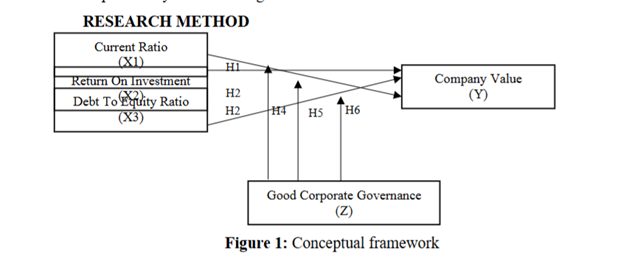
A study by Meliyanti, Cepi Pahlevi, and Fauzi R. Rahim explores this issue in Indonesia’s manufacturing sector. The research, titled “The Influence of Current Ratio (CR), Return On Investment (ROI), Debt To Equity Ratio (DER) on Company Value with Good Corporate Governance as a Moderating Variable (Case Study of Manufacturing Companies Listed on the Indonesian Stock Exchange for the 2016–2020 Period),” was published in Jurnal Penelitian Ekonomi dan Akuntansi (JPENSI), Volume 9, Number 1, pages 14–25, by Universitas Islam Lamongan on February 10, 2024.
The researchers used Moderated Regression Analysis to examine manufacturing companies listed on the Indonesia Stock Exchange (IDX) during 2016–2020. They focused on three financial indicators: Current Ratio (CR), Return on Investment (ROI), and Debt to Equity Ratio (DER). Company value was measured using Price to Book Value (PBV), while managerial share ownership was used to represent Good Corporate Governance.
The results reveal a clear message for investors and business leaders: profitability matters. Return on Investment had a positive and statistically significant effect on company value, with p = 0.001 and t = 3.764. This means companies that use their resources effectively to generate returns are more likely to be viewed positively by investors.
Interestingly, the Current Ratio and Debt to Equity Ratio did not have significant direct effects on company value. In other words, simply having large amounts of liquid assets or maintaining a particular debt level does not automatically make a company more valuable. What matters is how those resources are managed and transformed into productive business activities and sustainable profits.
This is where Good Corporate Governance becomes important. When managers own shares in the company, their interests may become more closely aligned with those of shareholders. This can encourage managers to use resources carefully, control unnecessary risks, and make decisions that support long-term company performance.
The findings are closely connected to United Nations Sustainable Development Goal 17 (SDG 17): Partnerships for the Goals. Strong corporate governance requires trust, accountability, transparency, and cooperation among managers, shareholders, investors, regulators, and other stakeholders. These relationships can help companies make more responsible financial decisions and build sustainable businesses.
Ultimately, financial ratios are only part of the story. A healthy balance sheet does not guarantee strong company value if resources are poorly managed. For Indonesia’s manufacturing sector, the combination of profitability, responsible financial management, and effective governance can create stronger investor confidence and more resilient businesses.
The lesson is simple: financial resources create potential, but good management and good governance turn that potential into lasting value.
Reference
Doi: 10.30736/.v9i1.1854
Contact Info
- Name : Prof. Cepi Pahlevi, S.E., M.Si
- Phone/Mobile : +62 813-4193-6368
- Email : cepipahlevi@fe.unhas.ac.id