

MAKASSAR, Indonesia 8 September 2026/FSRAG – Rural economies form the true bedrock of national development, driving community self-reliance and creating vital local livelihoods. Under Indonesia’s national agenda to build the country from its periphery, Village-Owned Enterprises (BUMDes) alongside Micro, Small, and Medium Enterprises (MSMEs) have emerged as essential catalysts for grassroots growth. Yet, rural businesses often face intense market challenges, particularly when operating near major multinational industrial zones. Unlike large corporations that rely on vast economies of scale, rural small enterprises must discover unique sources of competitive advantage to survive, grow, and secure consistent market share.
A foundational empirical study authored by Cepi Pahlevi, Otto Randa Payangan, Sabir, and Andi Harmoko Arifin explores these grassroots business mechanics. The research, titled “Competitive Advantages of Small Scale Enterprises (UMKM) and Village Owned Enterprises (BUMDES) as a Central Development Area (NAWACITA) in Luwu Timur District,” was published in the Journal of Advanced Research in Dynamical and Control Systems (JARDCS) (Vol. 12, Issue 13, pp. 635–645, ISSN: 1943-023X) by publisher Institute of Advanced Scientific Research on February 27, 2020. Investigating 80 rural enterprise managers and BUMDes directors across Luwu Timur Regency, South Sulawesi, the authors examined how positional advantages and internal resource competencies collectively drive firm performance.
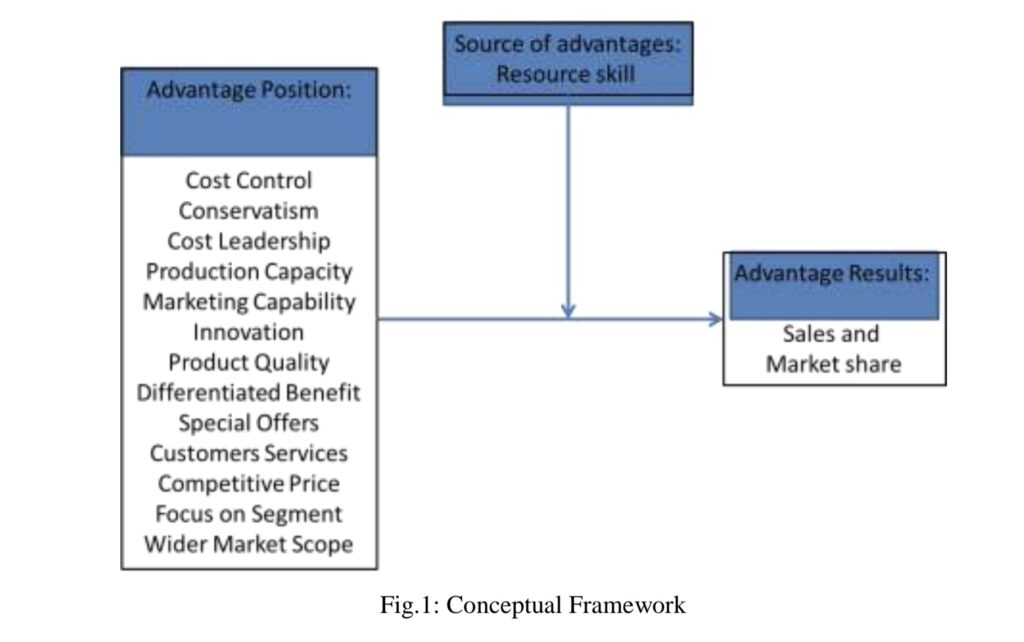
The empirical findings reveal a vital strategic lesson: superficial corporate structures alone cannot guarantee business success for rural enterprises. Formalities like share-based ownership or external capital grants from municipal authorities often showed negligible direct effects on business growth due to bureaucratic delays and access barriers. Instead, sustainable enterprise performance is driven by internal sources of advantage, specifically managerial skill sets and agile resource utilization. Capabilities such as conservative cost control, product innovation, niche market focus, responsive customer service, and reliable product quality directly transform operating positions into superior sales and expanding market reach ($R^2 = 0.848$, $F = 28.295$, $p = 0.000$). When rural enterprises combine practical organizational skills with focused market positioning, the interaction significantly accelerates business performance.
These findings align directly with the United Nations SDG 1 (No Poverty), specifically Target 1.4, which emphasizes ensuring equal rights to economic resources, local enterprise support, and financial independence for rural communities. By shifting away from passive dependency on government subsidies toward self-sustaining business competencies, BUMDes and rural MSMEs generate stable local income streams and reduce poverty from the grassroots up. Furthermore, the study demonstrates that empowering local community-owned businesses builds durable economic resilience in underserved regions, preventing rural wealth drain.
Ultimately, transforming rural enterprises into competitive powerhouses requires investing in human skills rather than mere administrative structures. By mastering cost management, prioritizing customer relationships, and delivering distinctive product value, village-owned businesses can achieve enduring commercial viability and foster lasting prosperity across rural communities.
Reference
DOI: 10.5373/JARDCS/V1213/20201927
Contact Info
- Name : Prof. Cepi Pahlevi, S.E., M.Si
- Phone/Mobile : +62 813-4193-6368
- Email : cepipahlevi@fe.unhas.ac.id