
Lantebung Mangrove Forest, Makassar, South Sulawesi, Indonesia/11-1-2026/FORTREMIC –
When people think about mangrove forests, they often imagine green coastal trees, birds, fish, and beautiful landscapes. However, beneath the water surface exists another hidden world that plays a crucial role in maintaining ecosystem balance. Millions of microscopic organisms live in mangrove waters, supporting nutrient cycles, organic matter decomposition, and the overall health of coastal ecosystems.
This research is strongly connected with Sustainable Development Goal (SDG) 14: Life Below Water, which focuses on conserving and sustainably using marine and coastal resources. Protecting marine ecosystems does not only mean protecting large marine animals but also preserving microscopic communities that form the foundation of aquatic life.
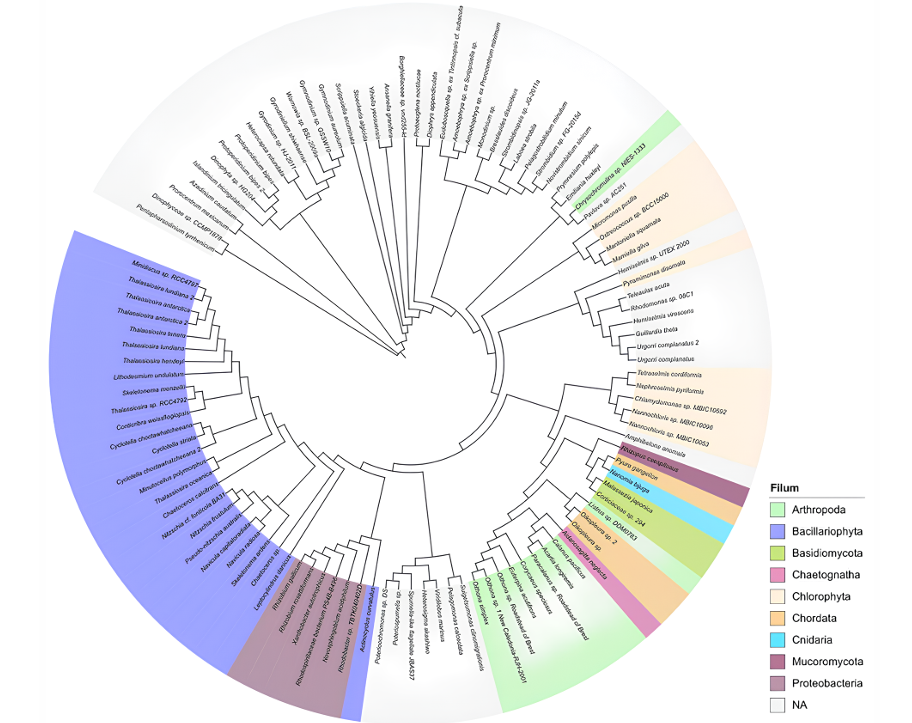
A study published in Ecology and Evolution explored the microbial community composition of tropical mangrove forests in Lantebung, Makassar, Indonesia. Researchers applied an advanced environmental DNA (eDNA) metabarcoding method to identify microorganisms living in mangrove waters. This technology allows scientists to discover biodiversity that is difficult to observe using traditional methods.
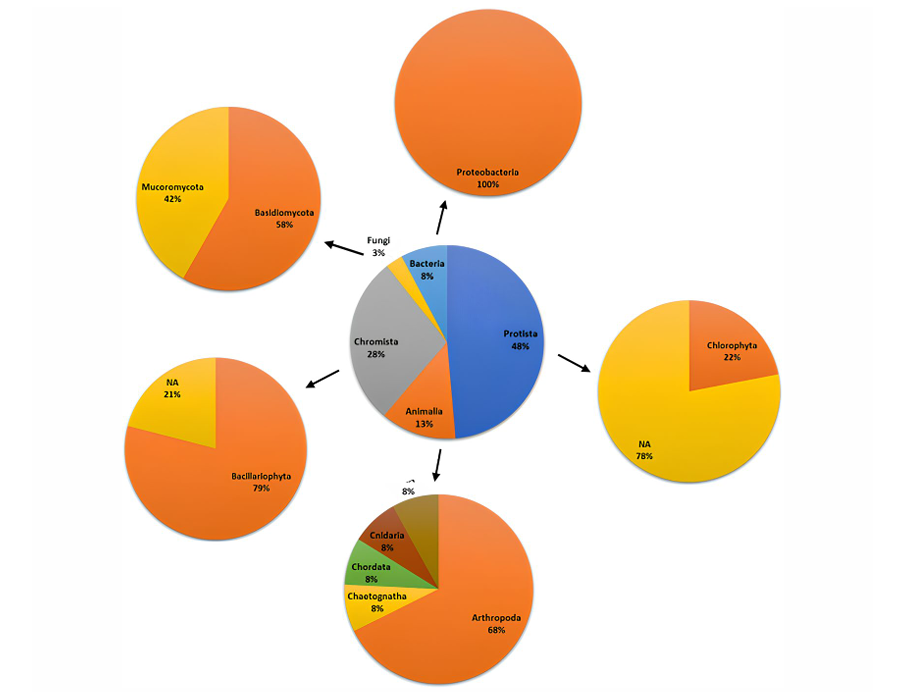
Pie chart of the percentage of species diversity at the kingdom and phylum levels of the Lantebung Mangrove Forest based on the 18S rRNA sequence.
The research revealed remarkable hidden biodiversity. Scientists identified 103 microbial species belonging to five major kingdoms: Protista, Chromista, Animalia, Bacteria, and Fungi. Protista represented the largest group with 48.54%, followed by Chromista (28%), Animalia (12.62%), Bacteria (7.77%), and Fungi (2.91%). These findings demonstrate that mangrove ecosystems contain complex biological networks that are essential for environmental stability.
Although microscopic, these organisms have important ecological functions. Some microorganisms act as primary producers that generate energy through photosynthesis and become the foundation of aquatic food chains. Others contribute to decomposition processes and nutrient recycling, helping maintain the productivity of mangrove ecosystems. A balanced microbial community can also indicate that an ecosystem is functioning properly.
The study also found that environmental conditions influence microbial diversity. Two sampling locations, P1 and P2, showed different microbial compositions. Station P1, which was more exposed to open water, had higher microbial diversity compared with the area under mangrove vegetation. Researchers suggested that differences in sunlight availability, water movement, and nutrient exchange contributed to these variations.
The discovery provides valuable information for mangrove conservation. Mangroves protect coastlines, support marine organisms, store natural resources, and provide benefits for coastal communities. Understanding microbial biodiversity gives scientists better tools to monitor ecosystem changes and develop effective conservation strategies.
This research is also related to other global sustainability goals. SDG 1: No Poverty is supported because healthy coastal ecosystems contribute to community livelihoods. SDG 3: Good Health and Well-being is connected through maintaining healthy environmental conditions. SDG 4: Quality Education is supported by increasing scientific knowledge about biodiversity. SDG 14: Life Below Water is the main focus because the study highlights marine and coastal biodiversity conservation. SDG 15: Life on Land is related because mangrove ecosystems connect land and coastal environments. SDG 17: Partnerships for the Goals is reflected through collaboration among researchers and institutions.
This research reminds us that protecting nature means protecting all forms of life, including those that cannot be seen. The smallest microorganisms beneath mangrove waters may hold a major key to maintaining the health of our coastal ecosystems.