
Bulukumba Regency, South Sulawesi, Indonesia/1-09-2025/FORTREMIC – Beneath agricultural land, a hidden biological network is working every day to maintain soil health and support plant growth. These tiny organisms are called arbuscular mycorrhizal fungi (AMF). Although they cannot be easily seen, AMF have an important role in creating sustainable agricultural ecosystems by forming a natural partnership with plant roots.
Beneath agricultural land, a hidden biological network is working every day to maintain soil health and support plant growth. These tiny organisms are called arbuscular mycorrhizal fungi (AMF). Although they cannot be easily seen, AMF have an important role in creating sustainable agricultural ecosystems by forming a natural partnership with plant roots.
This research is closely related to Sustainable Development Goal (SDG) 15: Life on Land, which focuses on protecting terrestrial ecosystems, conserving biodiversity, and promoting sustainable management of natural resources. Maintaining biodiversity is not only about protecting large animals and plants but also about preserving small organisms that keep ecosystems functioning.
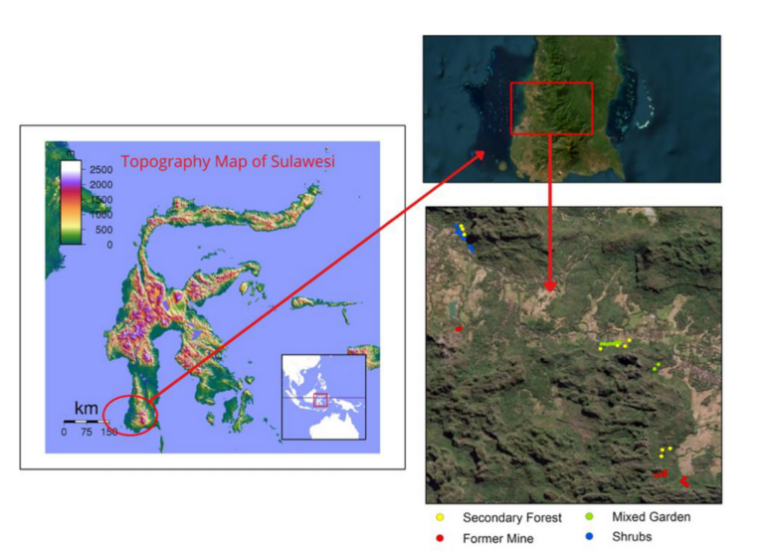
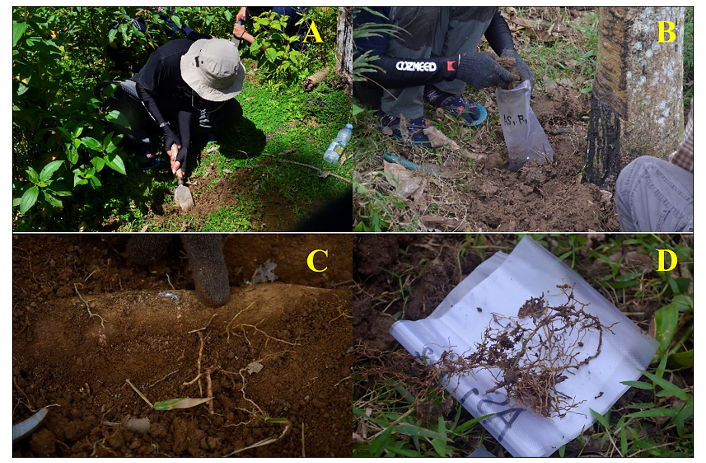
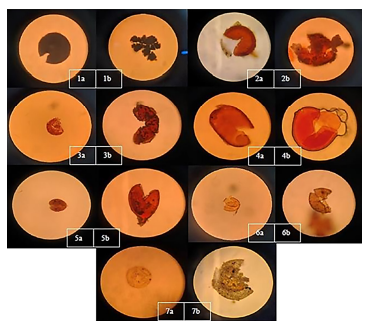
A scientific study published in Ecological Engineering & Environmental Technology investigated the relationship between rubber plants and AMF in rubber-based agroforestry systems in Jojjolo Village, Bulukumpa District, Bulukumba Regency, South Sulawesi, Indonesia. The research aimed to identify the diversity and density of AMF in soil, around plant roots, and their association with rubber plants.
Agroforestry is a sustainable farming approach that combines trees and agricultural crops in the same area. This system provides many environmental benefits, including increasing biodiversity, improving soil conditions, reducing erosion, and supporting ecosystem stability. Rubber agroforestry systems can function similarly to natural forests because different plants create complex root systems and habitats for many organisms.
The study found that AMF communities in rubber plantations consisted of two main genera: Glomus and Acaulospora. Glomus was identified as the dominant group because of its ability to adapt to different environmental conditions. Researchers also found that the highest AMF spore density reached an average of 88.97 spores per 50 grams of soil in agroforestry systems with sparse plant density.
The relationship between fungi and plants is a natural cooperation. AMF connect with plant roots and help plants obtain nutrients, especially phosphorus, which is essential for growth. In return, plants provide energy for fungi. This mutual relationship can improve plant productivity, soil structure, and plant resistance against environmental stress.
This research also contributes to several global sustainability goals. SDG 1: No Poverty is supported because sustainable agriculture can improve farmers’ productivity and livelihoods. SDG 3: Good Health and Well-being is related through sustainable food production systems. SDG 4: Quality Education is supported by increasing knowledge about environmental conservation. SDG 14: Life Below Water is connected because healthy land ecosystems help protect water environments. SDG 15: Life on Land is the main focus because the research highlights soil biodiversity conservation. SDG 17: Partnerships for the Goals is reflected through collaboration between researchers and institutions in developing sustainable environmental solutions.
The study provides an important message: sustainability starts from the ground beneath our feet. Protecting soil biodiversity means protecting the foundation of life. These invisible fungi remind us that even the smallest organisms can create a significant impact on the future of agriculture and the planet.
Reference:
https://doi.org/10.12912/27197050/208674
Contact:
Muhammad Restu
+62-811-443-515