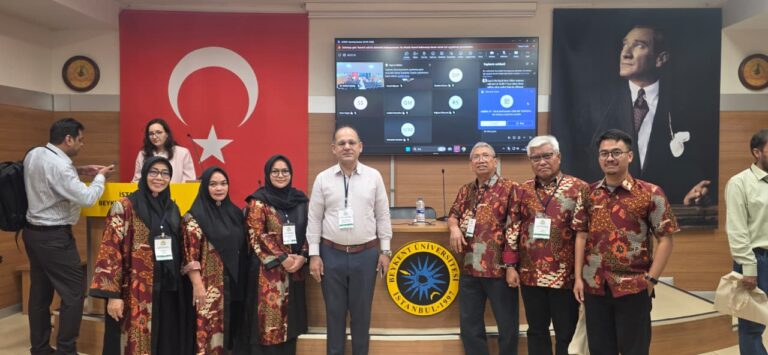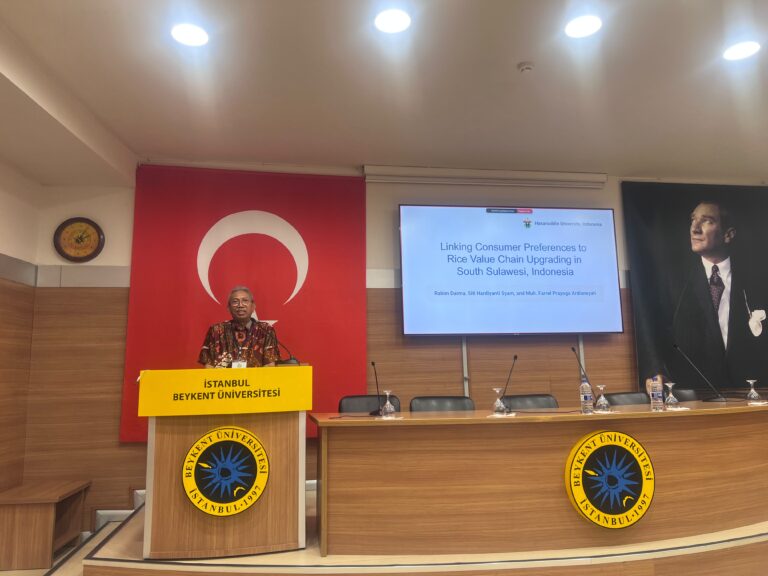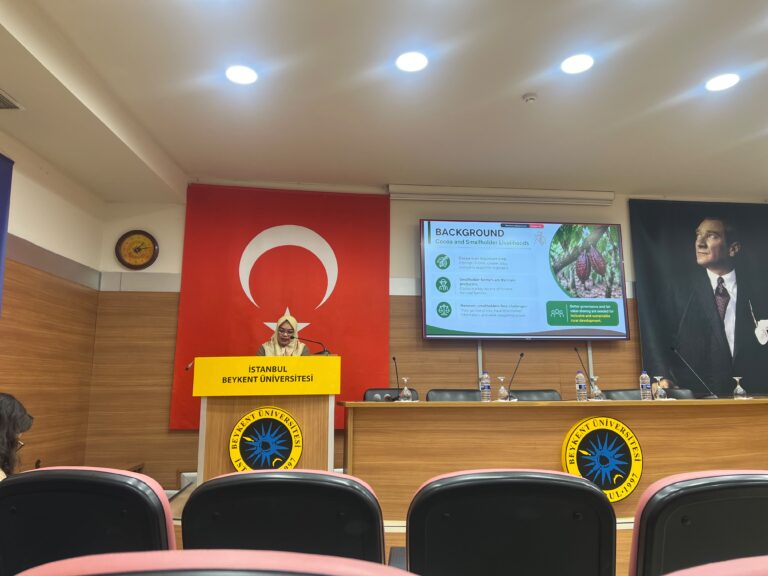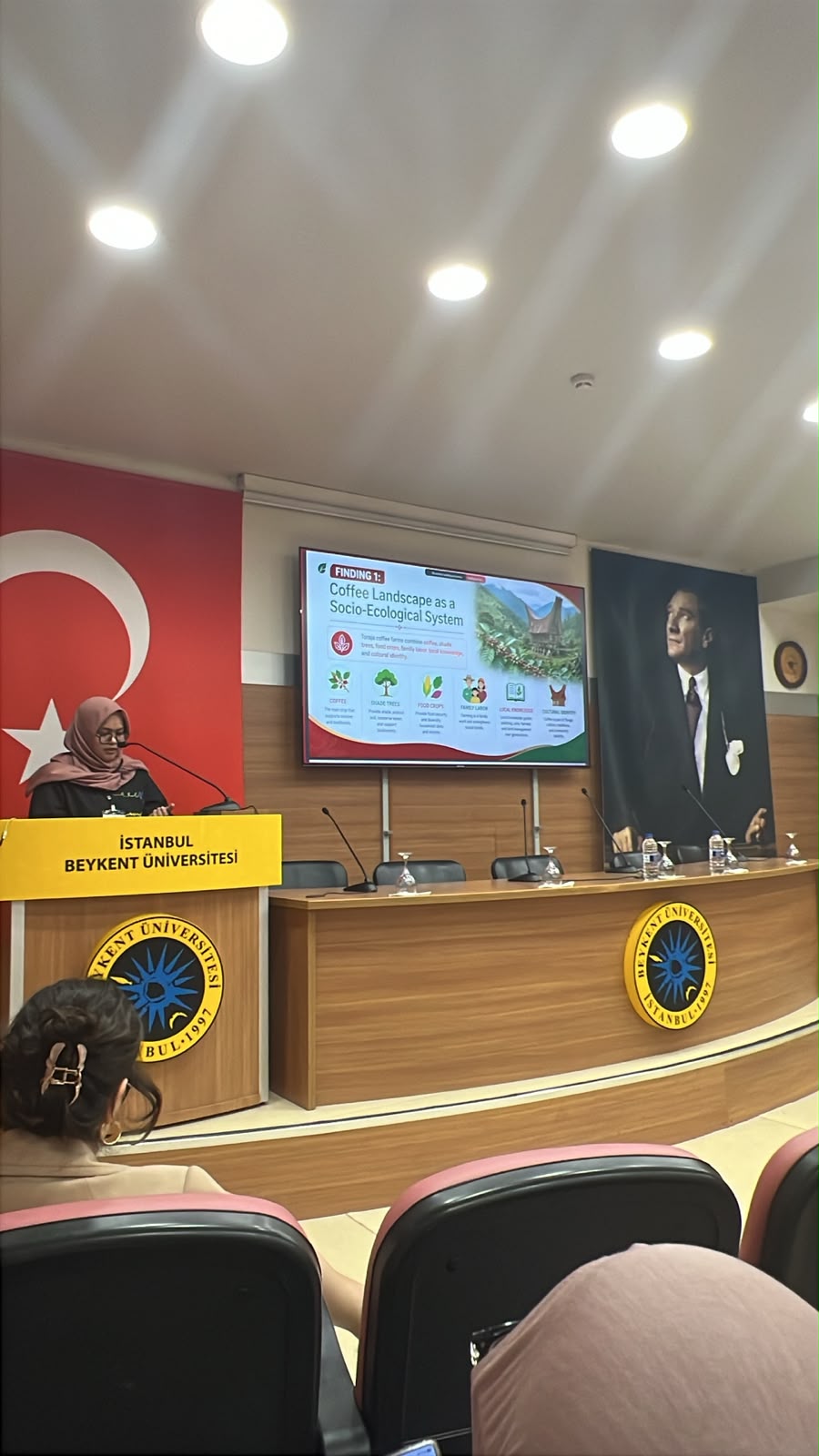

The Food Crops Value Chain Research Group presented new research on Indonesian coffee at the VIII International Agricultural, Biological and Life Sciences Conference (AGBIOL 2026), held on 6–9 September 2026 in Istanbul, Türkiye. Representing the group, Ms. Siti Hardiyanti Syam, M.Si, a lecturer at the Faculty of Agriculture and researcher in the group, presented a study examining how global coffee markets reshape cultural–ecological relations and social inequalities in smallholder agroforestry systems in Highland Toraja, Indonesia. Following the group’s previous engagement with coffee-related research at an international conference in Kyoto, Japan, this presentation extended the discussion by exploring the connections between market transformation, local knowledge, ecological practices, and social differentiation.
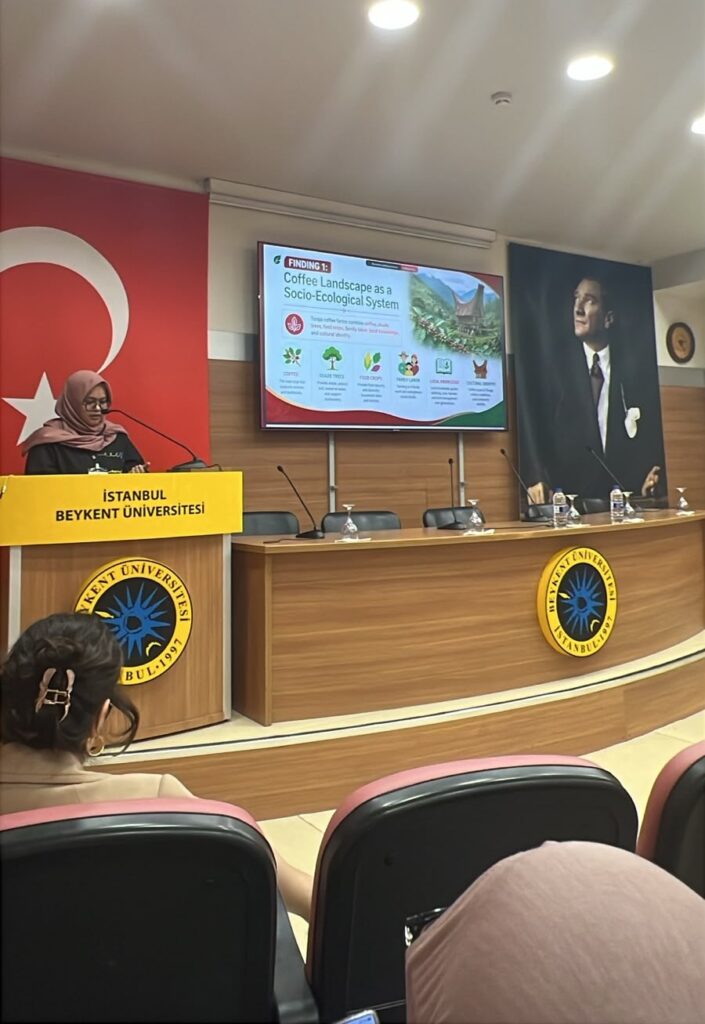
Organized by the International Researcher Association, Istanbul Beykent University, and Trakya University, AGBIOL 2026 provided an international platform for researchers from diverse academic backgrounds and countries to present scientific findings, exchange perspectives, and develop academic networks. The participation of the Food Crops Value Chain Research Group reflected its continued interest in understanding agricultural commodities not only as economic products but also as components of broader social, cultural, and ecological systems. The conference also created opportunities to identify shared research interests and explore interdisciplinary collaboration.
In her presentation, Ms. Siti Hardiyanti Syam discussed how growing demand for specialty coffee, quality differentiation, and market traceability influence farming practices and community life in Highland Toraja. Based on qualitative research incorporating in-depth interviews, field observations, and value chain analysis, the study examined how farmers respond to changing market expectations while maintaining relationships with their cultural heritage and surrounding agroforestry landscapes. The findings showed that market integration encourages quality-oriented production and selective intensification, while farmers combine inherited ecological knowledge with market-driven innovations. However, access to capital, information, and market networks remains uneven, enabling better-resourced farmers to capture emerging opportunities more effectively and potentially widening social inequalities. These changes also raise questions about the long-term resilience of agroforestry systems and the balance between commercial competitiveness and ecological sustainability.
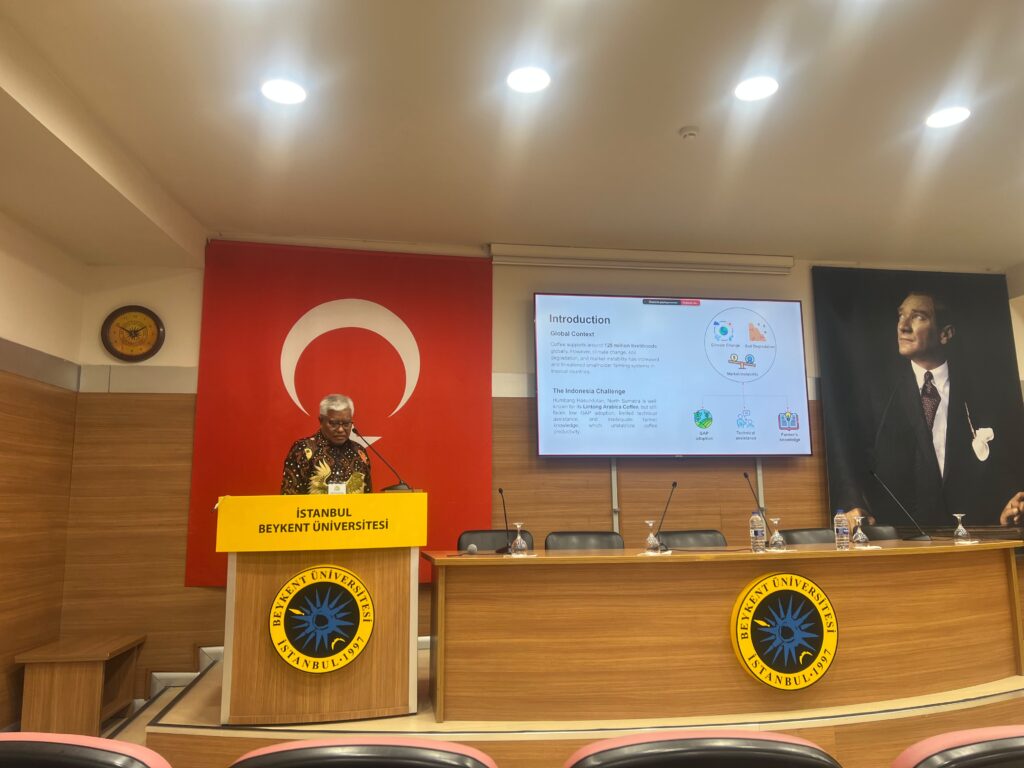
The conference also featured a related presentation by Prof. Dr. Akhsan, a lecturer whose research addresses coffee cultivation and farmer empowerment. His paper, “Empowerment and Sustainable Coffee Cultivation: The Role of Knowledge and Good Agricultural Practices in Enhancing Arabica Coffee Productivity in Indonesia,” complemented the broader discussion of sustainable coffee development by examining the importance of knowledge and agricultural practices in improving productivity. Together, the presentations highlighted the value of examining coffee production through complementary economic, social, and environmental perspectives.
The research is relevant to several United Nations Sustainable Development Goals, particularly SDG 1: No Poverty, through its attention to unequal market opportunities and smallholder livelihoods; SDG 4: Quality Education, through international knowledge exchange and research dissemination; and SDG 15: Life on Land, through its focus on agroforestry systems, ecological knowledge, and environmental resilience. Participation in AGBIOL 2026 strengthened opportunities for future multidisciplinary research, international academic partnerships, and scholarly publications. These efforts can contribute to policy discussions on inclusive coffee value chains that recognize farmers’ knowledge, strengthen equitable market participation, and balance economic development with cultural and ecological sustainability.