
Makassar, Indonesia 27 February 2026/FCVC/-Indonesia’s Toraja Arabica coffee is more than just a premium drink enjoyed around the world—it is a story of culture, survival, and sustainability. Behind every cup lies a deep connection between people, nature, and tradition. But as global demand grows, can this heritage product continue to support local communities fairly and sustainably? This question is explored in the article titled “From Tradition to Sustainability: Toraja Arabica Coffee as Heritage, Conservation Practice, and Source of Livelihood,” published in Frontiers in Human Dynamics by Frontiers Media on 25 February 2026. The study highlights how Toraja coffee plays a triple role: as cultural heritage, environmental conservation practice, and a key source of income.
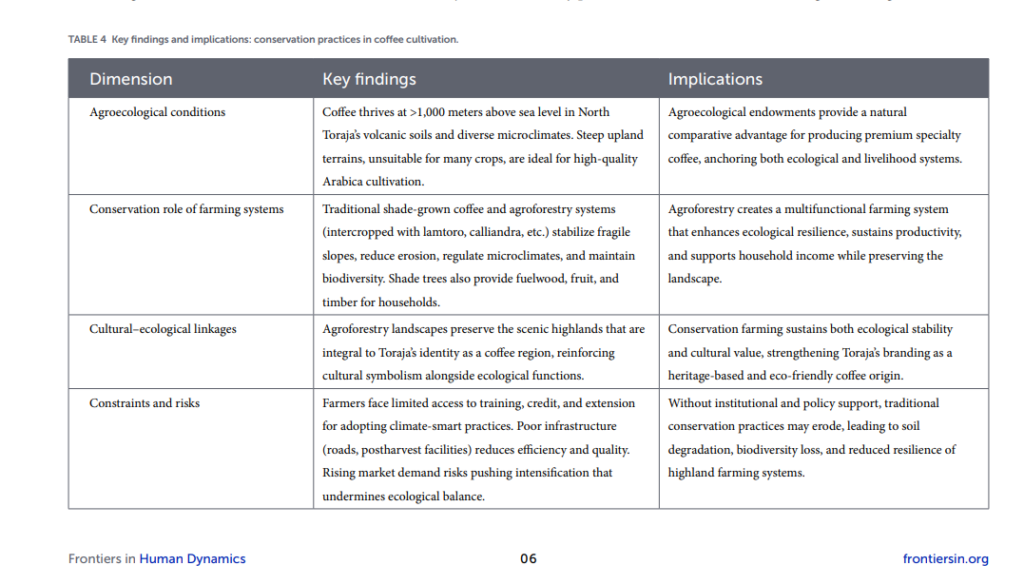
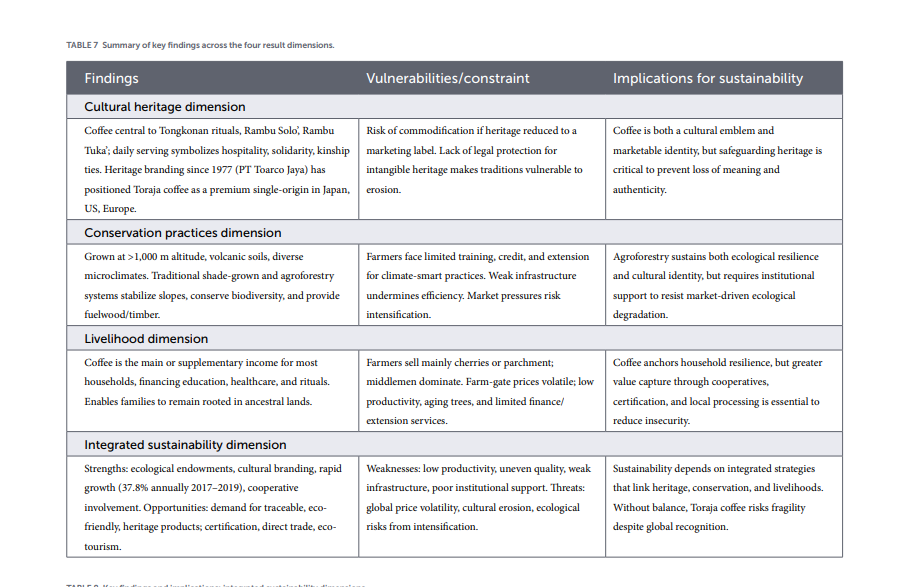
First, Toraja coffee is deeply rooted in local traditions. According to the findings on page 5, coffee is central to rituals such as Rambu Solo’ (funeral ceremonies) and Rambu Tuka’ (thanksgiving events), symbolizing respect, unity, and social connection. It is not just a commodity—it represents identity and community values. However, the study warns that global marketing risks turning this rich heritage into a simple “branding label,” potentially weakening its true meaning. Second, coffee farming in Toraja supports environmental sustainability. As described on page 6, farmers use traditional agroforestry systems, growing coffee under shade trees. This method helps protect biodiversity, prevent soil erosion, and maintain the fragile highland ecosystem. These practices show how local knowledge contributes directly to environmental conservation. Yet, increasing pressure to boost production may push farmers toward less sustainable methods, threatening long-term ecological balance. Third, coffee is the backbone of local livelihoods. The study explains on page 7 that income from coffee helps families pay for education, healthcare, and daily needs. However, many farmers remain economically vulnerable. They often sell raw coffee beans at low prices while middlemen and exporters gain higher profits. This unequal system limits farmers’ ability to benefit from the global popularity of Toraja coffee .
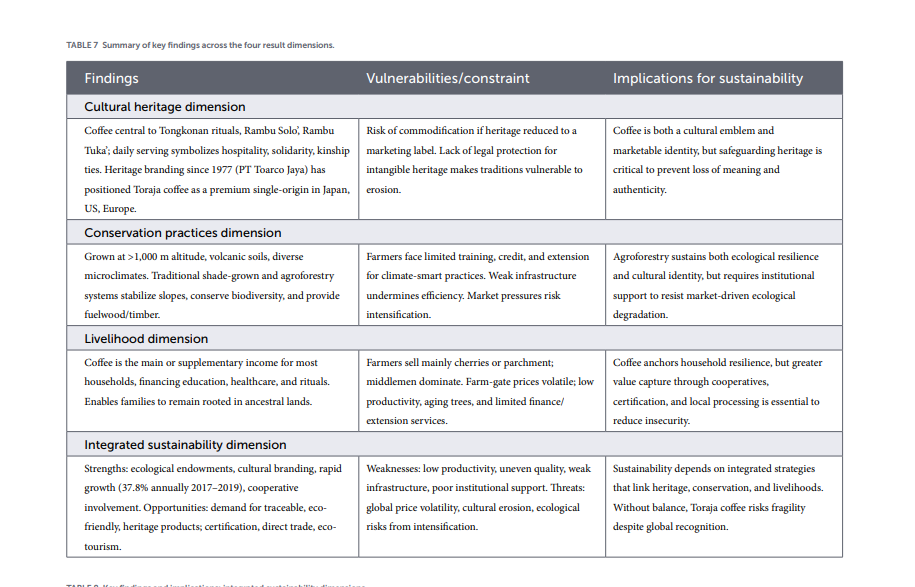
These challenges are closely linked to global development priorities, especially the Sustainable Development Goals (SDGs). Toraja coffee contributes to SDG 1 (No Poverty) by providing income for rural households, but inequality in the value chain must be addressed. It supports SDG 2 (Zero Hunger) by strengthening agricultural systems and food security through sustainable farming practices. Additionally, achieving long-term sustainability requires collaboration among farmers, governments, and global markets, aligning with SDG 17 (Partnerships for the Goals). The study emphasizes that the future of Toraja coffee depends on integration. Cultural heritage, environmental conservation, and economic development cannot be separated. As highlighted in the conclusion (page 10), strengthening cooperatives, improving infrastructure, and ensuring fair market access are key strategies to create a more balanced system .
In conclusion, Toraja Arabica coffee offers an important lesson: sustainability is not just about protecting nature or increasing profits—it is about balancing culture, ecology, and human welfare. If managed wisely, this iconic coffee can continue to empower communities while preserving the traditions and landscapes that make it truly unique.
Referece:
DOI: https://doi.org/10.3389/fhumd.2026.1781875
Contact:
Prof. Rahim Darma
+62 852-5564-6556
rdarma@unhas.ac.id