
MAKASSAR, Indonesia June 6 2026/FINRA/ – A cup of coffee may look simple, but behind every cup there is a financial story: daily sales, supplier bills, rent, wages, debt, savings, and future plans. For many micro, small, and medium enterprises, especially cafés in Makassar, the challenge is not only how to attract customers, but also how to understand the numbers that keep the business alive.
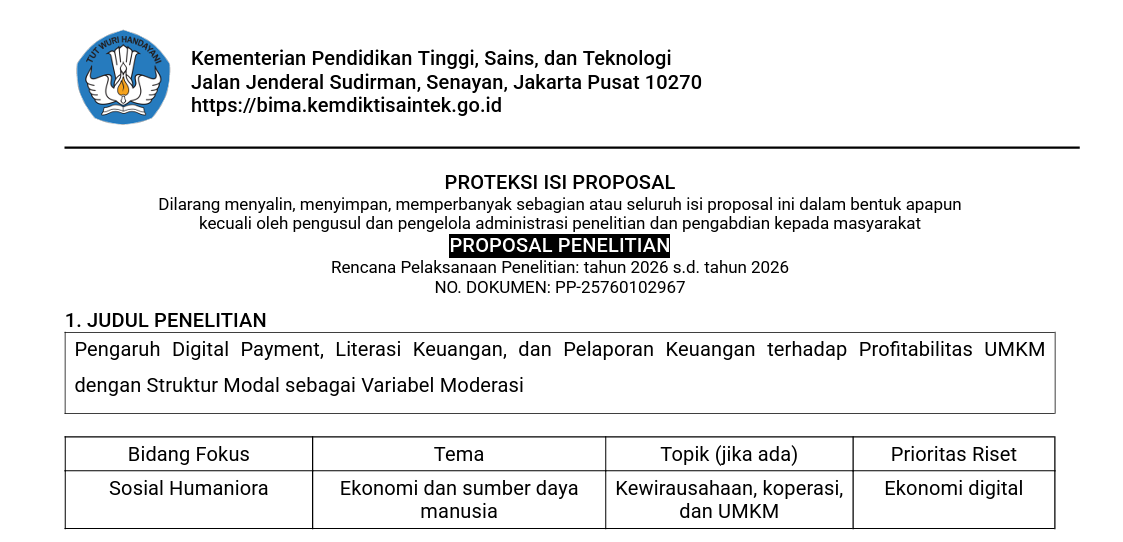
The ongoing BIMA research proposal titled “The Effect of Digital Payment, Financial Literacy, and Financial Reporting on MSME Profitability with Capital Structure as a Moderating Variable” brings this issue closer to everyday life. The study focuses on café-based MSMEs in Makassar and asks a practical question: can digital payments, financial knowledge, and better financial reports help small businesses become more profitable?
Digital payment is often seen as a modern tool for convenience. Customers can pay faster, owners can record transactions more easily, and cash flow can move more smoothly. However, technology alone is not a magic button. A café may receive many digital transactions, but without financial literacy, the owner may still struggle to separate business money from personal money. Without financial reports, daily income may look promising while actual profit remains unclear.
This is why financial reporting matters. Simple records of sales, costs, debts, and assets can help business owners see whether their café is truly growing or only busy. A crowded café does not always mean a profitable café. Good reporting turns scattered transactions into useful information. It helps owners decide when to buy equipment, reduce costs, raise prices, or avoid unnecessary loans.
The research also pays attention to capital structure, or how a business combines its own capital and borrowed money. Debt can help a café expand, but too much debt can reduce profit because of repayment pressure. In this sense, capital structure may strengthen or weaken the benefits of digital payment, financial literacy, and reporting.
This topic is directly connected to SDG 1: No Poverty, because stronger MSMEs can create income, jobs, and economic resilience for families and communities. It is also linked to SDG 17: Partnerships for the Goals, since universities, government, and business actors need to work together to turn research into practical guidance for small entrepreneurs in real markets.
Source Article Metadata: This popular scientific article is based on an ongoing 2026 BIMA research proposal from Universitas Hasanuddin. Main researcher: Prof. Dr. Darmawati, SE., Ak., M.Si., CA., CRA., ASEAN CPA; student researcher: Nathania Pratiwi, S.Ak. Field: accounting, MSME finance, and digital economy. Research design: explanatory sequential mixed methods. Quantitative analysis: SEM-PLS using SmartPLS. Qualitative analysis: thematic coding using NVivo. Research location: café-sector MSMEs in Makassar. Main keywords: digital payment, financial literacy, financial reporting, capital structure, and MSME profitability.