
When money intended for hospitals, classrooms, or public roads disappears through dishonest accounting, the damage reaches far beyond a balance sheet. People lose services, institutions lose credibility, and communities lose trust. Preventing that loss requires more than catching wrongdoers after the fact. It calls for people who understand how to protect public funds before anything goes wrong.
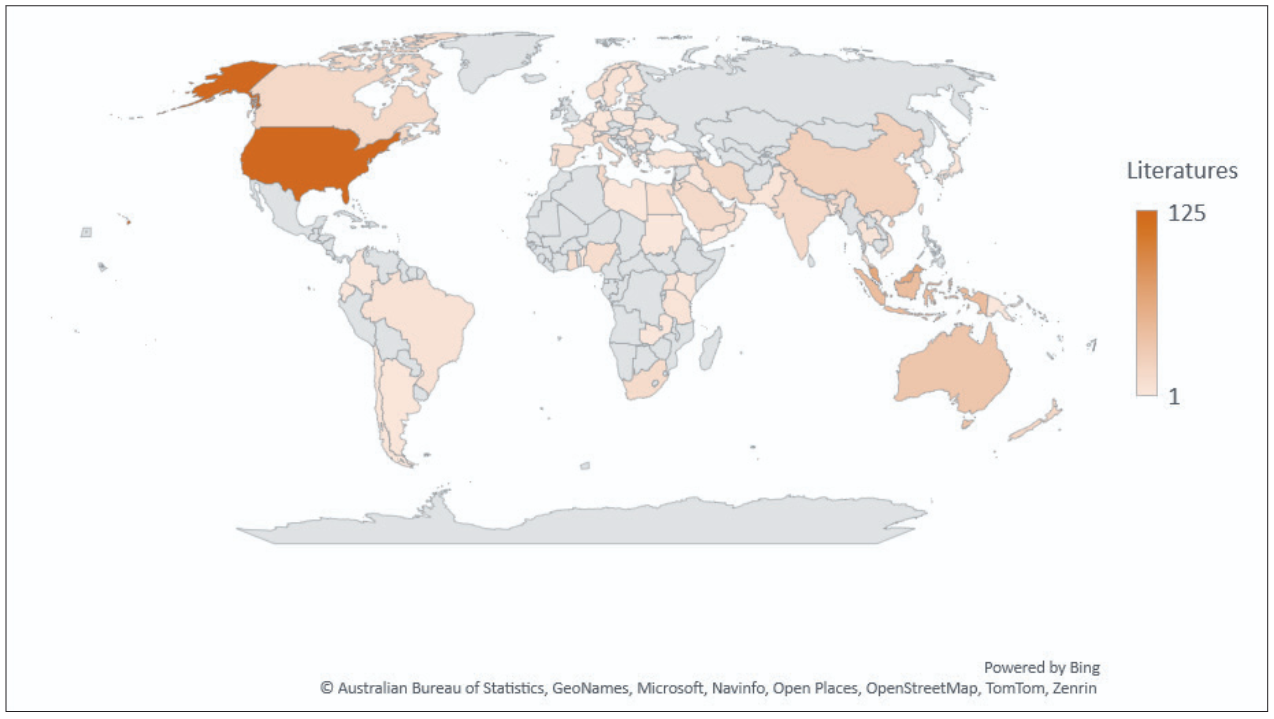
The global picture is explored by Darmawati, Elis Mediawati, and Andi Ratna Sari Dewi in their article, “Global Trends in Internal Control and Public Sector Accounting Fraud Research: A Bibliometric Study.” Published in the Asian Journal of Business and Accounting by Universiti Malaya, Malaysia, on 8 January 2026, in Volume 18, Number 2 (2025), the study asks what researchers worldwide have been learning about fraud and internal control in government finances.
Instead of investigating a single fraud case, the authors examined 473 research papers published between 2018 and 2023. Using bibliometric analysis—a method for tracking patterns across scientific publications—they mapped major themes, influential researchers, and academic partnerships. That makes the study a guide to the research landscape, not a direct experiment into which anti-fraud policy works best.
The most repeated themes were fraud, corporate governance, and internal control. “Fraud” appeared as a keyword 71 times, followed by “corporate governance” 51 times and “internal control” 38 times. Interest in forensic accounting, which involves examining records for signs of wrongdoing, and audit committees also grew across the period. These patterns show what researchers have increasingly been discussing about financial safeguards.
Think of internal controls as the locks, alarms, and regular inspections of public finances. Clear approval procedures, reliable records, independent checks, and safe ways to report concerns can make misuse harder to hide. Yet even the best rules depend on the people applying them. An employee who cannot recognize a suspicious invoice may overlook a warning that a trained colleague would question.
That is why this research offers a meaningful connection to Sustainable Development Goal 4 (SDG 4: Quality Education). Quality education also involves lifelong learning and practical skills. For public employees, training in ethical judgment, financial reporting, audits, and reporting procedures can help translate written policies into everyday responsibility. The article discusses education and training as important components of fraud prevention, although its bibliometric analysis does not measure whether a particular course reduces fraud.
Fraud risks do not stand still. The research traces shifts in topics during the COVID-19 period, suggesting that anti-fraud knowledge must keep up with changing conditions. Public institutions therefore need opportunities for continuous professional development, rather than one-time workshops.
Ultimately, protecting taxpayer money starts with both systems and people. Strong checks can raise the alarm, but informed, ethical employees are more likely to notice and act. When learning becomes part of public service, transparency has a better chance of becoming everyday practice—and public resources have a better chance of reaching the people they were meant to serve.
Source Reference
Darmawati, Mediawati, E., & Dewi, A. R. S. (2026). Global trends in internal control and public sector accounting fraud research: A bibliometric study. Asian Journal of Business and Accounting, 18(2), 5–37. https://doi.org/10.22452/ajba.vol18no2.2