MAKASSAR, Indonesia Mar 11 2026/f-analysis/ – When we think about measuring an angle, we usually picture a protractor resting on a flat piece of paper. Whether it is the corner of a building or the tilt of a solar panel, calculating the space between two intersecting lines is a fundamental part of how we understand the physical world around us. However, when mathematicians explore abstract, multi-dimensional universes, the familiar rules of high school geometry suddenly stop working.
In the realm of advanced mathematics, there are conceptual environments known as normed spaces. Within these mathematical universes, determining the distance between points is possible, but calculating the angle between intersecting lines can be incredibly complex. This is because a specific mathematical tool required to measure angles—known as an inner product—does not naturally exist in all of these spaces. One such challenging environment is called the space of p-summable sequences, denoted as $l^p$. In this specific space, traditional Euclidean methods for finding angles simply break down and fail because the geometry is “curved” or “stretched” in ways that a standard ruler cannot accommodate.
Fortunately, a groundbreaking mathematical solution was detailed in an article titled “Angle in the space of p-summable sequences.” This remarkable research was authored by Muh Nur, Moch Idris, and Firman. The paper was officially published on November 19, 2021, in the academic journal AIMS Mathematics, which is released by the publisher AIMS Press.
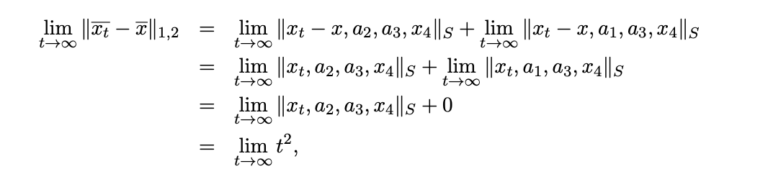
In this study, the research team successfully tackled the geometric problem by introducing a brand-new inner product tailored specifically for a subspace within this complex p-summable sequence space. By developing this novel mathematical tool, they successfully proved that this specific environment is mathematically “complete,” meaning it is a Banach space that is structurally solid and has no “missing” mathematical points. More importantly, this newly invented inner product acts like a high-tech, multi-dimensional protractor. It finally allows researchers to accurately calculate the precise angle between two vectors in a space that previously lacked a standard angular definition.
Going even further, their advanced formula can calculate the exact angle between a simple one-dimensional line and a vastly more complex, multi-dimensional flat surface—specifically, an $(s-1)$-dimensional subspace. This capability allows mathematicians to project high-dimensional data onto lower-dimensional planes with extreme precision, preserving the geometric integrity of the information.
While measuring angles in abstract dimensions might seem disconnected from daily life, this level of foundational research is intimately tied to the global mission of SDG 4: Quality Education. Achieving true quality education means pushing the absolute boundaries of critical thinking, advanced problem-solving, and robust scientific literacy on a global scale. Theoretical breakthroughs in pure mathematics often provide the hidden, invisible foundation for modern computational technologies, complex data analysis algorithms, and advanced physics. By supporting, funding, and popularizing complex mathematical research, we actively nurture a comprehensive education system. This empowers students and educators alike to think creatively and prepares future generations to tackle the unimaginable technological challenges of tomorrow.
Reference
DOI:
http://dx.doi.org/%2010.3934/math.2022155
Contact:
Dr. Muh. Nur, S.Si., M.Si
+6282187050898
muhammadnur@unhas.ac.id