
MAKASSAR, Indonesia, April 2026 – In forensic investigations, identifying individuals is not always straightforward. In some cases, traditional methods such as fingerprints or facial recognition are no longer viable due to damage or decomposition. But what if a simple bite mark could help reveal a person’s identity?
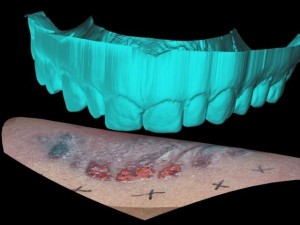
Bite mark analysis is one of the specialized techniques in forensic odontology that has been used to support human identification and criminal investigations. Every individual has unique dental characteristics, including the size, shape, and alignment of teeth. When these characteristics leave an impression on an object or human tissue, they can serve as valuable forensic evidence.
The Digital Forensic Dentistry Research Group at Hasanuddin University is currently exploring the role of bite mark analysis in strengthening forensic identification systems. This research focuses on improving the accuracy and reliability of bite mark interpretation by integrating digital imaging and analytical techniques. By converting physical bite mark patterns into digital data, forensic experts can conduct more precise comparisons and reduce subjective interpretation.
One of the main challenges in bite mark analysis is ensuring consistency and objectivity in interpretation. Traditional methods often rely heavily on expert judgment, which can vary between examiners. To address this issue, this research investigates the use of digital tools and standardized analysis methods to improve reproducibility and reliability in forensic examinations.
In addition, this study also examines how bite mark analysis can be combined with other forensic identification methods, such as dental records and radiographic data, to create a more comprehensive approach. By integrating multiple sources of evidence, the identification process becomes more robust and scientifically supported.
The application of bite mark analysis is particularly important in criminal cases involving physical violence, as well as in situations where other identification methods are limited. With the support of digital technology, this method has the potential to become more accurate, transparent, and widely accepted in forensic practice.
This research is closely aligned with several Sustainable Development Goals (SDGs). It supports SDG 3: Good Health and Well-Being by improving forensic and investigative services that contribute to public safety. It also contributes to SDG 4: Quality Education by enhancing the skills and knowledge of forensic professionals in modern analytical techniques. Furthermore, it aligns with SDG 16: Peace, Justice, and Strong Institutions, as reliable forensic identification plays an important role in supporting justice and legal processes.
In conclusion, bite mark analysis represents an important component of forensic dentistry that continues to evolve with the advancement of digital technology. By improving accuracy, standardization, and integration with other forensic methods, this research contributes to building a more reliable and effective identification system in both disaster and criminal investigation contexts.
Reference:
DOI: https://doi.org/10.3390/diagnostics14111180
Contact:
Digital Forensic Dentistry Research Group
Faculty of Dentistry, Hasanuddin University
Email: fuadhusainakbar@unhas.ac.id