


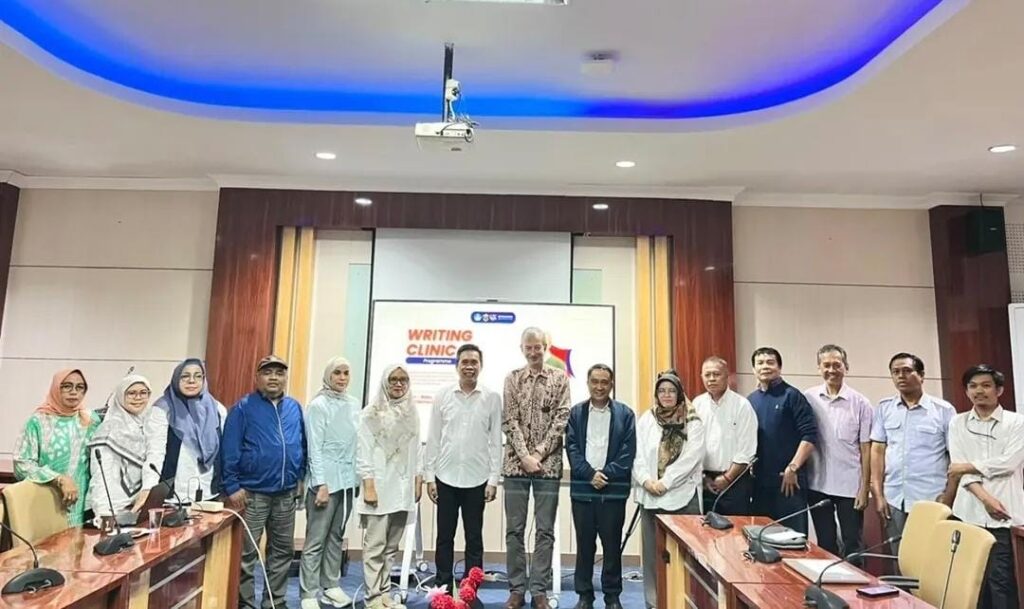
On Wednesday, February 4, 2026, a Writing Clinic was conducted at the Faculty of Humanities, Universitas Hasanuddin, as an academic capacity-building activity aimed at strengthening participants’ skills in preparing academic and scientific papers. The activity was attended by 25 lecturers representing different academic fields and units, providing an opportunity for participants to exchange experiences and enhance their competencies in academic writing.
The Writing Clinic was organized in response to the importance of effective academic communication in higher education. Academic writing is an essential competency for lecturers, not only for disseminating research findings but also for contributing to the development of knowledge, strengthening scholarly discussions, and increasing the visibility and impact of academic work. Through systematic and well-structured writing, research findings can reach wider academic and professional audiences and provide meaningful contributions to the advancement of knowledge.
During the activity, participants received presentations and practical guidance on various aspects of academic and scientific writing. The sessions addressed strategies for developing research ideas, organizing arguments, structuring academic papers, presenting information systematically, and improving the clarity and coherence of scholarly writing. Participants were also encouraged to understand academic writing conventions and maintain the quality and integrity of their scholarly work.
The clinic was conducted in an interactive atmosphere, allowing participants to actively engage in discussions, ask questions, exchange experiences, and receive feedback. This approach enabled the activity to go beyond a conventional lecture format by providing participants with opportunities to identify challenges in their writing practices and explore practical strategies for improving the quality of their academic manuscripts.
The activity directly supports Sustainable Development Goal (SDG) 4: Quality Education, particularly through the continuous development of educators’ knowledge and professional competencies. Strengthening lecturers’ academic writing skills can contribute to the production and dissemination of higher-quality scholarly knowledge, which ultimately supports the improvement of education, research, and academic learning environments.
The Writing Clinic also reflects the principles of SDG 17: Partnerships for the Goals. Bringing together lecturers from different academic backgrounds creates opportunities for knowledge sharing, professional networking, and interdisciplinary collaboration. Such interactions can provide a foundation for future research partnerships, joint publications, academic discussions, and other collaborative initiatives that strengthen institutional and scholarly networks.
The activity concluded with a group photo involving the participants, organizers, and speakers, marking the completion of a productive academic development program. More broadly, the Writing Clinic demonstrates the importance of continuous professional development in higher education and highlights how strengthening academic competencies can contribute to a stronger research culture, more effective knowledge dissemination, and sustainable educational development.