


Roadmap
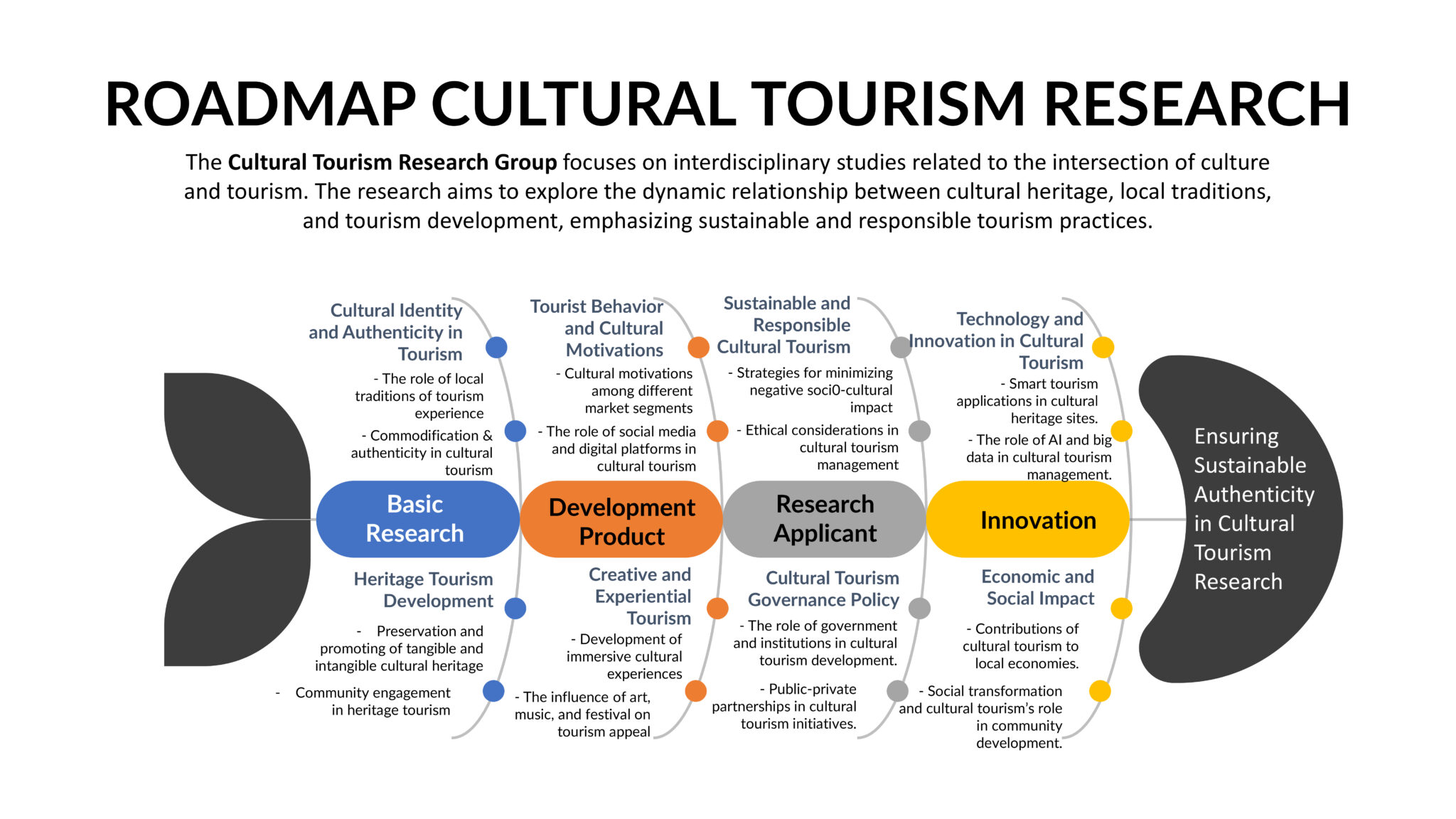
Research Sub-Theme
Introduction to Key Research Areas in Cultural Tourism Research
Cultural tourism plays a vital role in preserving heritage while contributing to economic and social development. However, ensuring Sustainable Authenticity in Cultural Tourism Research requires a comprehensive understanding of various influencing factors. To achieve this goal, a structured research framework is essential to address the key challenges and opportunities in cultural tourism.
This research framework is illustrated through a Fishbone Diagram, which categorizes the critical factors affecting cultural tourism research. The diagram identifies eight key research areas, each representing a significant component in the sustainable and authentic development of cultural tourism. These areas include:
- Cultural Identity and Authenticity in Tourism – Examines how traditions, local customs, and globalization influence tourism experiences.
- Heritage Tourism Development – Focuses on the preservation and promotion of cultural heritage while managing tourism impacts.
- Tourist Behavior and Cultural Motivations – Analyzes tourist preferences, expectations, and decision-making in cultural tourism.
- Creative and Experiential Tourism – Explores the role of arts, storytelling, and immersive experiences in enhancing cultural tourism.
- Sustainable and Responsible Cultural Tourism – Investigates strategies for minimizing negative impacts and fostering responsible tourism.
- Cultural Tourism Governance and Policy – Examines regulations, policies, and stakeholder collaborations in managing cultural tourism.
- Technology and Innovation in Cultural Tourism – Explores the use of digital tools, virtual reality, and AI in heritage interpretation and tourism management.
- Economic and Social Impacts of Cultural Tourism – Assesses how cultural tourism contributes to local economies and community development.
Through these research areas, the Cultural Tourism Research Group aims to generate valuable insights that contribute to the sustainable and authentic development of cultural tourism. This structured approach ensures a balanced integration of cultural preservation, tourism growth, and community well-being, paving the way for a responsible and impactful tourism industry.
Cultural Identity and Authenticity in Tourism: Key Research Subthemes
Cultural identity is a dynamic and evolving aspect of tourism, where local traditions, customs, and globalization interact to shape tourism experiences. This research theme seeks to explore how destinations can preserve authenticity while adapting to the demands of an interconnected world.
1. The Role of Local Traditions and Customs in Shaping Tourism Experiences
Local traditions and customs serve as the foundation of cultural tourism, offering travelers immersive and meaningful experiences. From traditional ceremonies and culinary heritage to performing arts and handicrafts, these elements enrich tourism encounters by fostering a deeper connection between visitors and host communities.
Key areas of exploration include:
- Community-based tourism initiatives that empower local residents to showcase their traditions.
- Storytelling and cultural narratives as a means to enhance visitor engagement.
- Challenges in adapting traditions for tourism while maintaining their original meaning and significance.
- The impact of visitor participation in cultural practices (e.g., traditional dances, weaving, or culinary workshops).
Example: Coffee Culture in Tourism
Our research on coffee tourism examines how traditional coffee preparation and rituals influence tourism experiences. In Toraja, Indonesia, for instance, ritualistic coffee brewing is not just about consumption—it is deeply embedded in spiritual and social traditions. By integrating this heritage into tourism, local communities can preserve and share their unique coffee culture while generating economic benefits. However, the challenge remains in balancing authenticity with the growing demand for commercialized coffee tourism experiences.
2. Commodification and Authenticity in Cultural Tourism
As cultural tourism grows, the commodification of heritage becomes an increasing concern. Many cultural traditions are adapted—or even altered—to meet the expectations of tourists, raising questions about what constitutes authenticity in modern tourism.
Key research areas include:
- Staged authenticity vs. genuine experiences – When does adaptation enhance tourism, and when does it lead to cultural dilution?
- Market-driven modifications in traditional festivals, performances, and handicrafts.
- The impact of commercialization on cultural heritage sites and community values.
- Tourist perceptions of authenticity and their influence on destination branding.
Example: Marine Heritage Tourism
Our study on marine heritage tourism highlights how traditional boat-building techniques and coastal fishing cultures are being transformed into tourism attractions. In places like Selayar, Indonesia, boat-making traditions have been preserved for centuries, but as tourism interest increases, these practices risk becoming performative rather than functional. This raises ethical concerns about whether cultural heritage is being preserved or merely repackaged for tourism consumption.
Heritage Tourism Development: Balancing Preservation and Community Engagement
Heritage tourism plays a crucial role in preserving and promoting both tangible and intangible cultural heritage, fostering community engagement, and managing the impact of tourism on historical sites. With the growing intersection of technology and heritage conservation, innovative methods such as 3D printing and digital reconstruction have emerged as vital tools for safeguarding fragile cultural assets while enhancing tourism experiences. A notable example of this is the 3D printing reconstruction of Bulu Sipong 4, an important prehistoric site in Indonesia.
1. Preservation and Promotion of Tangible and Intangible Cultural Heritage
The preservation of cultural and historical assets is a fundamental challenge in heritage tourism. Physical sites and artifacts are often vulnerable to environmental damage, over-tourism, and neglect. Meanwhile, intangible heritage—such as oral traditions, rituals, and craftsmanship—faces risks of being forgotten or altered due to globalization and commercialization.
To address these challenges, technological advancements have played a significant role in preserving heritage in new and innovative ways. Digital documentation, 3D scanning, and 3D printing technologies now allow for the recreation of artifacts, structures, and even entire archaeological sites, ensuring that fragile heritage is documented, analyzed, and presented to the public without risking damage to the original remains.
Case Study: 3D Printing of Bulu Sipong 4
Bulu Sipong 4, a prehistoric cave in South Sulawesi, Indonesia, is home to some of the oldest known rock art in the world, dating back at least 40,000 years. The discovery of this site provided groundbreaking insights into early human artistic expression and symbolic thought. However, due to its fragile limestone formations and environmental vulnerability, direct human interaction with the site poses a threat to its preservation.
To address this, 3D printing technology has been used to create highly accurate replicas of the cave and its ancient paintings, allowing researchers, educators, and tourists to explore the site without causing physical degradation. These replicas serve multiple purposes:
- Educational Tools: The 3D-printed models allow museums and cultural institutions to present the site’s history and significance to a broader audience.
- Tourism Enhancement: Visitors can engage with the heritage in an interactive and immersive way through virtual reality (VR) and augmented reality (AR) experiences, reducing the need for physical access to the fragile cave itself.
- Conservation Efforts: By creating detailed 3D models, archaeologists can monitor erosion and other changes over time, ensuring that conservation strategies remain data-driven and effective.
The use of 3D technology in heritage tourism represents a significant step forward in balancing accessibility and conservation, allowing cultural heritage to be shared globally while protecting its integrity.
2. Community Engagement in Heritage Tourism
Heritage tourism is most successful when local communities take an active role in preserving, managing, and sharing their cultural heritage. Community-based tourism (CBT) is a model that emphasizes local participation, ensuring that the benefits of tourism are equitably distributed and that local voices shape how heritage is presented to visitors.
Key areas of research in community engagement include:
- Empowering local stakeholders: Encouraging indigenous and local communities to take ownership of tourism initiatives rather than allowing external developers to dictate how heritage is showcased.
- Capacity building and skill development: Providing training in heritage conservation, tour guiding, storytelling, and sustainable tourism management to enhance community involvement.
- Economic and social benefits: Ensuring that tourism revenue directly supports local communities, whether through employment, infrastructure development, or funding for cultural preservation projects.
- Co-creation of tourism experiences: Encouraging authentic interactions where visitors engage meaningfully with local traditions, such as participating in cultural workshops or village homestays.
Case Study: Coffee Tourism and Community Empowerment
In regions known for their rich coffee heritage, such as Toraja, Indonesia, coffee tourism has been an effective way to integrate community engagement with heritage preservation. Farmers and local producers have begun offering coffee plantation tours, coffee-making workshops, and storytelling sessions about their ancestral farming techniques. This model has enhanced economic opportunities for small-scale farmers while educating visitors about the cultural significance of coffee in Torajan rituals and traditions. However, it is crucial to ensure that large-scale tourism development does not disrupt the local way of life or marginalize traditional growers.
Tourist Behavior and Cultural Motivations: Understanding the Drivers of Cultural Tourism
Cultural tourism is one of the fastest-growing segments in the global travel industry, driven by travelers seeking authentic, immersive experiences that connect them with local traditions, history, and artistic expressions. Understanding tourist behavior and cultural motivations is essential for developing effective destination marketing strategies, tourism policies, and visitor experience designs that align with the expectations and values of diverse traveler groups.
This research theme explores the psychological, social, and digital influences that shape tourist behavior in cultural tourism, focusing on three key areas:
- Cultural motivations behind travel decisions
- Perceptions of cultural tourism among different market segments
- The role of social media and digital platforms in cultural tourism promotion
1. Cultural Motivations Behind Travel Decisions
Tourists travel for a variety of reasons, but in the context of cultural tourism, motivations are often rooted in personal enrichment, identity exploration, nostalgia, and the desire for authenticity. Understanding these motivations helps destinations tailor their tourism products and experiences to attract the right audiences.
Key Motivational Drivers for Cultural Tourists:
✅ Heritage and Identity: Many travelers seek to explore their ancestral roots, historical connections, or cultural affinities, leading to the rise of diaspora tourism and genealogy tourism.
✅ Education and Knowledge-Seeking: Museums, historical sites, and cultural workshops attract intellectually curious travelers who want to learn about art, history, and local traditions.
✅ Authenticity and Local Experiences: Tourists increasingly seek genuine interactions with local communities, such as participating in traditional ceremonies, culinary experiences, and artisanal craft workshops.
✅ Escape and Transformation: Many cultural tourists travel to experience new perspectives, disconnect from routine, and engage in personal growth through cultural immersion.
✅ Social and Prestige Factors: Cultural tourism is often linked to status and social capital, where travelers seek to share unique and sophisticated experiences with their peers.
Example: Coffee Tourism as a Cultural Motivation
One notable example is coffee tourism, where visitors travel to destinations like Toraja, Indonesia, or Ethiopia to experience traditional coffee production, rituals, and tastings. These tourists are motivated by both cultural appreciation and experiential learning, engaging with local farmers, indigenous traditions, and sustainable agriculture practices.
2. Perceptions of Cultural Tourism Among Different Market Segments
Not all tourists perceive cultural tourism in the same way. Differences in age, nationality, socio-economic status, travel experience, and lifestyle preferences shape how visitors engage with cultural heritage, local traditions, and artistic expressions.
Market Segments in Cultural Tourism
1️⃣ Heritage Enthusiasts: Typically older travelers who seek historical depth and academic insights, often visiting UNESCO sites, museums, and heritage villages.
2️⃣ Experience-Seekers: Younger travelers (Millennials & Gen Z) who value interactive, hands-on experiences, such as local homestays, food tours, and community-based tourism.
3️⃣ Luxury Cultural Travelers: High-end tourists who prioritize exclusive access to cultural events, private tours, and premium accommodation in historic settings.
4️⃣ Pilgrimage and Spiritual Travelers: Visitors with religious or spiritual motivations, participating in pilgrimage routes, sacred rituals, and meditation retreats.
5️⃣ Festival and Event Tourists: Those who plan their trips around cultural festivals, music events, and artistic performances, such as Carnival in Brazil or the Ubud Writers & Readers Festival in Bali.
Cultural Tourism in the Digital Age: Changing Perceptions
With the rise of digital platforms and travel influencers, perceptions of cultural tourism are shifting from being seen as “elite” or “academic” travel to becoming more accessible, engaging, and experiential. Social media has made it easier for younger and budget-conscious travelers to appreciate cultural tourism through visual storytelling and interactive content.
📌 Example: Marine Heritage Tourism and Market Perception
In Indonesia, marine heritage sites like the traditional boat-making villages in Selayar attract different market segments. While cultural heritage enthusiasts appreciate the craftsmanship and historical value, younger travelers are more drawn to the experiential aspect, such as learning how to carve wooden boats or participating in local seafaring traditions. Understanding these differences allows for more targeted tourism product development.
3. The Role of Social Media and Digital Platforms in Cultural Tourism Promotion
In the digital age, social media and online platforms have transformed how cultural tourism is marketed and consumed. User-generated content (UGC), influencer endorsements, virtual experiences, and interactive storytelling play a critical role in shaping travelers’ perceptions and decision-making processes.
How Digital Platforms Influence Cultural Tourism
✅ Destination Branding & Storytelling
- Platforms like Instagram, YouTube, and TikTok showcase cultural destinations through visually compelling content, making them more attractive to younger audiences.
- Storytelling through blogs, podcasts, and digital travel magazines enhances the narrative of cultural destinations, emphasizing history, myths, and traditions.
✅ Virtual and Augmented Reality Experiences
- Virtual tours of museums, heritage sites, and cultural performances enable remote engagement and attract future visitors.
- Augmented reality (AR) applications allow tourists to experience historical reconstructions of ancient cities or lost civilizations.
✅ Personalized Travel Recommendations
- AI-driven platforms like Google Travel and TripAdvisor use big data and consumer analytics to recommend tailored cultural experiences based on user behavior.
- Online reviews and testimonials significantly influence travel decisions, with positive reviews increasing bookings for cultural tourism attractions.
✅ Community-Driven Tourism Marketing
- Crowdsourced initiatives such as Airbnb Experiences and community-led tourism campaigns help promote authentic local experiences directly to travelers.
- Hashtag campaigns and digital movements, such as #SupportLocalCulture or #HeritageTravel, encourage sustainable and ethical cultural tourism.
Example: The Role of Social Media in Promoting Bulu Sipong 4
The digital reconstruction of Bulu Sipong 4 has gained international recognition through social media campaigns and online museum exhibits, allowing global audiences to experience its prehistoric cave art virtually. By leveraging immersive storytelling, VR technology, and digital tourism platforms, this project has expanded cultural tourism engagement beyond physical visitation.
Creative and Experiential Tourism: Enhancing Cultural Engagement Through Arts, Music, and Storytelling
In the evolving landscape of cultural tourism, creative and experiential tourism has emerged as a powerful approach to enhancing visitor engagement, fostering deeper connections with local cultures, and driving economic growth. This research theme explores how arts, music, festivals, immersive experiences, and digital storytelling shape modern tourism, making destinations more attractive and emotionally resonant.
Key areas of focus include:
- The Influence of Arts, Music, and Festivals on Tourism Appeal
- Development of Immersive Cultural Experiences
- The Role of Storytelling and Digital Media in Cultural Tourism
1. The Influence of Arts, Music, and Festivals on Tourism Appeal
Cultural expressions such as visual arts, traditional and contemporary music, dance, and festivals significantly contribute to a destination’s attractiveness. They provide visitors with unique, memorable, and emotionally rich experiences that go beyond traditional sightseeing.
How Arts, Music, and Festivals Drive Tourism:
🎨 Cultural and Heritage Arts: Traditional arts and crafts, from batik-making in Indonesia to indigenous weaving techniques in South America, attract visitors seeking authentic cultural engagement.
🎶 Music as a Cultural Identifier: Traditional music, whether fado in Portugal, gamelan in Bali, or blues in New Orleans, creates a deep cultural atmosphere, drawing music enthusiasts and cultural tourists.
🎭 Festivals as Tourism Magnets: Large-scale events like Rio Carnival, Gion Matsuri in Japan, and the Bali Arts Festival bring thousands of visitors, generating economic and cultural benefits.
🎤 Performing Arts and Theatre: Destinations with rich theatrical traditions, such as Broadway in New York or Wayang Kulit performances in Java, attract both cultural tourists and casual visitors.
📌 Example: Marine Heritage Festivals
In coastal communities, festivals celebrating maritime traditions—such as boat-building festivals in Indonesia or Viking heritage events in Scandinavia—help revive local knowledge, attract tourists, and support cultural preservation.
2. Development of Immersive Cultural Experiences
Modern travelers seek interactive, hands-on cultural engagements, moving beyond passive observation to active participation. The development of immersive cultural tourism enables visitors to fully experience and engage with local traditions in meaningful ways.
Innovative Immersive Experiences in Cultural Tourism:
🛖 Living Museums and Heritage Villages: Visitors can experience daily life in traditional settings, such as staying in a Maasai village in Kenya or participating in Balinese community rituals.
🎭 Interactive Theatrical Experiences: Historical reenactments, like Gladiator Training in Rome or Viking battles in Norway, allow tourists to step into the past.
🖌️ Creative Tourism Workshops: Tourists can learn traditional crafts, such as pottery in Greece, calligraphy in China, or boat-building in Indonesia.
🚶 Heritage Walking Tours with Local Experts: In-depth cultural explorations led by historians, artisans, or community elders offer personalized storytelling experiences.
📌 Example: Immersive Marine Heritage Tourism
In Selayar, Indonesia, travelers can participate in traditional wooden boat-making workshops, allowing them to engage with centuries-old maritime craftsmanship while learning about sustainability in modern shipbuilding.
3. The Role of Storytelling and Digital Media in Cultural Tourism
Storytelling is a fundamental aspect of cultural tourism, transforming historical facts and cultural traditions into engaging narratives that captivate visitors. With advancements in digital technology, storytelling has evolved into a powerful tool for promoting and enhancing cultural tourism experiences.
Storytelling and Digital Innovations in Cultural Tourism:
📖 Folklore and Mythology Integration: Many destinations integrate local legends and historical figures into tourism experiences, such as King Arthur’s heritage sites in the UK or the Ramayana storytelling performances in Southeast Asia.
📺 Augmented Reality (AR) and Virtual Reality (VR) Tours: Digital reconstructions of historical sites, such as ancient cities or sunken shipwrecks, allow for immersive remote and in-person experiences.
📱 Social Media and Travel Influencers: Platforms like Instagram, YouTube, and TikTok showcase cultural destinations through visual storytelling, making them more appealing to global audiences.
🎙️ Podcast and Audio Guides: Many heritage sites now offer narrated audio guides, blending history, storytelling, and visitor engagement.
📌 Example: Digital Storytelling in Marine Heritage Tourism
The 3D digital reconstruction of Bulu Sipong 4, an ancient rock art site in South Sulawesi, allows visitors to explore prehistoric maritime heritage virtually, making the cultural site accessible to a global audience while preserving its historical significance.
Sustainable and Responsible Cultural Tourism: Balancing Heritage Conservation and Community Well-being
Cultural tourism plays a crucial role in preserving heritage, fostering cross-cultural understanding, and supporting local economies. However, if not managed responsibly, it can lead to over-commercialization, loss of authenticity, and socio-cultural disruptions within host communities. Sustainable and responsible cultural tourism seeks to balance economic benefits, cultural integrity, and environmental sustainability, ensuring that tourism contributes positively to both visitors and local populations.
This research theme explores:
- Strategies for minimizing negative socio-cultural impacts
- Ethical considerations in cultural tourism management
1. Strategies for Minimizing Negative Socio-Cultural Impacts
Tourism can bring numerous benefits to cultural destinations, but it also poses risks such as cultural commodification, gentrification, and loss of traditional lifestyles. Sustainable cultural tourism must incorporate strategies to mitigate these challenges while promoting responsible visitor behavior.
Key Strategies to Reduce Socio-Cultural Impacts:
✅ Community-Based Tourism (CBT): Encourages local ownership and participation, ensuring that tourism benefits are equitably distributed while preserving cultural traditions.
✅ Visitor Management Strategies: Implementing carrying capacity limits, timed ticketing systems, and zoning regulations to prevent overtourism at heritage sites.
✅ Cultural Sensitivity Education: Providing pre-visit guidelines, responsible travel codes, and ethical storytelling approaches to raise visitor awareness about cultural respect.
✅ Authenticity Protection Policies: Regulating mass-produced souvenirs, commercialized performances, and misrepresentation of cultural heritage to safeguard authenticity.
✅ Revenue Reinvestment in Cultural Conservation: Ensuring that a portion of tourism revenue directly supports heritage conservation, restoration projects, and cultural education programs.
📌 Example: Sustainable Tourism at Marine Heritage Sites
In Selayar, Indonesia, marine heritage conservation efforts include controlled visitor access to coral reefs and shipwreck dive sites to prevent marine ecosystem degradation and underwater cultural heritage damage. Local fishermen are also involved in eco-tourism initiatives to ensure their traditional knowledge is valued and integrated into tourism experiences.
2. Ethical Considerations in Cultural Tourism Management
Ethics play a critical role in shaping how cultural tourism is developed and managed. Sustainable tourism should prioritize respect for local communities, fair economic distribution, and the protection of cultural heritage from exploitation.
Key Ethical Considerations:
✔️ Informed Consent and Cultural Representation: Local communities should have the right to control how their traditions and heritage are presented to tourists.
✔️ Fair Compensation and Labor Rights: Traditional artisans, performers, and local guides should receive fair wages and recognition for their cultural contributions.
✔️ Avoiding Cultural Appropriation: Tourism businesses must ensure that sacred traditions, symbols, and rituals are not misused or commodified for commercial purposes.
✔️ Equitable Tourism Benefits: Large tourism corporations should not monopolize the profits, and local businesses, cooperatives, and indigenous groups should receive equitable opportunities.
✔️ Protection of Sacred and Sensitive Sites: Some spiritual or sacred places should have restricted visitor access to prevent desecration and ensure cultural integrity.
📌 Example: Ethical Tourism Practices in Indigenous Communities
In Toraja, Indonesia, the elaborate funeral traditions are a major cultural attraction, but ethical concerns arise when tourists disrupt the sacred nature of these ceremonies. Local tourism authorities have implemented visitor guidelines, cultural interpretation programs, and community consent mechanisms to ensure that tourism respects Torajan customs and beliefs.
Cultural Tourism Governance and Policy: Strengthening Frameworks for Sustainable Development
Cultural tourism is a vital driver of economic growth, heritage preservation, and community empowerment. However, its success depends on effective governance, clear policies, and strong institutional frameworks that regulate and manage cultural heritage responsibly. Cultural tourism governance and policy research focuses on understanding the role of government, legal frameworks, and collaborative efforts in ensuring sustainable and inclusive cultural tourism development.
This research theme explores:
- The Role of Government and Institutions in Cultural Tourism Development
- Public-Private Partnerships in Cultural Tourism Initiatives
1. The Role of Government and Institutions in Cultural Tourism Development
Governments and institutions play a pivotal role in shaping cultural tourism through strategic planning, investment, regulation, and promotion. Their involvement ensures that cultural tourism is not only profitable but also sustainable, culturally respectful, and beneficial for local communities.
Key Responsibilities of Governments and Institutions:
🏛️ Policy and Planning: National and regional governments establish master plans to guide sustainable cultural tourism development, integrating economic, environmental, and socio-cultural considerations.
🏛️ Infrastructure Development: Governments invest in roads, museums, visitor centers, and interpretation facilities to improve cultural tourism experiences.
🏛️ Capacity Building and Training: Institutions provide training programs for local communities, tour guides, and heritage managers to enhance skills and professionalism in the cultural tourism sector.
🏛️ Destination Marketing and Branding: Governments promote cultural tourism through marketing campaigns, festivals, and digital platforms, attracting both domestic and international visitors.
🏛️ Crisis and Risk Management: Institutions play a crucial role in disaster preparedness, heritage site protection, and tourism resilience strategies in case of environmental or socio-political challenges.
📌 Example: Government-led Cultural Tourism Development in Indonesia
The Indonesian Ministry of Tourism and Creative Economy has designated Bali, Yogyakarta, and Toraja as priority cultural tourism destinations, investing in heritage conservation, tourism infrastructure, and local community involvement programs. These efforts ensure that tourism benefits local artisans, protects historical sites, and enhances visitor experiences.
2. Public-Private Partnerships in Cultural Tourism Initiatives
The successful development of cultural tourism often requires collaboration between governments, private sector investors, NGOs, and local communities. Public-private partnerships (PPPs) enable:
✔️ Sustainable funding models for cultural tourism projects
✔️ Innovation in tourism products and services
✔️ Greater market access and destination branding
✔️ Long-term conservation and tourism management strategies
Types of Public-Private Partnerships in Cultural Tourism:
🤝 Heritage Site Management Agreements: Governments collaborate with private tourism operators, heritage trusts, and NGOs to manage sites efficiently.
🤝 Tourism Investment and Infrastructure Development: Private investors contribute to the restoration of heritage buildings, the creation of cultural-themed accommodations, and the development of interactive visitor experiences.
🤝 Community-Based Cultural Enterprises: Local communities and private stakeholders co-develop cultural experiences, handicraft markets, and homestay programs, ensuring equitable economic benefits.
🤝 Digital and Technological Innovation Partnerships: Tech companies work with cultural institutions to create virtual heritage experiences, augmented reality (AR) tours, and digital archives for cultural tourism promotion.
📌 Example: Marine Tourisn Based Governance Partnership in Papua Barat Daya Regency is study explores how collaborative governance models between government agencies, conservation organizations, private tourism operators, and indigenous communities in Southwest Papua (Papua Barat Daya) contribute to the sustainable development of marine tourism. It aims to analyze policy effectiveness, stakeholder roles, and community involvement in ensuring that marine tourism supports both biodiversity conservation and local economic growth
Technology and Innovation in Cultural Tourism: Enhancing Heritage Experiences Through Digital Advancements
The rapid advancement of digital technologies has transformed cultural tourism, enabling more immersive, accessible, and interactive experiences. From virtual heritage tours to AI-powered tourism analytics, technology plays a crucial role in enhancing visitor engagement, preserving heritage, and optimizing tourism management. This research theme explores how virtual and augmented reality, smart tourism applications, and artificial intelligence contribute to the future of cultural tourism.
1. The Use of Virtual and Augmented Reality in Heritage Interpretation
Transforming Cultural Heritage with Digital Experiences
Virtual Reality (VR) and Augmented Reality (AR) are revolutionizing heritage interpretation by offering immersive, interactive, and educational experiences. These technologies allow visitors to explore historical sites, ancient civilizations, and cultural narratives in ways that were previously impossible.
Key Applications in Cultural Tourism:
🕶️ Virtual Reality (VR) Heritage Tours
- Visitors can experience reconstructions of ancient cities, such as a 3D simulation of Borobudur Temple during its peak era.
- Museums and heritage sites offer VR headsets to provide 360-degree virtual tours, allowing users to explore locations remotely.
📱 Augmented Reality (AR) for On-Site Engagement
- AR apps overlay historical reconstructions on archaeological ruins, enabling tourists to see how structures originally looked.
- Interactive storytelling through AR enhances museum exhibits, murals, and cultural performances, offering a layered historical narrative.
📌 Example: 3D Digital Reconstruction of Bulu Sipong 4 (Selayar, Indonesia)
In Selayar, 3D scanning and printing technologies were used to digitally reconstruct prehistoric rock art at Bulu Sipong 4. This initiative allows virtual access to fragile archaeological sites, protecting them from over-tourism while making them more widely available for education and research.
2. Smart Tourism Applications in Cultural Heritage Sites
How Smart Technology Enhances Cultural Tourism
Smart tourism integrates IoT (Internet of Things), AI, and digital connectivity to improve visitor experiences, optimize site management, and promote sustainability. Cultural heritage sites increasingly use smart applications to offer real-time information, personalized guides, and interactive learning experiences.
Smart Tourism Innovations in Cultural Heritage:
📍 GPS-Enabled Interactive Cultural Maps
- Tourists can access location-based storytelling, guiding them through historical districts, museums, and heritage trails.
- Smart maps use QR codes, NFC chips, and AI chatbots to provide personalized cultural information.
🎧 AI-Powered Multilingual Audio Guides
- Mobile apps use speech recognition and AI translation to deliver automated cultural guides in multiple languages.
- Example: AI-driven cultural narration in UNESCO sites, offering adaptive storytelling based on user preferences and real-time location.
📡 Crowd Monitoring and Smart Visitor Management
- Real-time data collection helps authorities manage visitor flow, reduce overcrowding, and enhance site preservation.
- Example: In Angkor Wat (Cambodia), AI sensors monitor foot traffic, redirecting visitors to alternative routes to preserve fragile structures.
📌 Example: Smart Tourism in Tana Toraja, Indonesia
A smart tourism app was developed to guide visitors through Toraja’s traditional villages, burial sites, and cultural festivals. The app integrates digital storytelling, AI-driven itinerary planning, and virtual AR experiences to enhance tourist engagement while protecting sacred sites.
3. The Role of Artificial Intelligence and Big Data in Cultural Tourism Management
Leveraging AI and Data Analytics for Sustainable Cultural Tourism
Artificial Intelligence (AI) and Big Data analytics allow cultural tourism managers to predict visitor trends, customize experiences, and implement data-driven conservation efforts.
Key AI and Big Data Applications in Cultural Tourism:
🤖 AI-Driven Personalized Recommendations
- AI algorithms analyze user behavior, preferences, and search history to provide personalized cultural tourism recommendations.
- Example: Google Arts & Culture uses AI to suggest heritage destinations based on user interests.
📊 Big Data for Destination Management and Conservation
- Data analytics help cultural tourism authorities monitor environmental impact, track tourist demographics, and optimize resource allocation.
- Example: Predictive analytics in Kyoto, Japan, helps manage seasonal overcrowding at cultural temples by analyzing real-time visitor flow data.
🎭 AI-Generated Digital Storytelling for Cultural Narratives
- AI tools create interactive historical reconstructions and digital heritage exhibitions, bringing past civilizations to life.
- Example: The Louvre Museum (France) uses AI-generated art interpretation to create personalized virtual tours.
📌 Example: AI and Marine Cultural Heritage in Southwest Papua
In Southwest Papua, AI is being explored to analyze historical maritime routes, shipwreck data, and indigenous navigation techniques. Using machine learning models, researchers reconstruct ancient sea trade networks, helping tourism planners design cultural heritage-based marine tourism experiences.
Economic and Social Impacts of Cultural Tourism: Enhancing Local Prosperity and Community Development
Cultural tourism serves as a key driver of economic growth and social transformation, particularly in regions rich in heritage, traditions, and local arts. By attracting visitors interested in authentic cultural experiences, this tourism sector generates employment, fosters entrepreneurship, and strengthens local economies. Furthermore, cultural tourism plays a vital role in preserving traditions, promoting social cohesion, and empowering communities.
This research theme explores how cultural tourism contributes to economic and social well-being, focusing on three key areas: economic contributions, employment and entrepreneurship, and social transformation in communities.
1. Contributions of Cultural Tourism to Local Economies
Cultural tourism provides significant economic benefits to destinations, businesses, and local communities. It contributes to regional GDP, infrastructure development, and income generation while ensuring that heritage assets become valuable resources for sustainable economic growth.
Key Economic Contributions of Cultural Tourism:
Revenue Generation & GDP Growth
- Many countries rely on cultural tourism as a major source of foreign exchange earnings.
- Example: In Indonesia, Bali’s cultural tourism industry contributes approximately 50% of the region’s total economy, driven by traditional arts, dance performances, and temple visits.
Revitalization of Historic Districts & Cultural Heritage Sites
- Investment in heritage restoration and tourism infrastructure leads to urban and rural economic revitalization.
- Example: Kota Tua (Jakarta’s Old Town) has benefited from cultural tourism, with restored colonial buildings now housing cafés, museums, and art spaces.
Boosting Local Markets & Handicraft Industries
- Tourists contribute to the demand for local crafts, textiles, and traditional products, creating sustainable income sources.
- Example: The Tenun Ikat weaving industry in Sumba has gained global recognition through cultural tourism, empowering local artisans and preserving traditional craftsmanship.
Case Study: Cultural Tourism’s Economic Impact in Toraja, Indonesia
Toraja’s traditional burial ceremonies and unique architecture (Tongkonan houses) attract thousands of tourists annually. This has led to:
✔️ Growth in hospitality businesses (hotels, guesthouses, and homestays)
✔️ Increased sales of locally produced coffee and handwoven textiles
✔️ Expansion of cultural events and festivals that generate regional revenue
2. Employment and Entrepreneurship Opportunities in Cultural Tourism
Cultural tourism creates direct and indirect job opportunities across various sectors, from tour guiding and hospitality to handicraft production and cultural event management. Additionally, it empowers local entrepreneurs to develop tourism-based businesses.
Key Aspects of Employment & Entrepreneurship in Cultural Tourism:
Job Creation in the Hospitality & Tourism Sector
- Cultural tourism provides stable employment opportunities in hotels, restaurants, tour operations, and transportation services.
- Example: The Yogyakarta tourism industry supports thousands of jobs in batik workshops, heritage hotels, and traditional performance venues.
Entrepreneurship & Small Business Development
- Many communities establish cultural-based businesses, including homestays, handicraft workshops, traditional culinary ventures, and eco-tourism experiences.
- Example: The Bali Aga communities in Tenganan village promote their unique traditions through handmade “Lontar” palm-leaf manuscripts and Gringsing textiles.
Performing Arts & Cultural Events as Income Generators
- Cultural performances, storytelling events, and heritage festivals offer employment to artists, musicians, and dancers.
- Example: The Ubud Writers & Readers Festival in Bali generates significant employment for local authors, artisans, and event organizers.
Case Study: Marine Cultural Tourism & Local Employment in Southwest Papua
In Southwest Papua, marine cultural tourism (integrating indigenous traditions with marine heritage) has led to:
✔️ Job opportunities for local youth as tour guides and boat operators
✔️ Growth of community-based eco-lodges and marine heritage storytelling experiences
✔️ Increased demand for indigenous handicrafts and locally sourced seafood
3. Social Transformation and Cultural Tourism’s Role in Community Development
Beyond economic benefits, cultural tourism fosters social cohesion, identity preservation, and intergenerational knowledge transfer. It promotes cross-cultural understanding and empowers local communities through increased participation in tourism planning and heritage conservation.
Key Social Impacts of Cultural Tourism:
Cultural Exchange & Community Pride
- Interactions between tourists and locals encourage mutual cultural appreciation, while communities take pride in showcasing their heritage.
- Example: The Bali Subak rice terrace system, a UNESCO World Heritage Site, integrates tourism with traditional agricultural knowledge and spiritual values.
Empowerment of Indigenous & Rural Communities
- Many cultural tourism projects involve local governance models, ensuring that indigenous groups retain control over their cultural assets.
- Example: In Baduy, Banten, controlled visitor access protects local customs while allowing cultural tourism to provide financial benefits to the community.
Preservation of Traditions Through Tourism Engagement
- Festivals, storytelling, and traditional craft-making help sustain cultural traditions among younger generations.
- Example: The Pasola festival in Sumba continues to thrive as a tourist attraction, helping preserve warrior horse-riding rituals and encouraging youth participation in cultural preservation.
Case Study: Social Transformation through Cultural Tourism in Wakatobi
Wakatobi, known for its Bajo sea nomads, has used cultural tourism to:
✔️ Promote marine heritage storytelling, ensuring younger generations learn about traditional navigation skills
✔️ Support women-led tourism businesses focused on Bajo crafts and cuisine
✔️ Encourage community-led conservation efforts to protect marine biodiversity